

 Patrik Zdvíhal
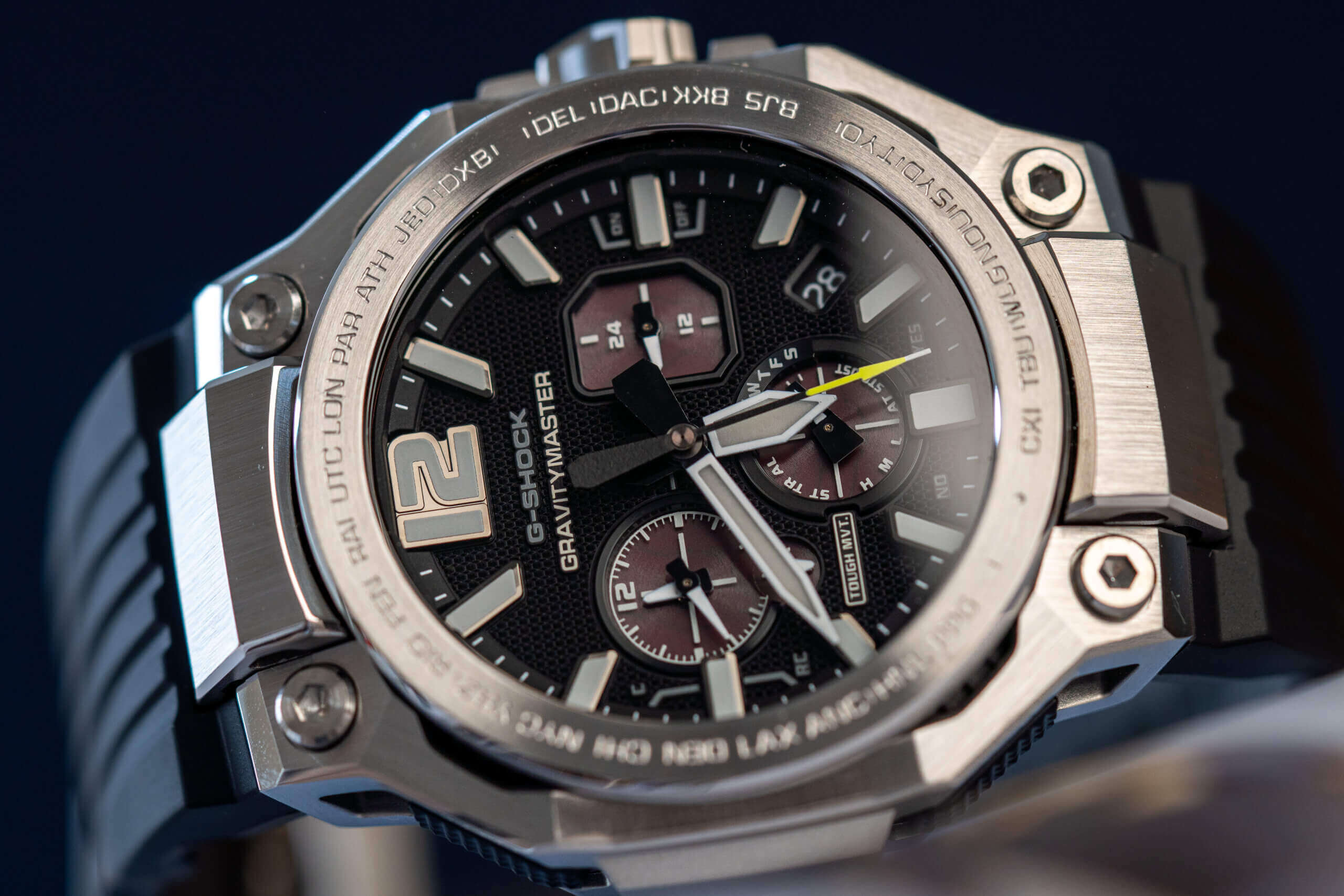
 The Casio G-Shock Gravitymaster GWR-B3000 ushers the Master of G series into a new era. It features a carbon-reinforced construction, Tough Solar, Multi-Band 6 radio synchronization, Bluetooth, and smart functions that can automatically check and correct the position of the hands after an impact. Check out everything this modern Gravitymaster can do and why it deserves the attention of aviation enthusiasts.
Table of Contents
The new Gravitymaster GWR-B3000 takes the G-Shock aviation series a step further. Casio has refined the case design, accuracy, and durability, and added several smart features that address one of the biggest problems with analog watches: what happens to the hands after a hard impact.
When Resilience Meets Modern Aviation
Within the G-Shock lineup, the Gravitymaster series belongs to the Master of G family and is designed for aviation. Its philosophy, however, is somewhat different from that of classic pilot’s watches. It’s not just about large hands, a bezel with calculation functions, or traditional aviation aesthetics. Casio has long sought to build watches that can withstand a combination of impacts, vibrations, and centrifugal force—conditions that, in aviation, can affect not only people but also equipment.
They are designed to be reliable timepieces that can withstand environments where ordinary analog watches might struggle.
The history of the modern line dates back to the 2014 GPW-1000 model, which combined GPS and radio synchronization. A significant milestone came in 2019 with the GWR-B1000—the first Gravitymaster with a carbon construction and the then-new Tough Movement system. The GWR-B3000 is now the successor to that model.
Video Review: Casio G-Shock Gravitymaster GWR-B3000-1AER
TOUGH MVT.2
And, as usual, Casio didn’t focus solely on appearance. The new model features a new movement, a new case design, and a new way of protecting the hands. The most interesting new technology is TOUGH MVT.2.
Its basic philosophy remains the same as that of the previous Tough Movement: it is a solar-powered analog movement that ensures the hands remain in the correct position. However, Casio has added two new features.
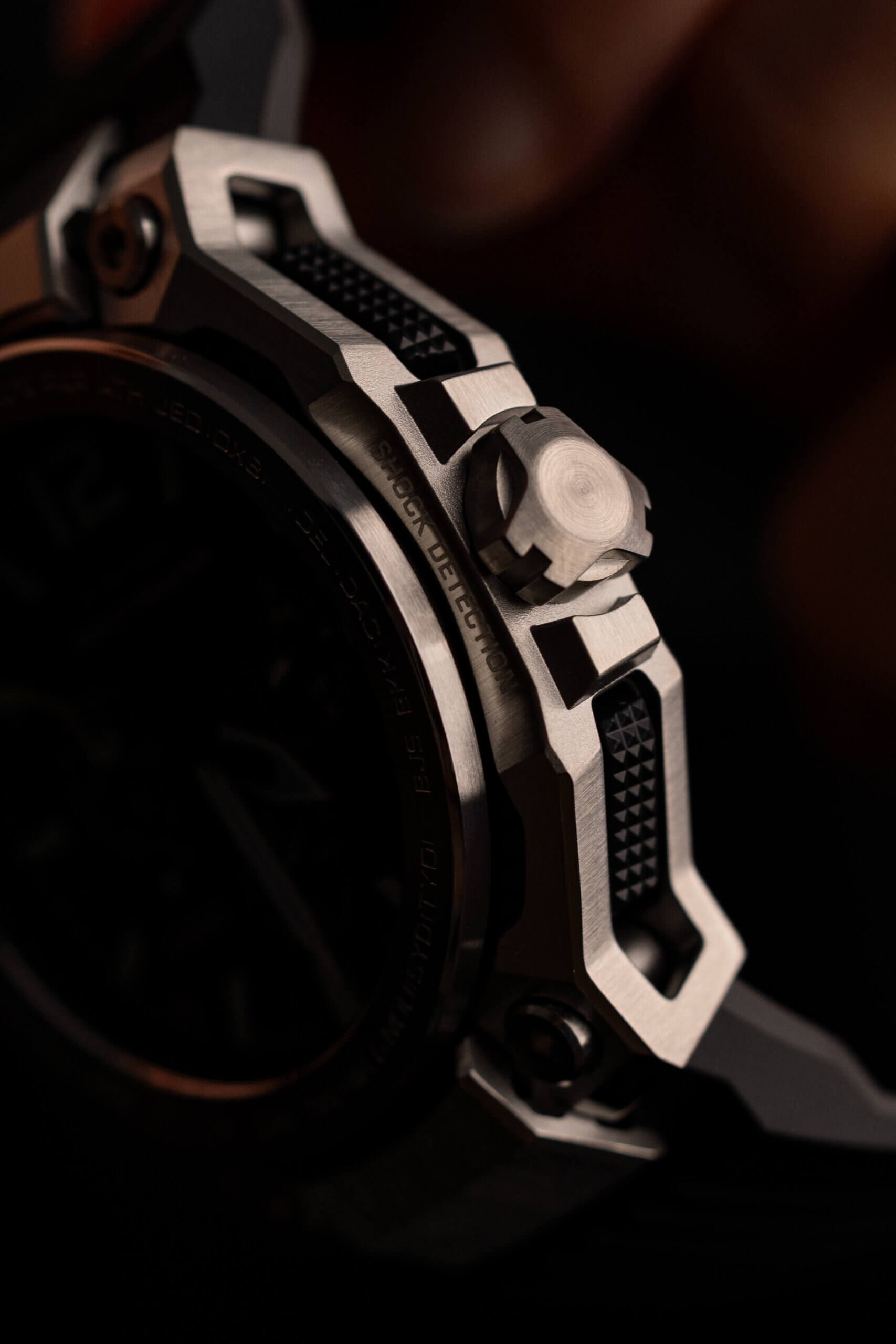
The first is impact detection. After a strong impact, an analog watch may function perfectly well in terms of time measurement, but the hands may physically jump out of their correct positions.
So, the watch knows internally that it is, for example, 10:15, but the hand may show something slightly different. The impact detection feature can recognize an impact and then automatically check and correct the position of the hands. In other words, it doesn’t just wait for a regular check; it reacts directly to an event that could throw off the hands’
position.
The second new feature is magnetic field detection. If the watch detects a strong magnetic
field, the hands stop to prevent them from being misaligned. Once the magnetic field subsides, the mechanism returns to normal operation and continues to display the correct time. This is a wonderful example of how Casio approaches durability. It doesn’t just ask, “Will the watch survive an impact?” but also, “Will it still tell time correctly after an impact?”
Dual Hollow Structure
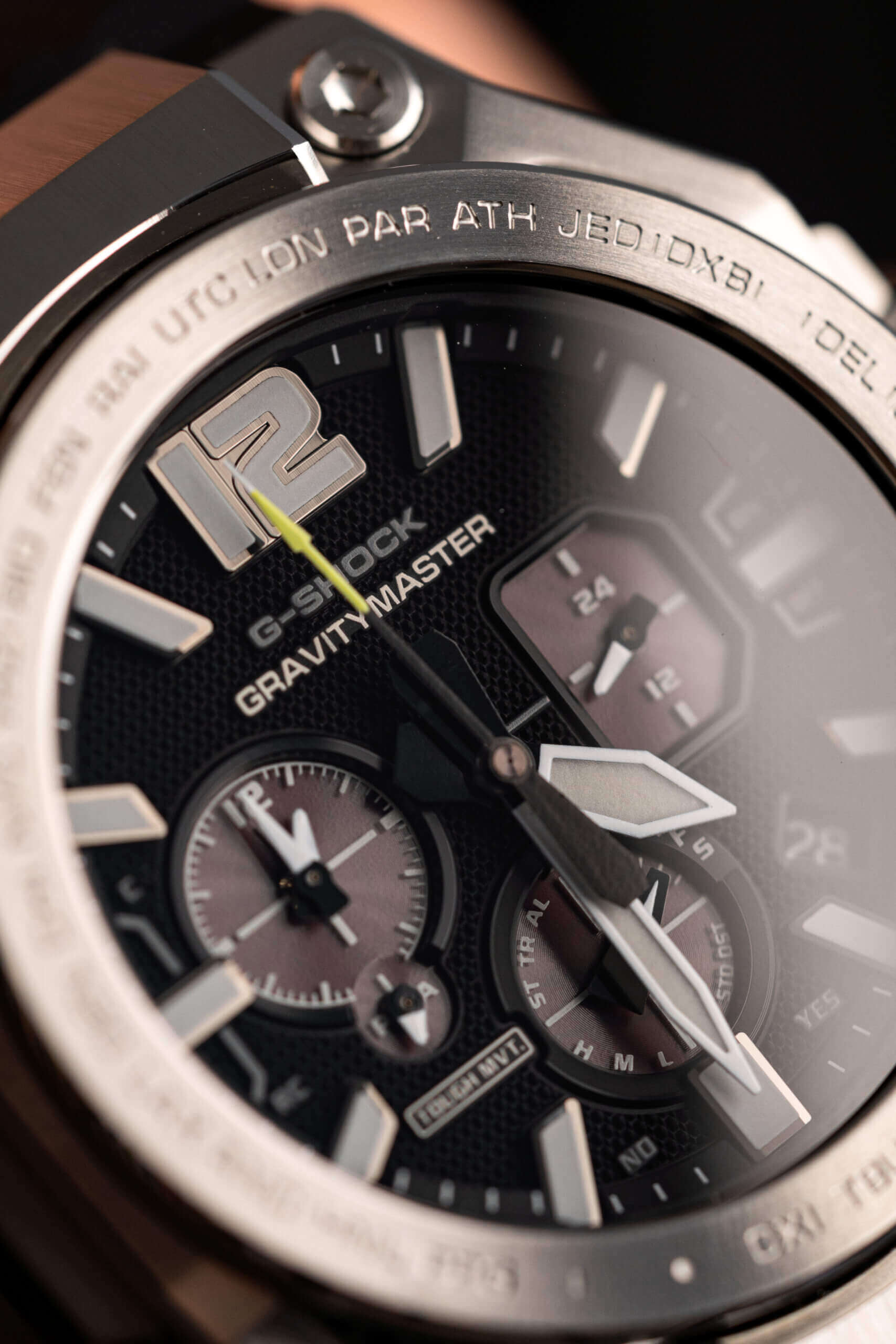
The case design has undergone a major change. Casio uses what is known as the Dual Hollow Structure. Inside, there is carbon-reinforced resin, while the outer protective parts are made of stainless steel using MIM (Metal Injection Molding) technology. Damping elements made of resin are located between the individual parts. Additionally, the inner case is secured at four points. According to Casio, the entire structure was optimized using simulations of stress, impact, vibration, and centrifugal force. The result is a design that, at first glance, looks almost like a mechanical component of some kind of aviation equipment. The individual layers are not hidden; on the contrary, they are an integral part of the design.
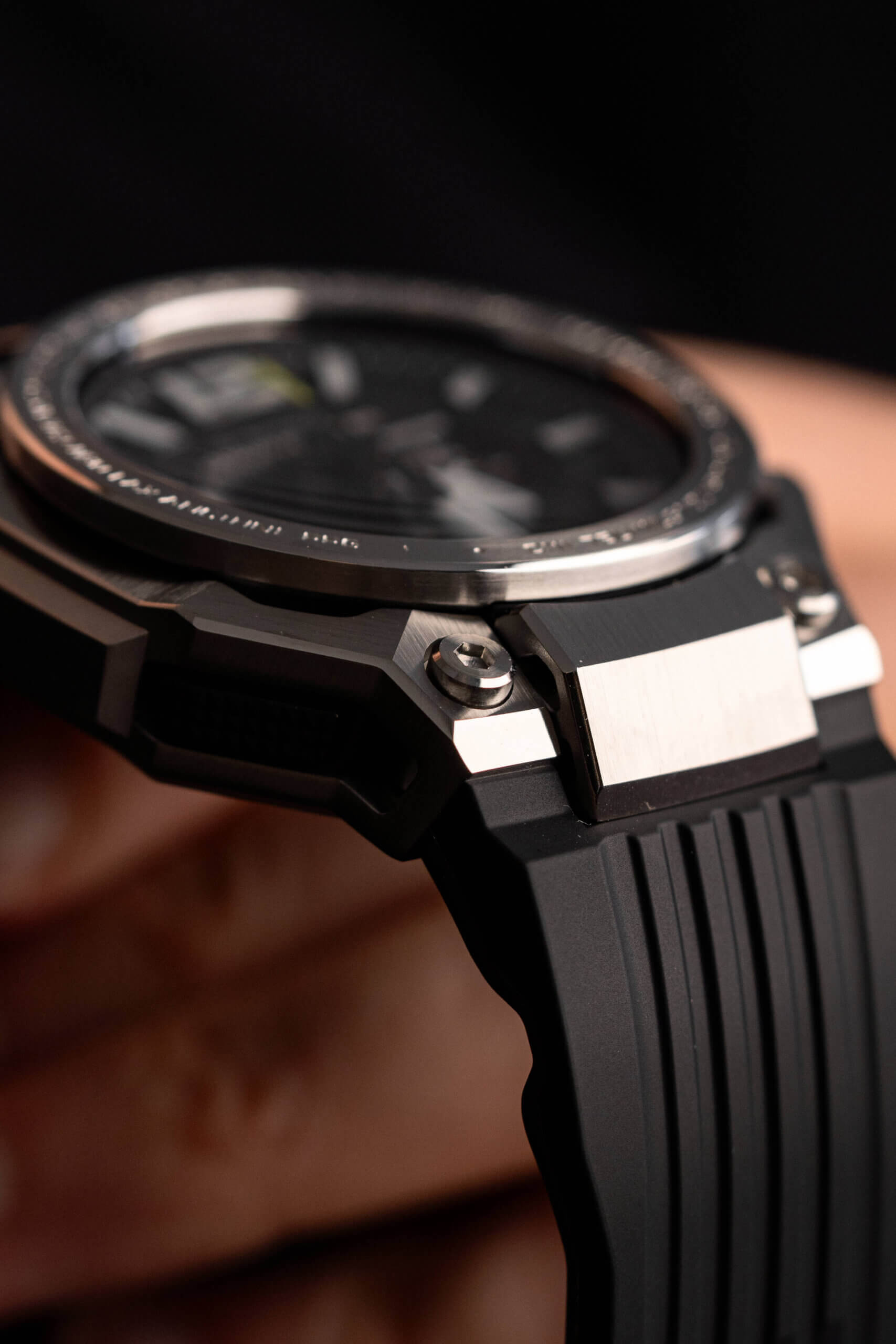
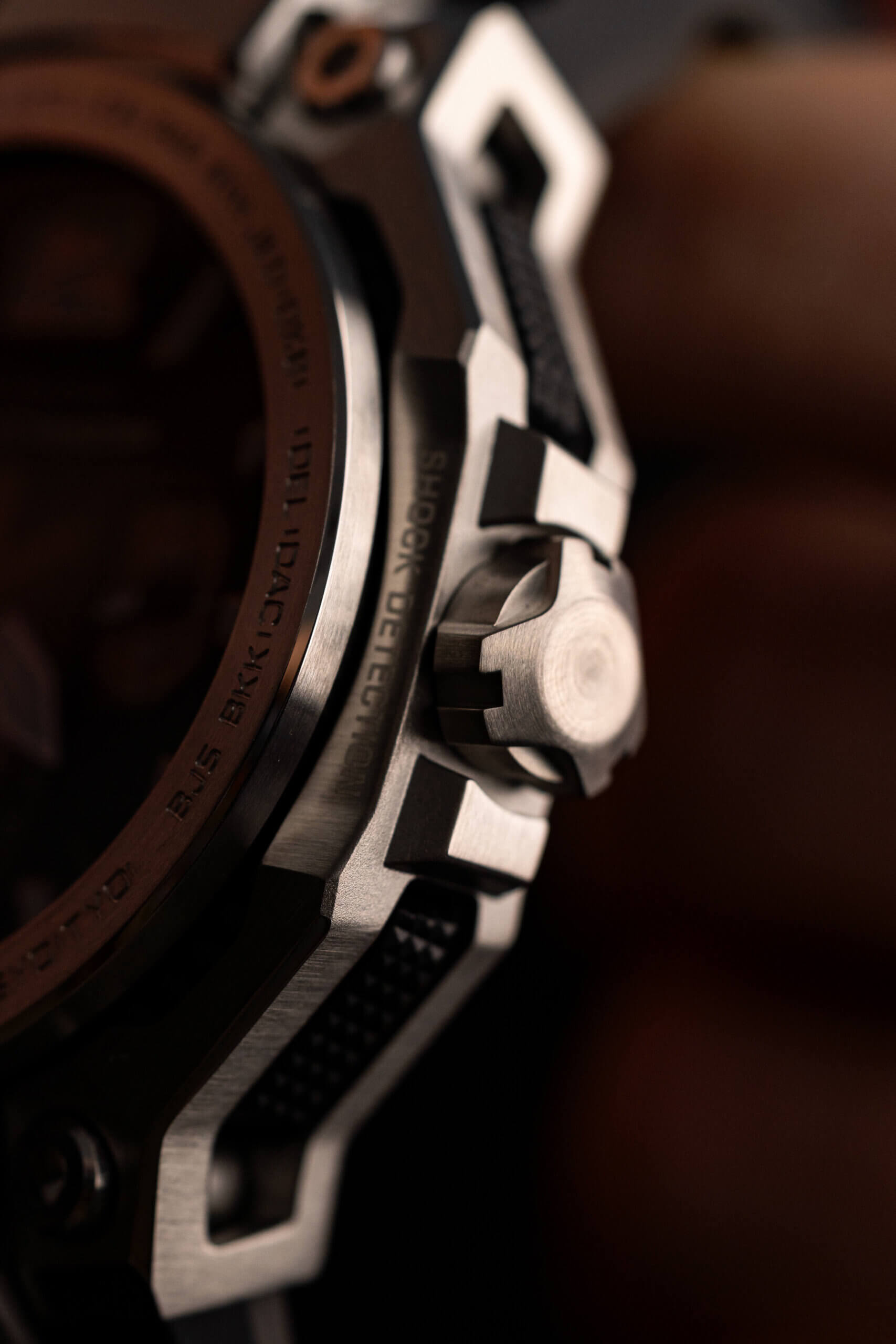
The GWR-B1000 was quite radical in 2019. It featured a carbon monocoque, was significantly lighter, and sought to demonstrate just how far the design of an analog G-Shock could be pushed. It weighs only 72 g, and its dimensions are approximately 46.3 × 16.9 mm. Interestingly, although the new model has a significantly more robust appearance and features metal protective elements, it is no thicker than the GWR-B1000. In fact, its height is 14.1 mm. However, the new model is 30 grams heavier.
How to Carry 102 Grams
The dimensions of 56.7 × 47.3 × 14.1 mm are certainly not small. The 47.3 diameter already classifies the model as a large watch, and the 56.7 mm length significantly exceeds the typical dimensions of classic mechanical watches. On the other hand, the height is particularly interesting. With a G-Shock of this caliber, we’d expect a tall case and a bulky profile. Yet the B3000 is surprisingly slim for its design. The weight of 102 g isn’t extreme. You can certainly feel the watch on your wrist, but it’s not a heavy metal piece like some of the steel or titanium Master of G models.
A Cockpit on Your Wrist
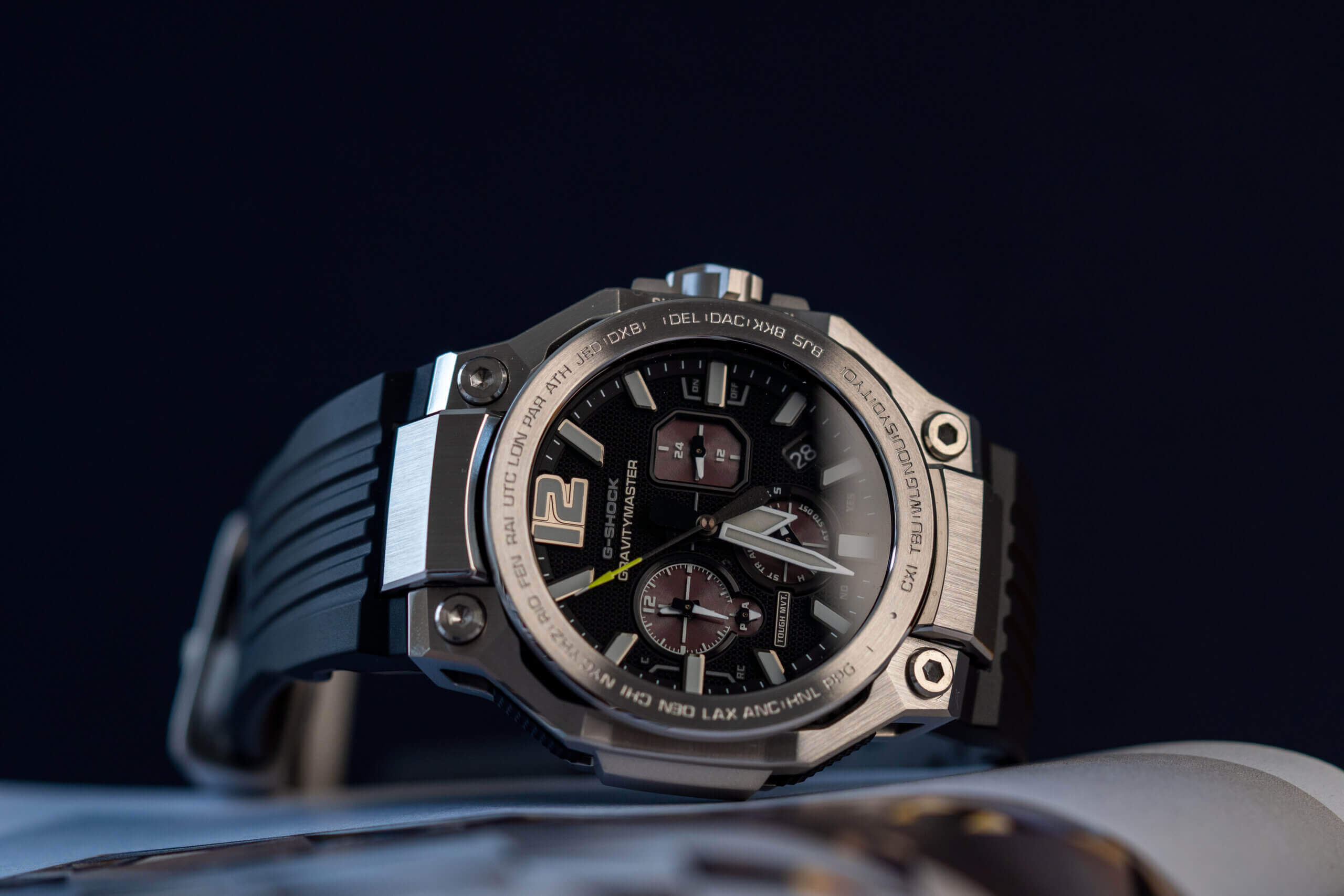
The new Gravitymaster doesn’t try to be a classic “pilot’s watch” in the traditional sense. For example, you won’t find a rotating bezel with a logarithmic scale here. Instead, Casio is working with the concept of a cockpit on the wrist. The dial has a subtly textured matte finish. The microstructure diffuses incoming light and reduces glare, which is particularly helpful when reading the time in direct sunlight. The bold hands and hour markers are further enhanced by luminescence and LED illumination.
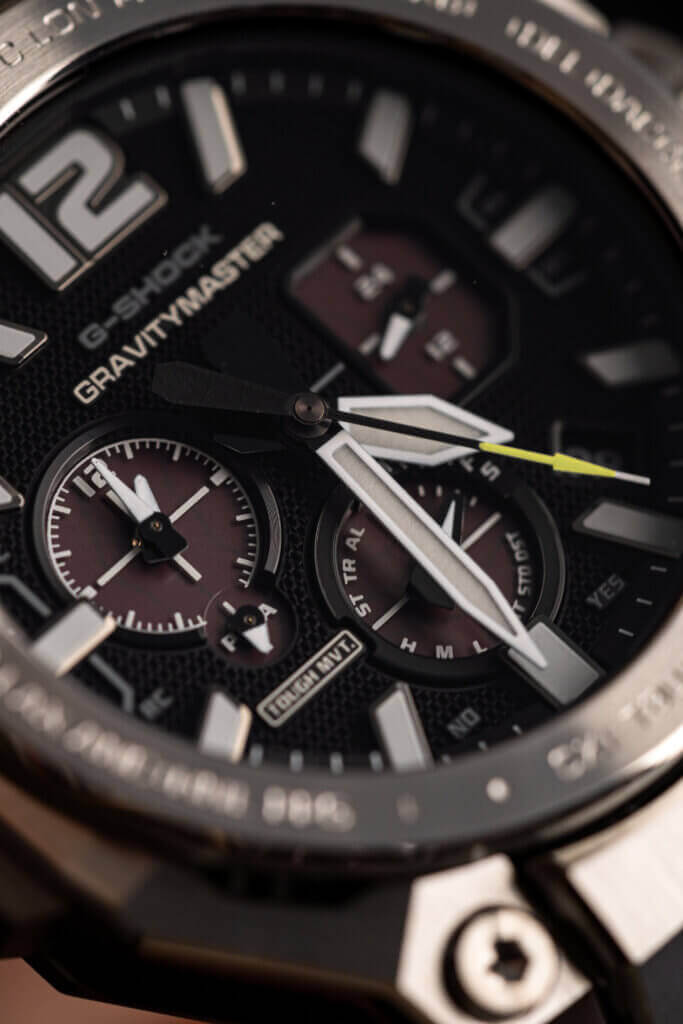
The bezel is another particularly well-executed detail. Instead of simply repeating the G-Shock logo, Casio has inscribed the codes for cities around the world on it. The design thus immediately brings to mind a navigation device. The dial also features a 24-hour sub-dial.
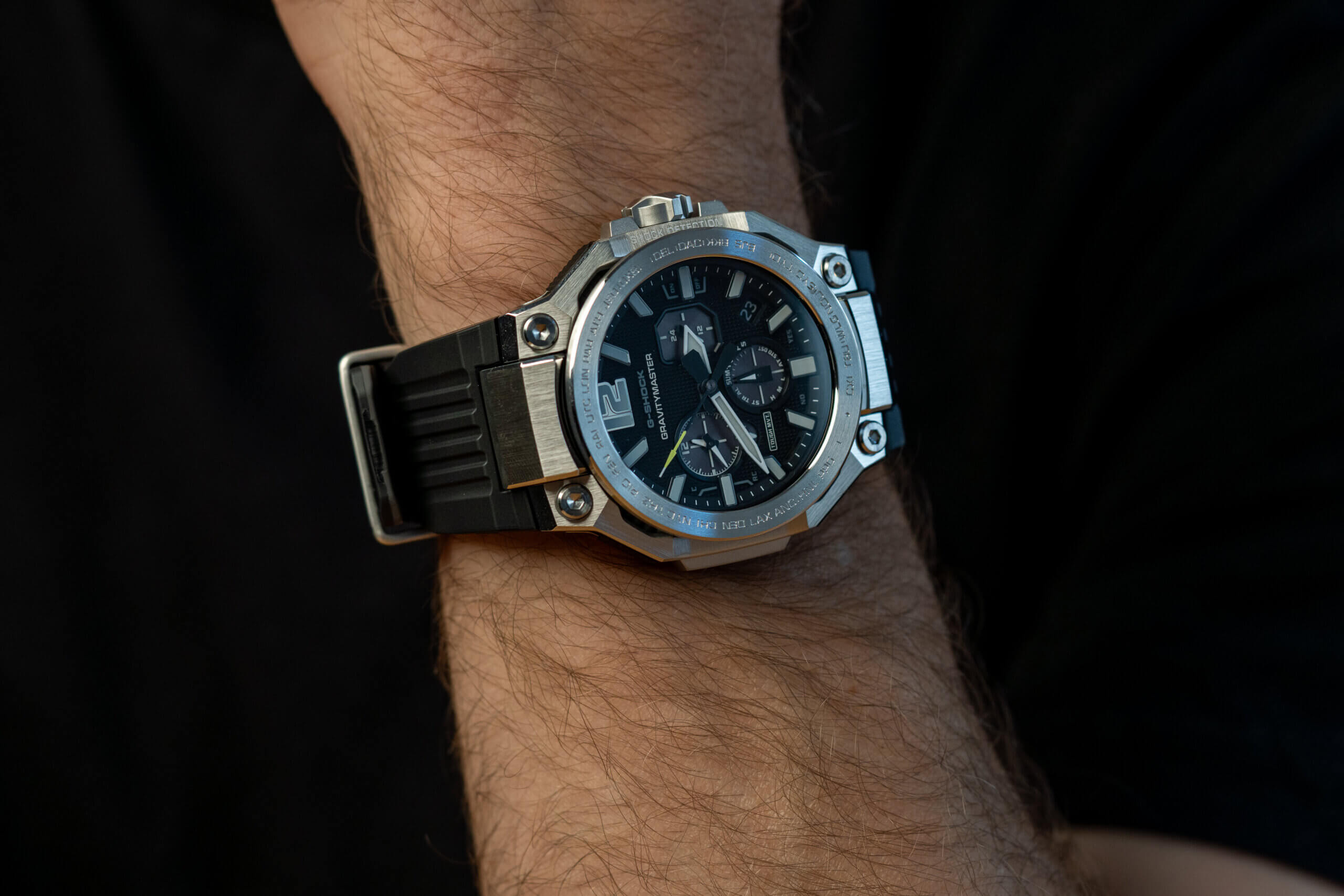
The case combines carbon-reinforced resin and stainless steel, with the metal components manufactured using MIM technology. Casio also uses a sapphire crystal with an anti-reflective coating,
so it didn’t rely solely on traditional mineral glass to protect the dial. The strap is made of soft bio-resin. Its two-layer construction is designed to ensure comfort and durability. That’s one of the reasons why it weighs only 102 g. On paper, it’s a large and relatively complex piece of technology, but thanks to carbon and resin, the weight remains at a reasonable level.
What the GWR-B3000 Can Do
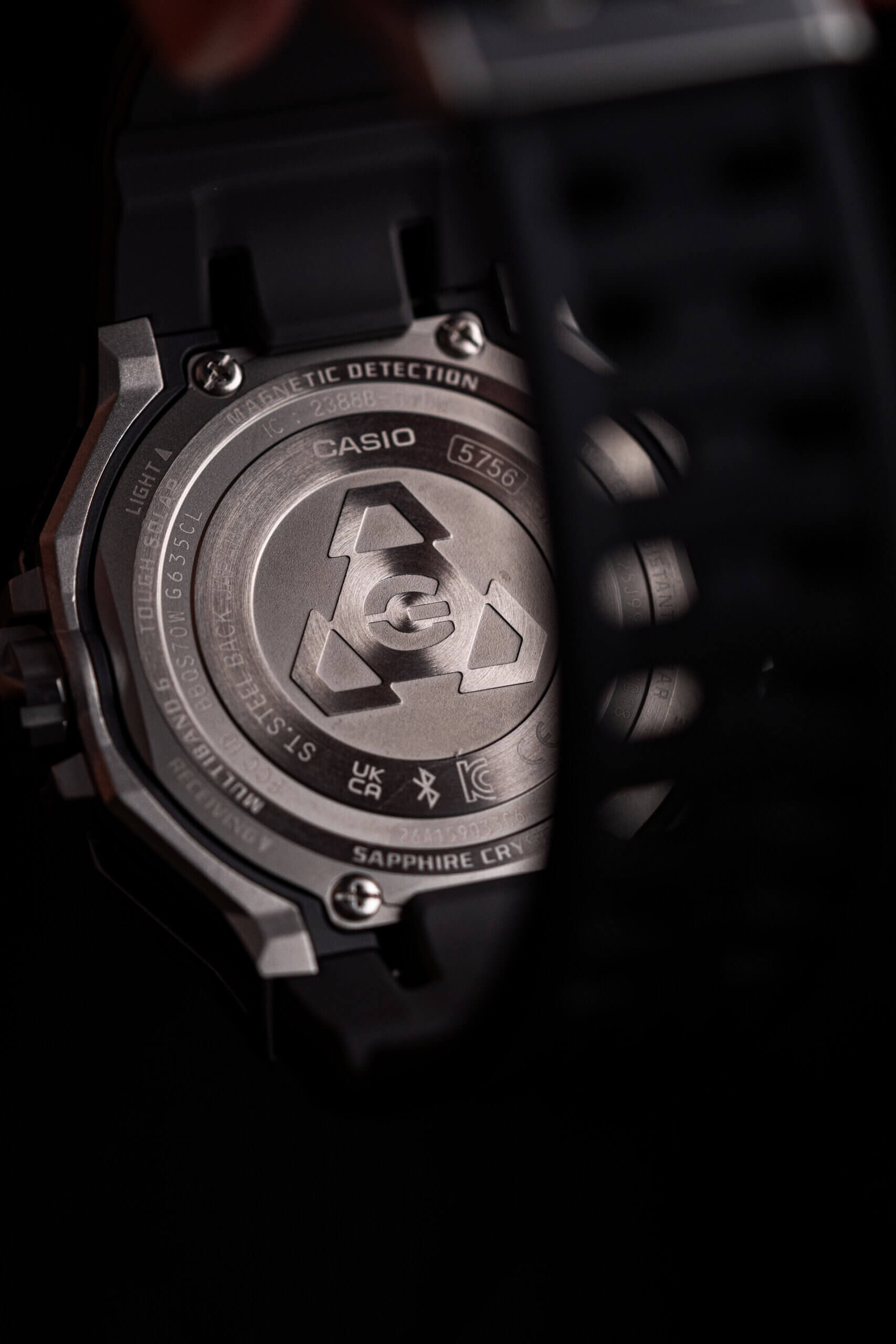
The foundation is a combination of Tough Solar, Multi Band 6, and Bluetooth. Solar power means the watch recharges using light. According to the specifications, it can operate for approximately five months under normal conditions without exposure to light, and up to 22 months when stored in complete darkness. The accuracy of the 5756 module without a signal is rated at ±15 seconds per month. Multi Band 6 enables automatic radio time synchronization, and Bluetooth adds connectivity to your phone and the CASIO WATCHES app.
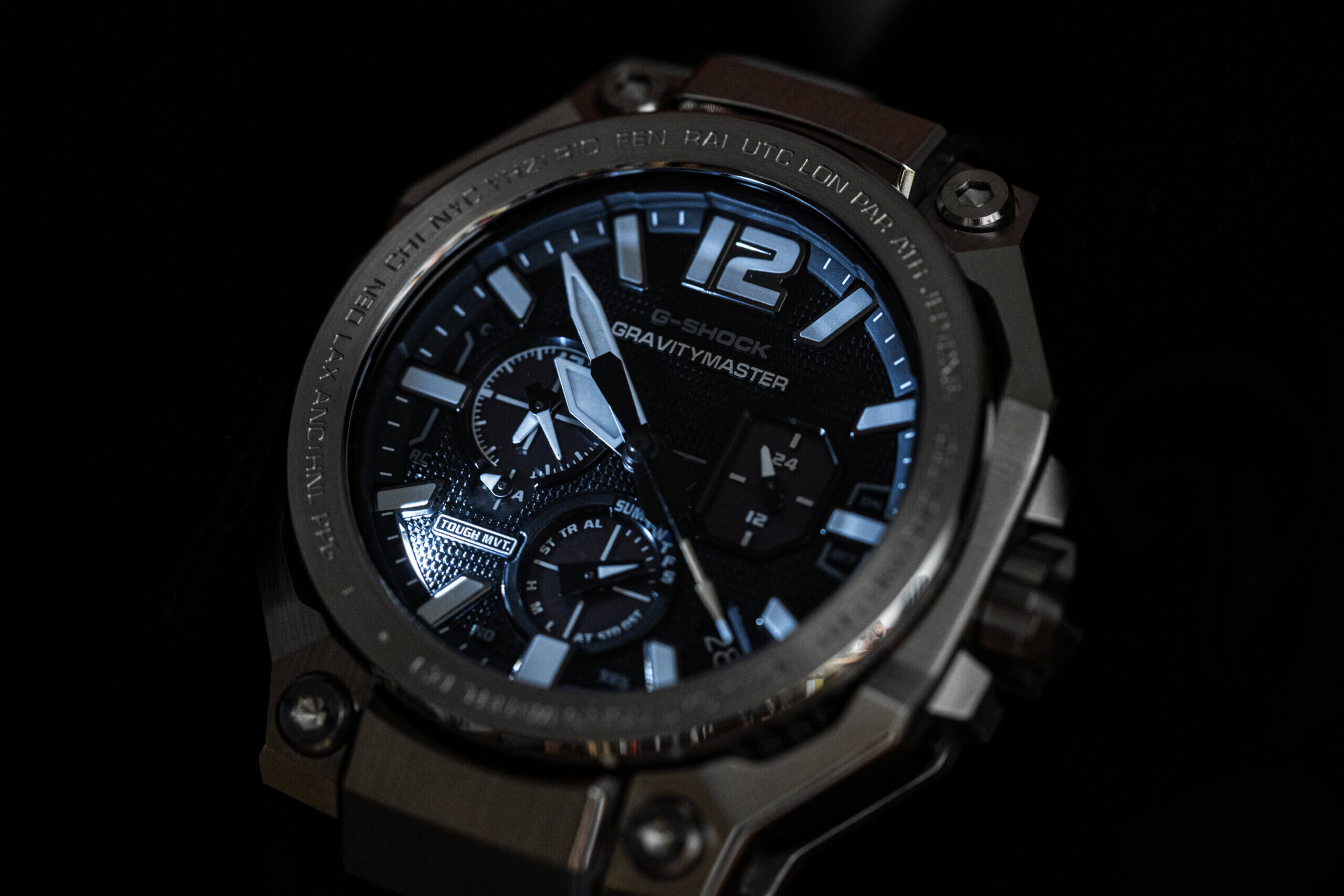
For example, the following are available:
- world time,
- UTC,
- dual time,
- stopwatches,
- deduction,
- alarm,
- automatic calendar,
- LED lighting,
- luminescence,
- Phone Finder,
- Flight Log,
- automatic correction of handle position,
- magnetic field detection,
- Triple G Resist,
- Water resistance: 200 meters.
A Digital Journal for Aviation Enthusiasts
For aviation enthusiasts, the Flight Log feature is particularly interesting. When you press the button, the watch, in conjunction with the CASIO WATCHES app, records the time and location. The data is then displayed on a map within the app. This feature allows you to create records of individual flights and review them
later. It’s important to note that the watch, of course, does not replace an onboard navigation system. It’s more of a supplement and a digital logbook for anyone with a passion for flying.
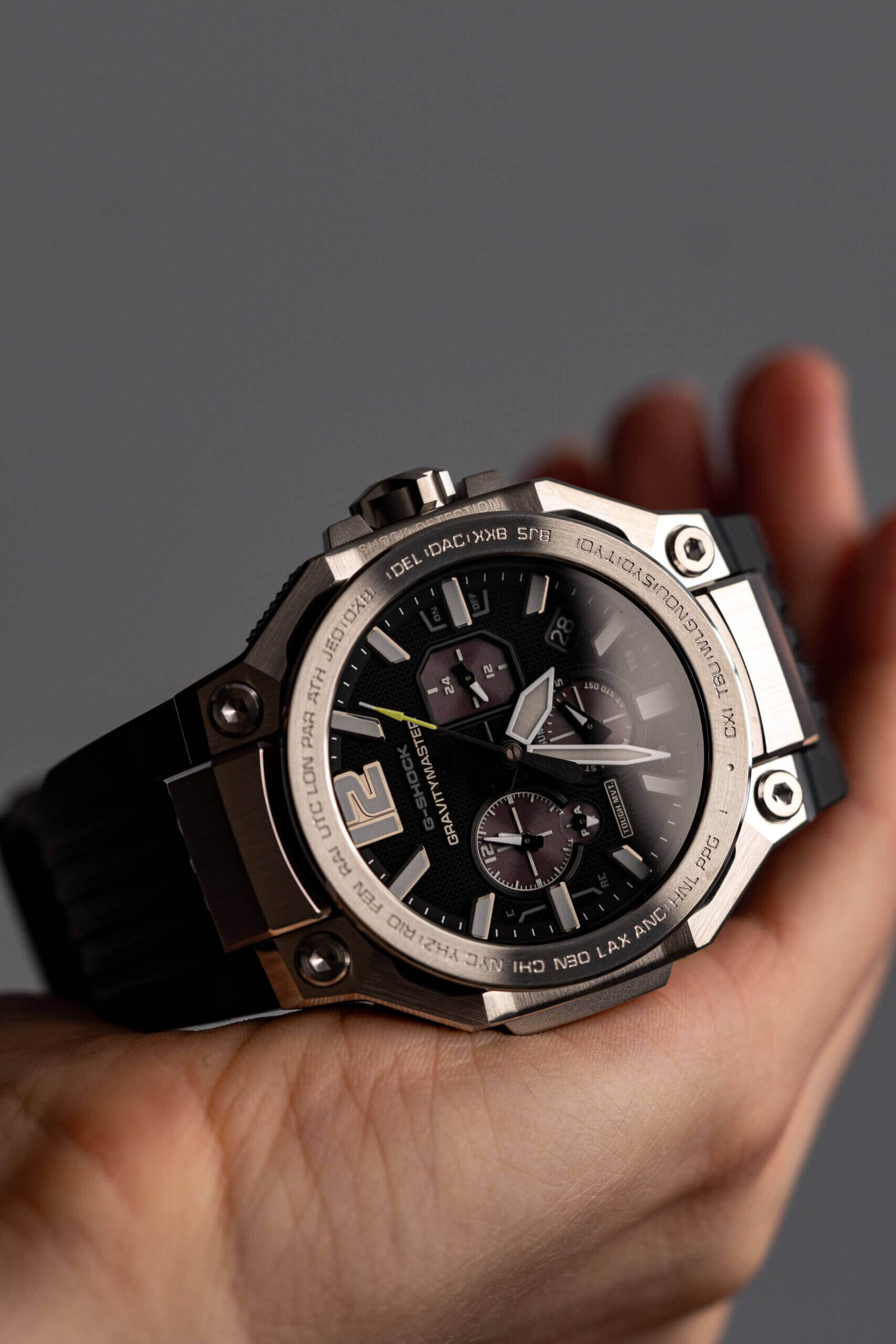
When we consider a modern professional pilot, the idea that a wristwatch is his most important navigation tool is, understandably, a bit out of touch with reality. Modern aircraft use sophisticated avionics, displays, navigation systems, and onboard computers. A watch is not meant to compete with them.
Who is the GWR-B3000 designed for?
They are designed to be reliable timepieces that can withstand environments where ordinary analog watches might struggle. In fact, Casio builds the entire design around resistance to shocks, vibrations, centrifugal force, readability, and accuracy. The Triple G Resist is designed to protect against these forces, and Casio claims it can withstand centrifugal forces exceeding 15 G and vibrations reaching 20 G.
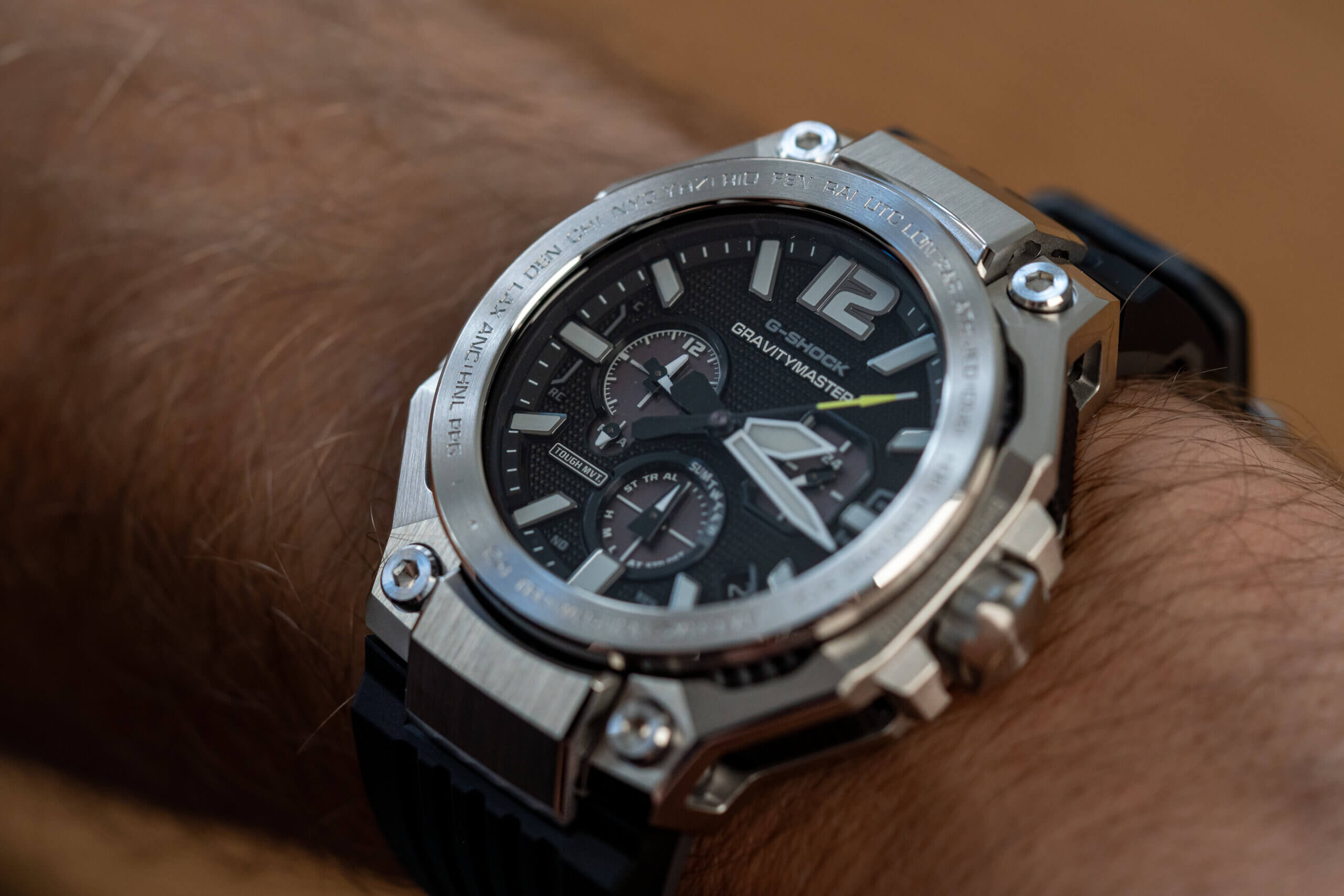
Just as someone might buy a diving watch because they love the world of diving, someone else might buy a Gravitymaster because they love airplanes, cockpits, supersonic aircraft, and technology. And Casio clearly knows exactly who it’s selling these watches to. Above all, it’s for aviation enthusiasts who want a piece of a modern cockpit on their wrist. And in that regard, the new Gravitymaster is more compelling than ever
before.

Casio G-Shock Gravitymaster GWR-B3000-1AER
19 990 €
The Casio G-Shock Gravitymaster GWR B1000-1A is a watch that feels right at home not only in the city but also in harsh conditions, offering its owners a wide range of features and a modern design, all backed by exceptional durability…If you’re interested in other models from the GWR B1000 series, please don’t
Specifications
- Part numbers: GWR-B3000-1AER, GWR-B3000A-2AER, GWR-B3000B-8AER
- dimensions: 47.3 x 14.1 x 56.7 mm
- Power source: solar 5756
- glass: sapphire with anti-reflective coating
- Water resistance: 200 m





Comments
No one has commented on this article yet. Be the first.