

 Patrik Zdvíhal
 The new Casio Edifice Automatic line shows that the brand takes the automatic watch segment seriously. It features a sapphire crystal, a reliable movement, a compact case, and an attractive dial design. In this review, we’ll take a look at how the new Edifice models stack up against watches from Seiko, Citizen, and popular microbrands, and who would truly benefit from purchasing them.
Table of Contents
Just a few years ago, there was a simple rule. Anyone looking for their first mechanical watch under 10,000 crowns would almost automatically turn to Seiko, Orient, or one of the up-and-coming microbrands. But times are changing.
Entering the world of mechanical watches with more confidence than ever before
This is the third time Casio has released an Edifice automatic watch, and it’s clear that each generation is more confident than the last. The new Automatic models don’t come across as an experiment or a marketing detour. On the contrary, they look like a model with a clear goal—to offer a solid mechanical watch to people who have been thinking about an automatic watch for a long time but didn’t know where to start.
Nothing over-the-top or flashy. Just a modern, versatile watch that works for the office, the weekend, and a night out on the town.
It looks more expensive than the price tag suggests
And that’s exactly what puts them in direct competition with dozens of microbrands. When we hear “Casio,” most of us think of the F-91, the iconic G-Shocks, or one of the endless array of Edifice quartz models. Mechanical watches, however, have always been more of a niche market for the Japanese manufacturer.
This makes it all the more interesting to see how the approach has changed in recent years. The first automatic Edifice models were more of a cautious test of the market. The second generation showed greater confidence, and this year’s models give the impression that Casio now knows exactly what it wants to offer—and it’s doing so without unnecessary experimentation.
Video Review of the Casio Edifice EFK-200D-4AER
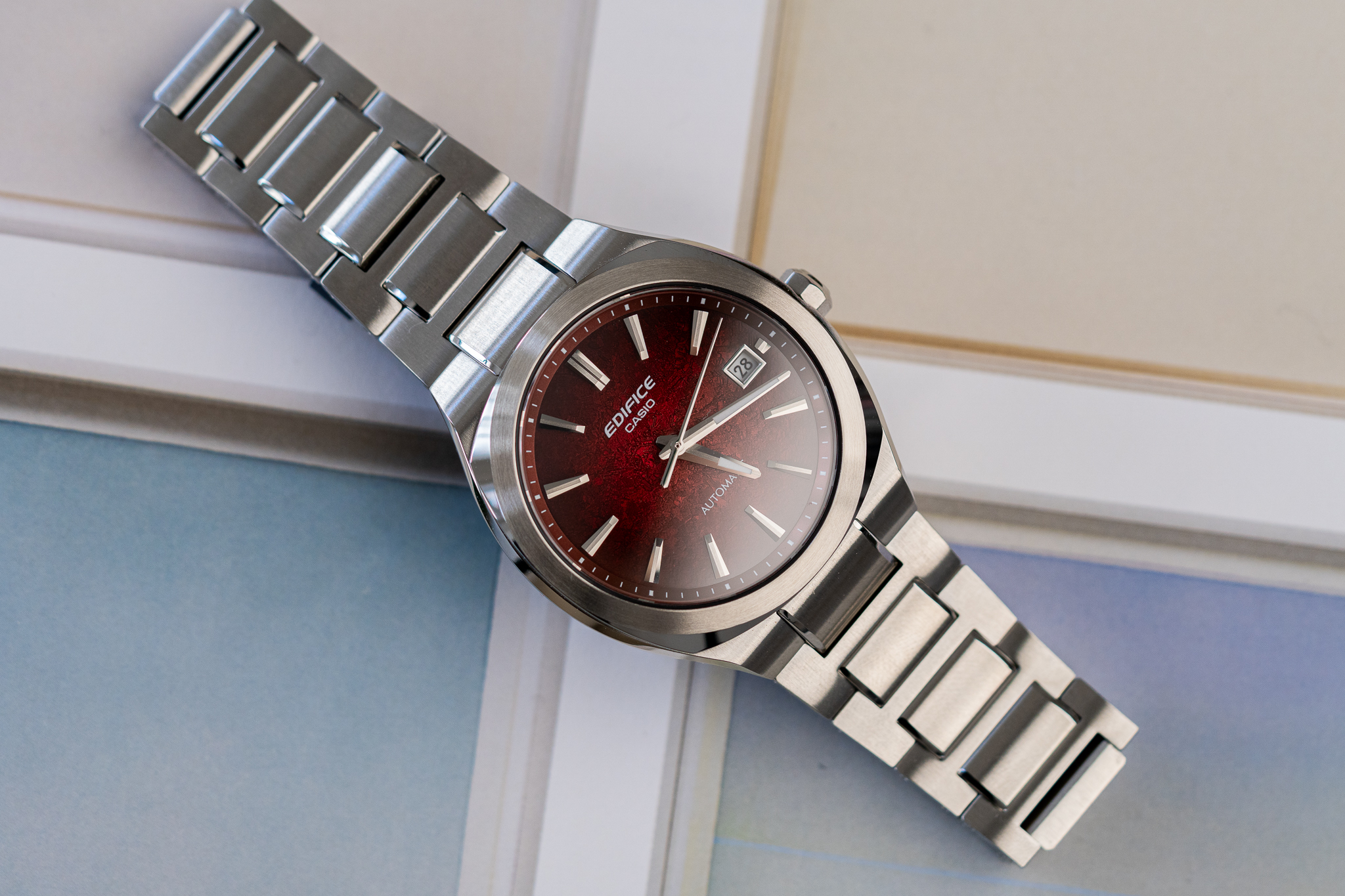
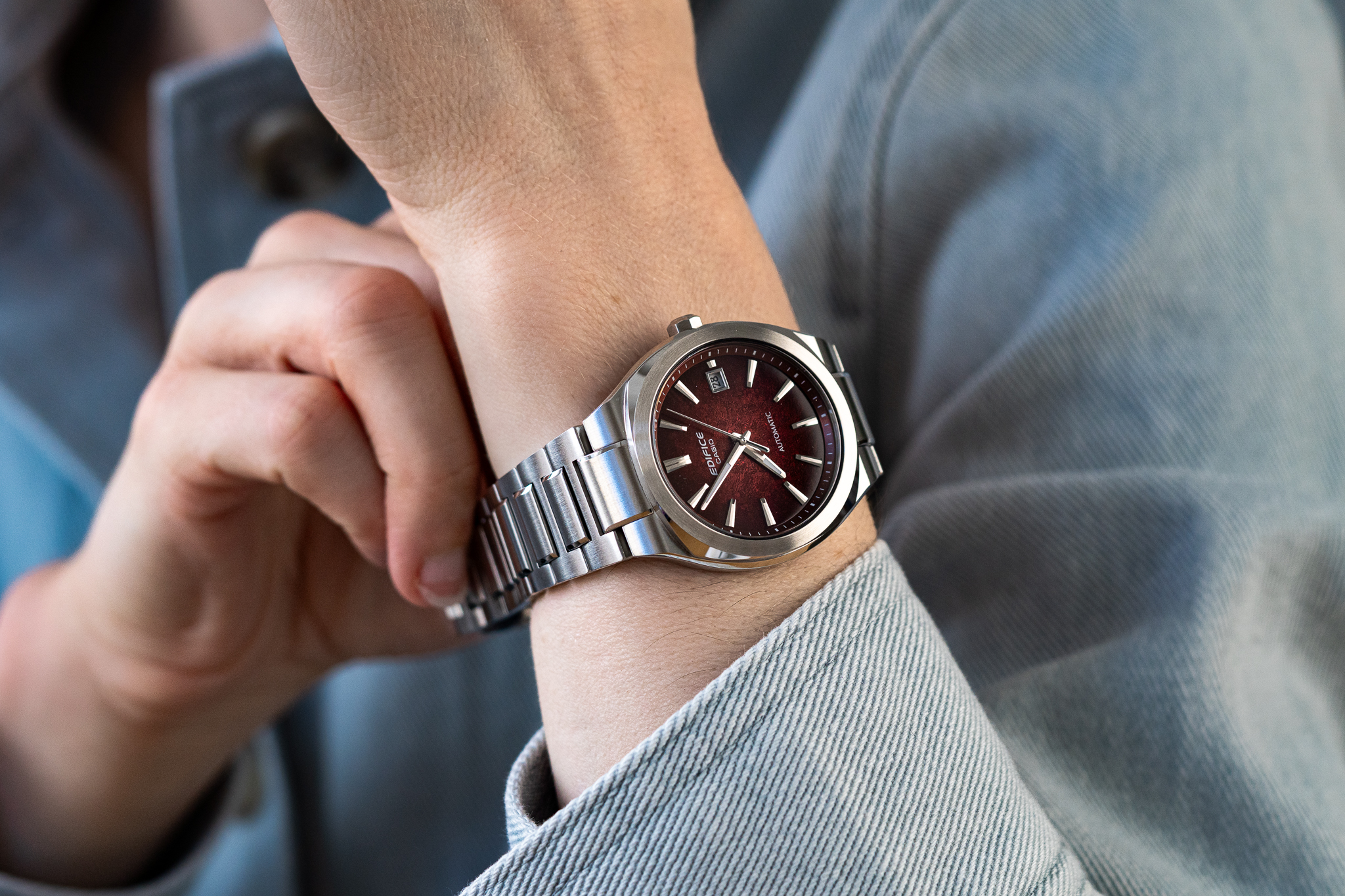
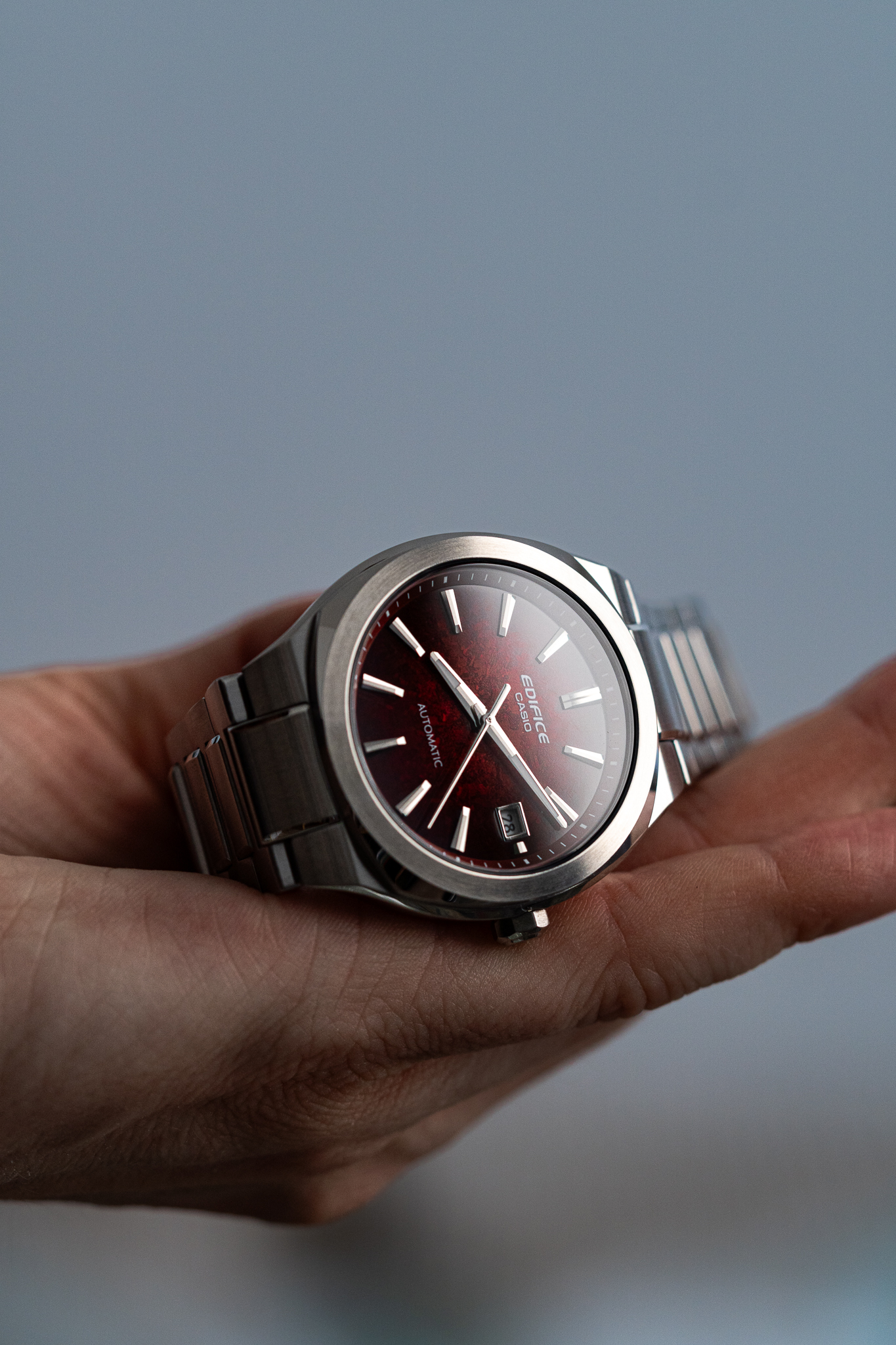
At first glance, it’s clear that the brand knows what’s in style today. The stainless steel case has a diameter of 38 mm, which is the perfect size. The watch doesn’t look too small or overly bulky and fits well on most wrists. The case thickness of 11.9 mm is still very comfortable for an automatic watch with a mechanical movement and allows for comfortable wear even under a shirt sleeve.
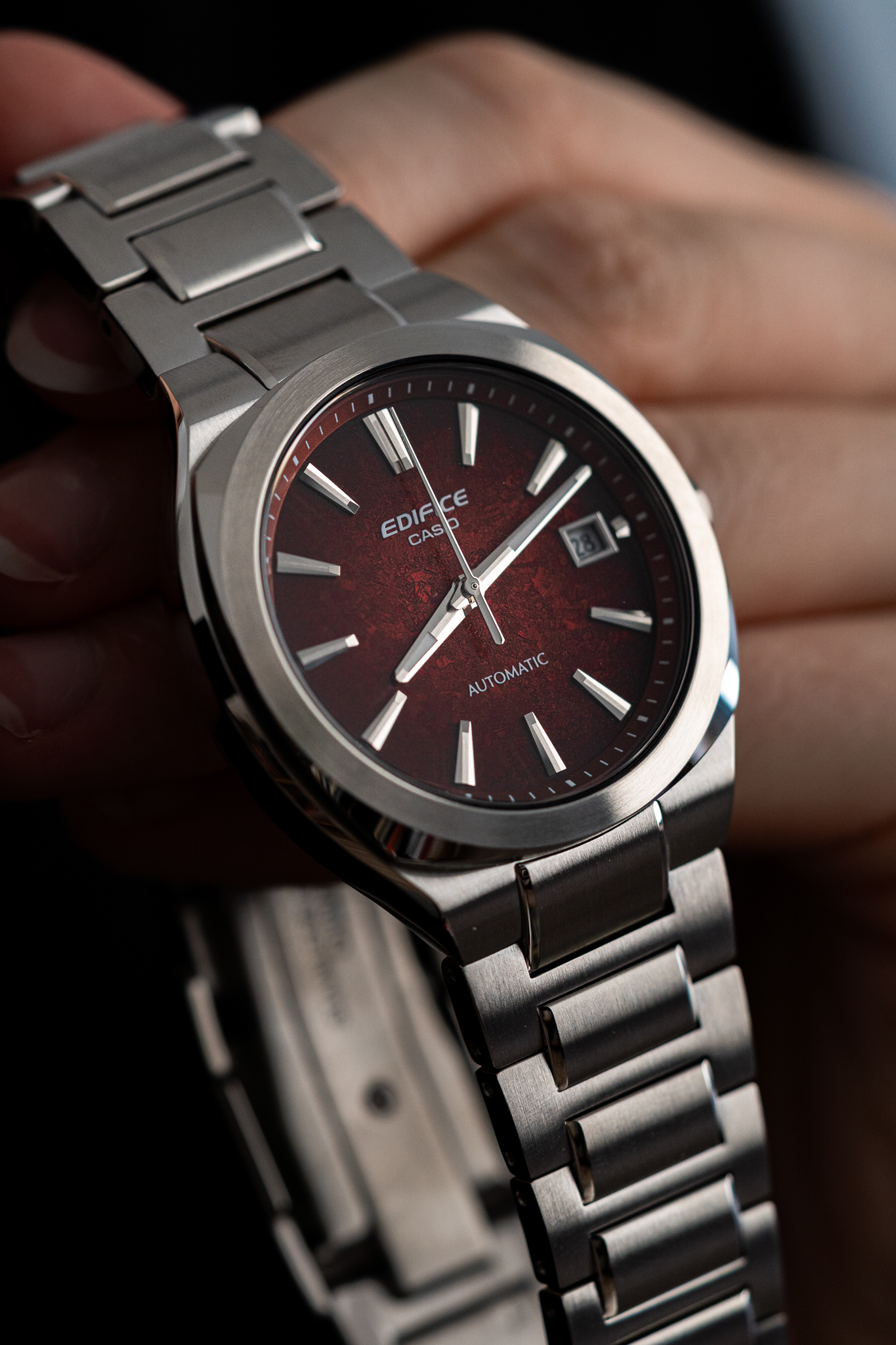
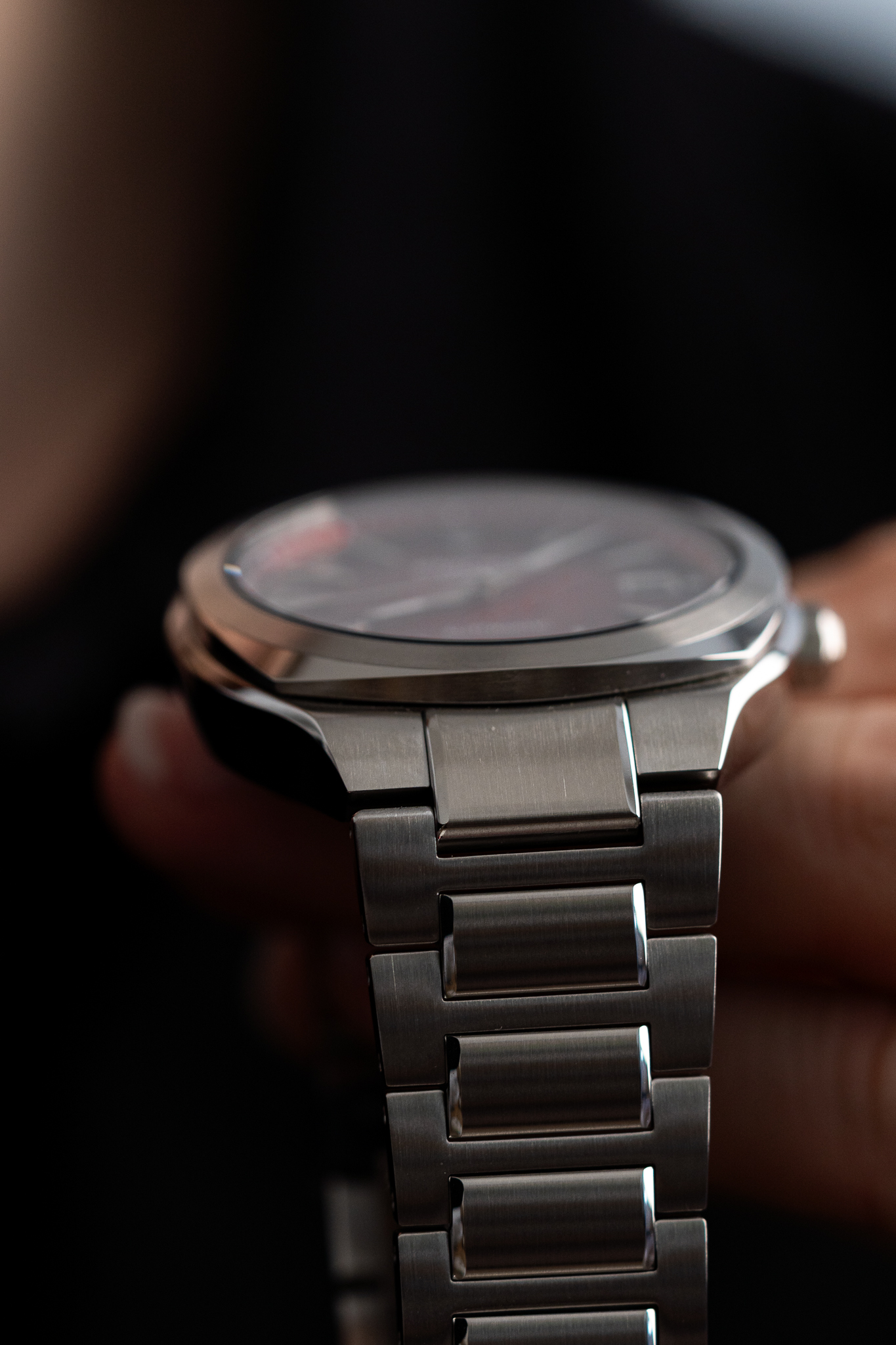
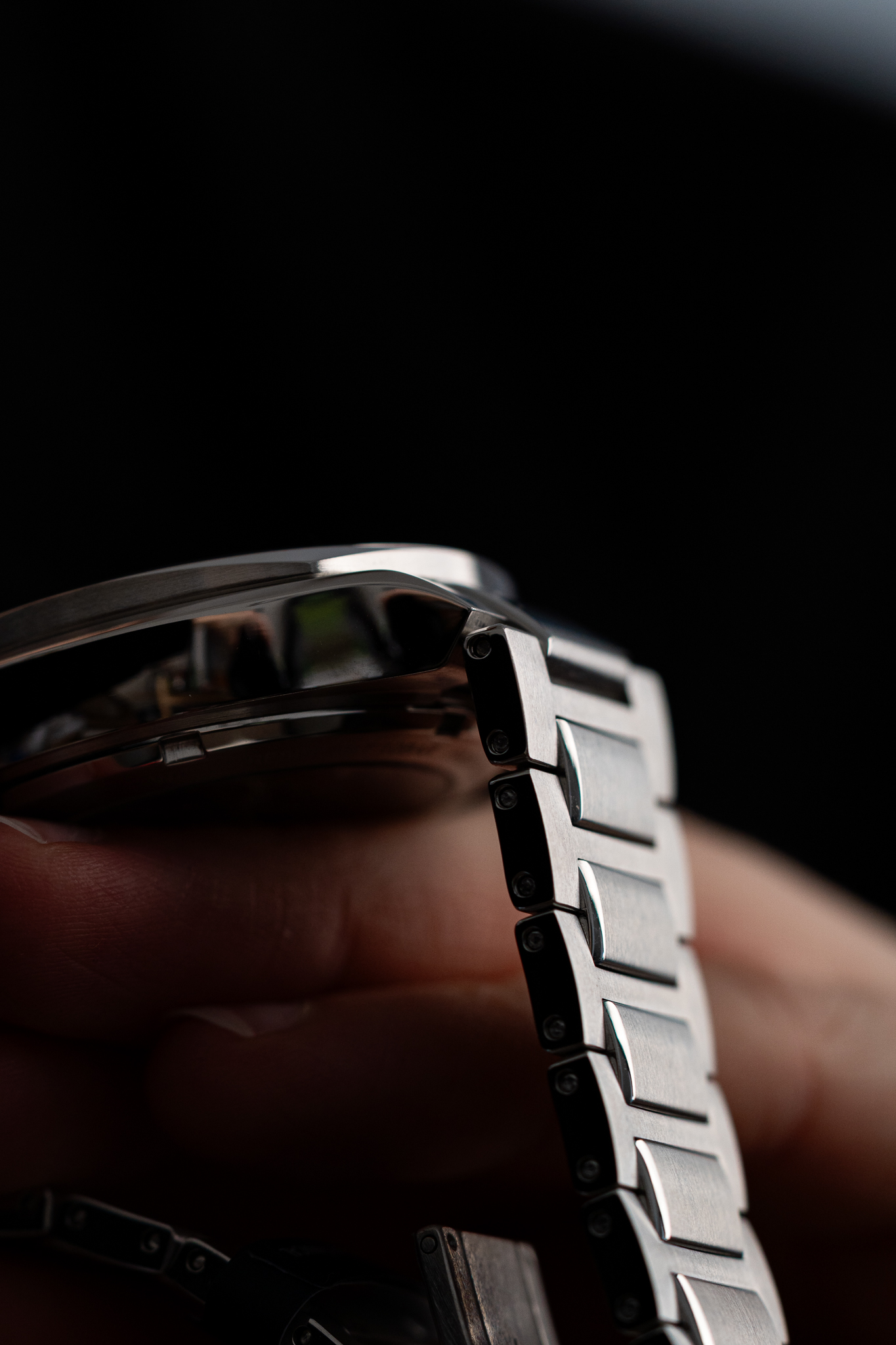
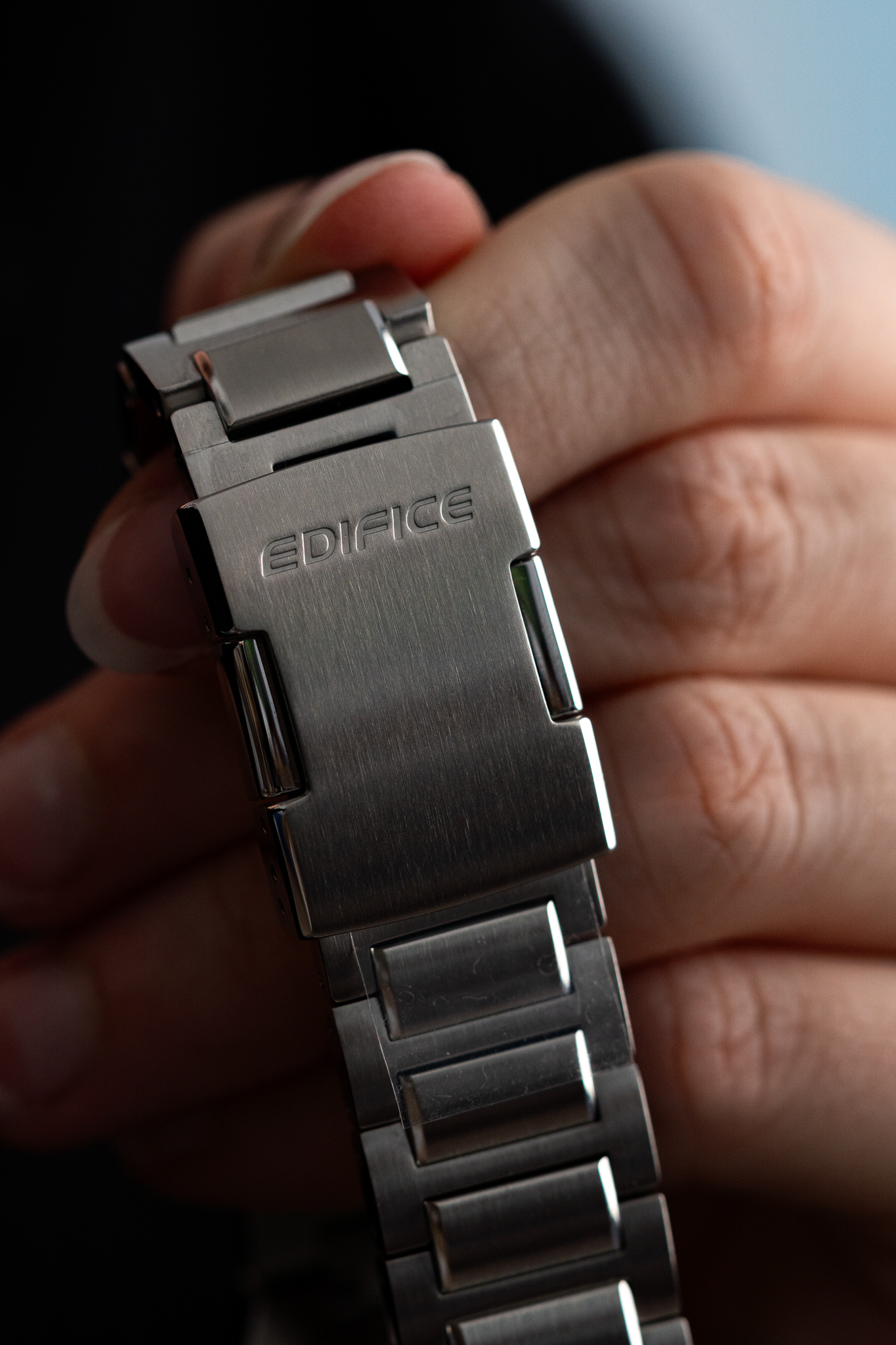
The integrated steel bracelet, sporty yet elegant proportions, sapphire crystal, and refined details give the watch a look that’s significantly more expensive than its price tag would suggest. With 100-meter water resistance, you don’t have to worry about everyday use. Nothing over-the-top or flashy. Simply a modern, versatile watch that’s perfect for the office, the weekend, and a night out on the town.
A watch face that will never stop entertaining you
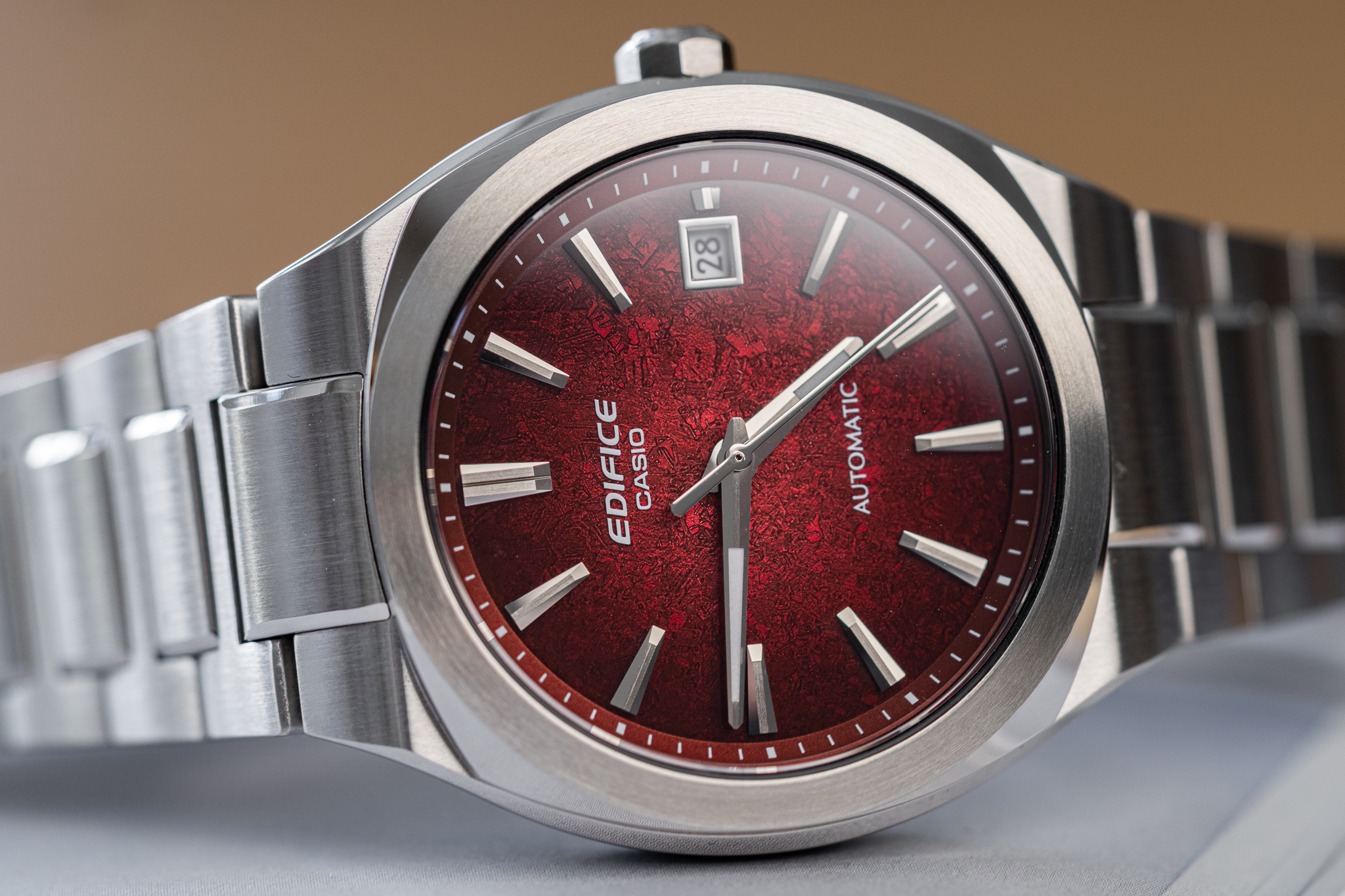
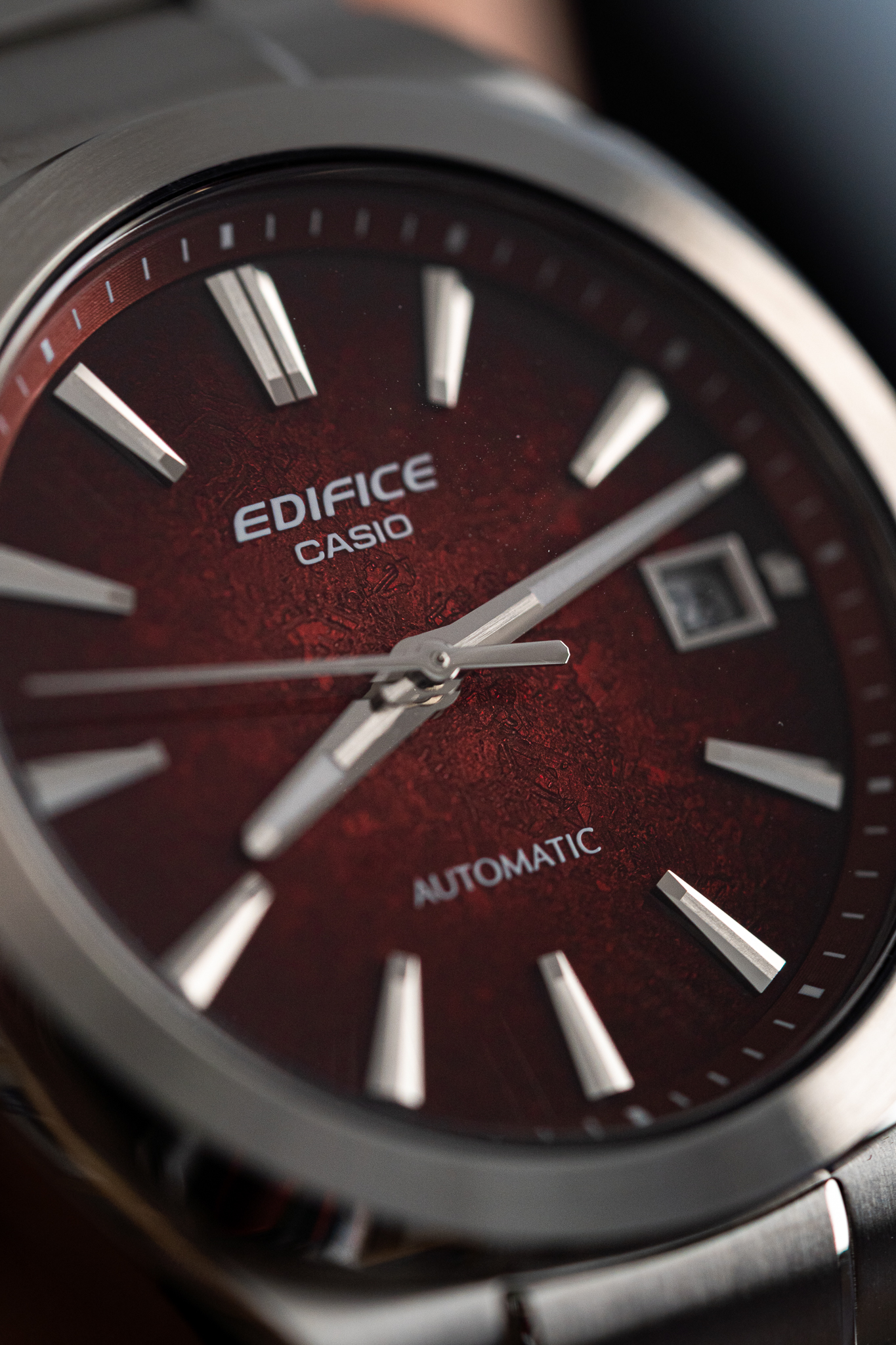
The model with the crimson-red dial—which we’ll be taking a closer look at today—is the one that really catches the eye. I’d go so far as to say that the dial itself is one of the strongest elements of the entire collection. Casio doesn’t just rely on a bold color here, but also adds a number of subtle details that give the watch a much more interesting character.
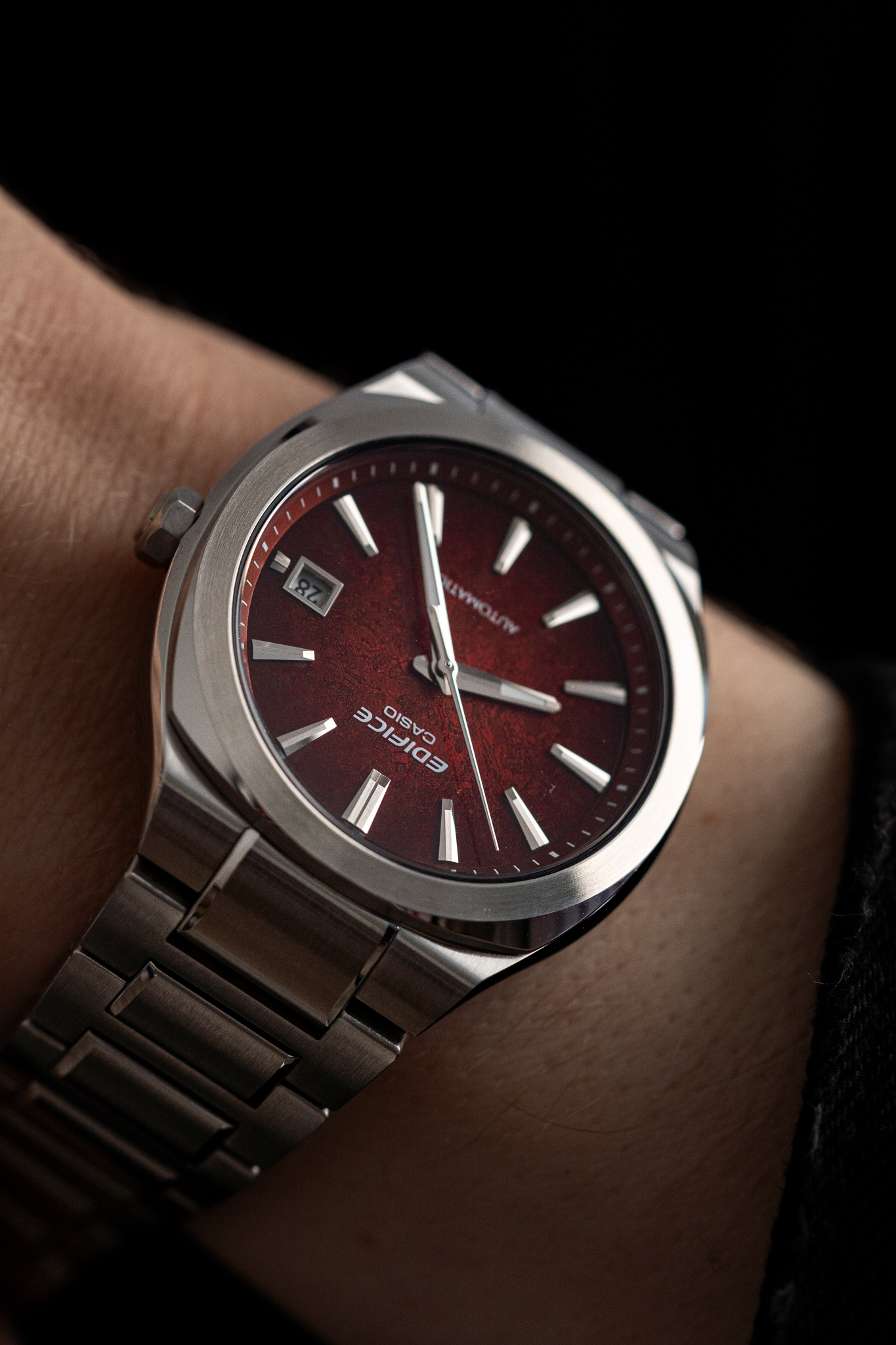
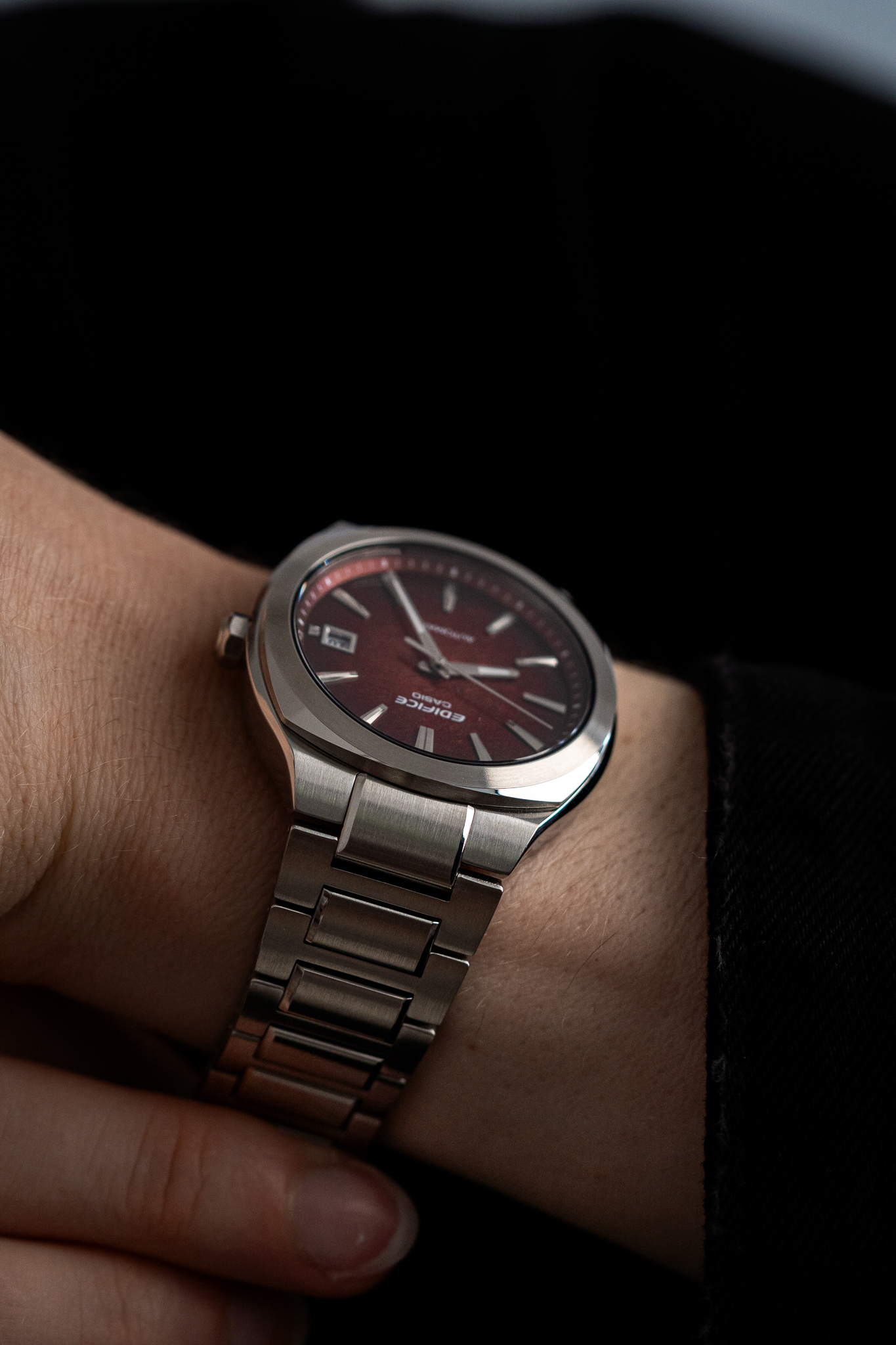
The dials are created using an electroplating process, which allows them to feature remarkable depth and unique surfaces. Depending on the specific model, they incorporate textures reminiscent of a crystalline effect, brushstrokes, a lacquered finish, or a subtle gradient color transition. The dial does not appear as a uniform expanse of color—its hue and texture shift slightly depending on the angle of the light. The result is a dynamic look that gives the watch a distinctive character while remaining elegant enough for any occasion.
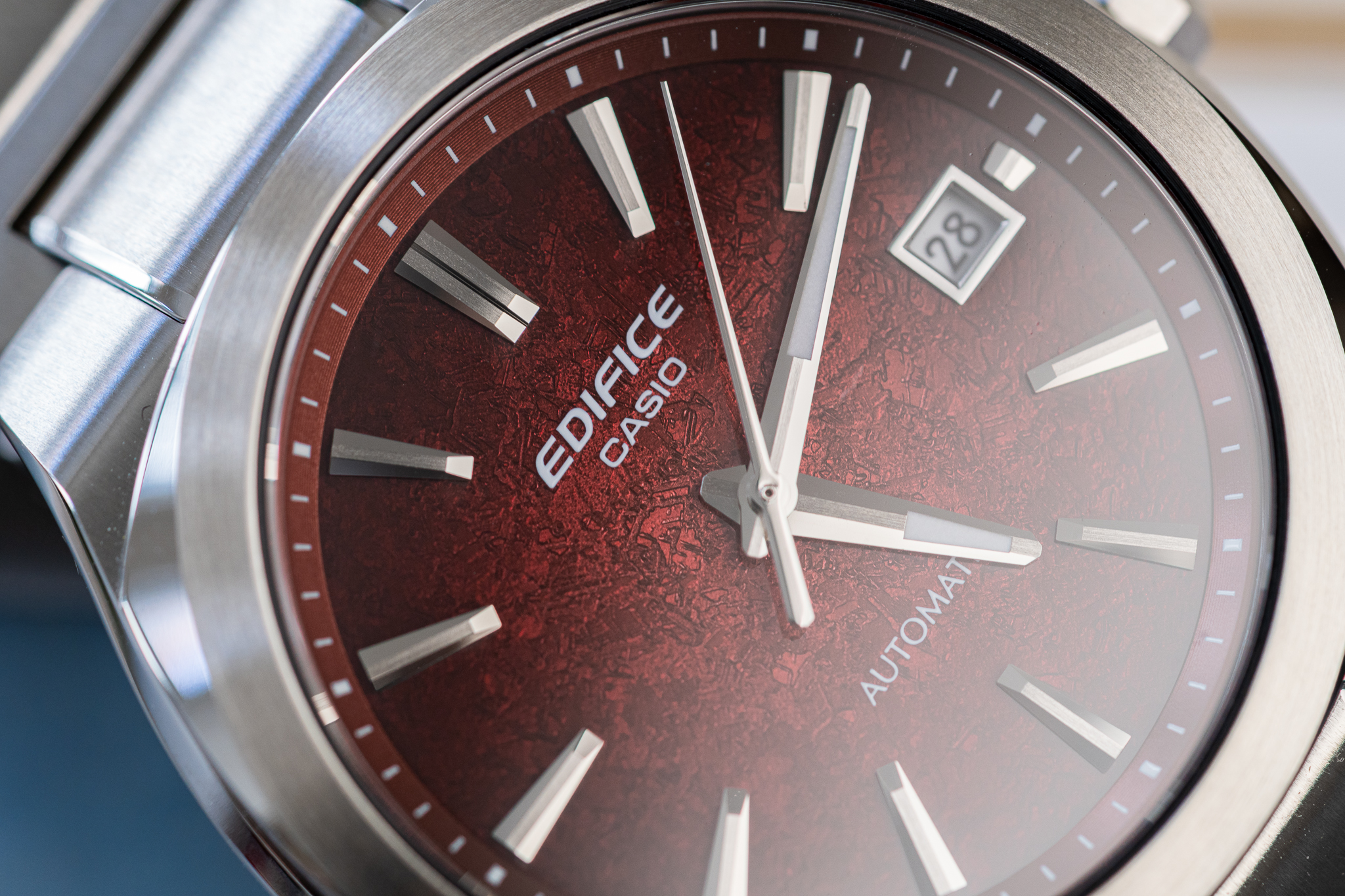
Casio adds applied hour markers with striking detailing, hands with a high-quality finish, a faceted bezel, and sharply defined case lines. The overall look is modern, technical, and surprisingly sophisticated. The sapphire crystal is not just a practical bonus, but an important feature that is still not a given in this price range. It ensures high scratch resistance and helps the watch maintain its appearance even after years of use.
Why did Casio choose a Miyota movement?
Some people might be surprised to learn that it doesn’t have its own movement inside. Casio opted for the tried-and-true Miyota 5766 automatic movement, manufactured by Citizen. The movement offers a power reserve of approximately 42 hours, automatic winding, and the option of manual winding.
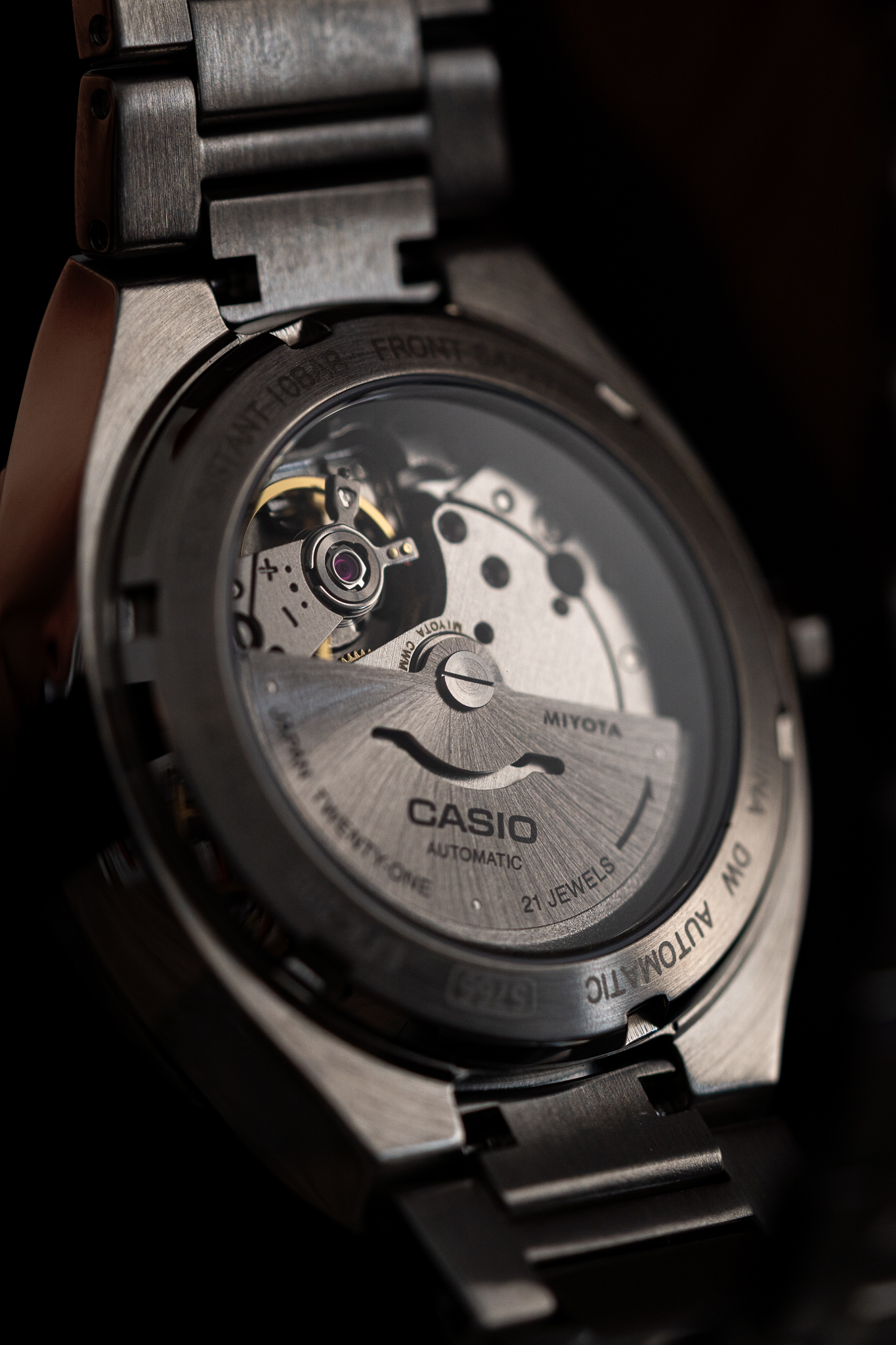
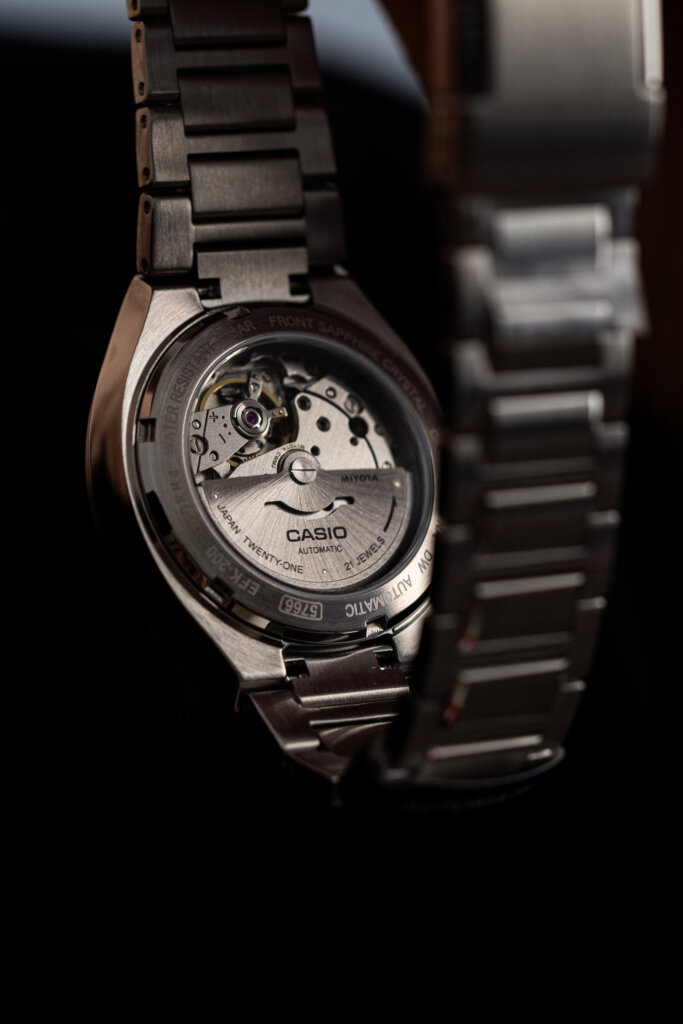
Above all, however, it is known for its reliability, affordable service, and time-tested design. The Japanese brand uses a Japanese movement from another Japanese manufacturer. No unnecessary ego. Just a sensible decision that makes sense both technically and economically.
Is the Edifice Automatic the ideal first mechanical watch?
Just a few years ago, small independent brands had one huge advantage. They were able to offer exactly what large manufacturers often couldn’t—a mechanical movement, sapphire crystal, high-quality craftsmanship, and an interesting design—at a price that was affordable for many customers. It was precisely this philosophy that gave rise to a whole range of microbrands.
Today, however, established players are also entering this space. And Casio is perhaps one of the most interesting examples. The Edifice Automatic line operates in a market where we commonly encounter popular models such as the Tissot PRX Powermatic 80 or the Citizen Tsuyosa, as well as dozens of smaller brands that attract customers with mechanical movements, original designs, and an excellent balance of price and features.
Casio isn’t some unknown manufacturer that has to convince customers that its watches are worth buying. The brand is backed by decades of experience, a global service network, and a reputation as a manufacturer that can offer reliability at a reasonable price. And that’s precisely where the strength of these watches lies. They don’t aim to outdo microbrands with originality. Their ambition is to offer a safe and confident first step into the world of mechanical watches. For someone who wants to experience the magic of an automatic movement for the first time, this is perhaps one of the most logical entry points on the market.
Anyone who has ever switched from a quartz watch to a mechanical one has faced the same questions. Will I enjoy wearing it every day? Will the lower accuracy bother me? What if I find out that a mechanical watch isn’t really for me?
This is exactly where the new Edifice models make the most sense. They don’t force you to compromise on build quality, they don’t cost an arm and a leg, and at the same time, they offer everything you’d expect from a modern automatic watch. If you get hooked on the world of mechanical watches, you’ll have a great stepping stone to more expensive models. If not, you’ll still have a very well-crafted, versatile watch.
Will we ever see an automatic G-Shock?
As soon as Casio showed that it was serious about mechanical watches, one question began to surface among fans: Will we ever see an automatic G-Shock? At first glance, it sounds like a collector’s dream come true. A mechanical G-Shock would bring together two watchmaking legends. But this is where physics gets in the way.
Mechanical movements are significantly more sensitive to shocks than quartz modules. Yet the entire G-Shock philosophy is based on extreme resistance to drops, vibrations, and overload. Developing a case that would sufficiently protect the rotor, flywheel, and escapement during typical G-Shock tests would be extremely challenging. Technically, it’s not impossible. There are mechanical watches with enhanced shock resistance, and modern materials are opening up new possibilities.
The question, however, is whether the result would still be a true G-Shock. A mechanical movement would bring greater sensitivity, higher maintenance costs, and lower accuracy—characteristics that G-Shock has actually been fighting against since its inception. Perhaps that is precisely why Casio’s current path is the right one. Mechanical watches belong to the more elegant Edifice line, while G-Shock remains true to the technology that made it a legend.
Verdict
If future generations of automatic Edifice watches continue in the same direction as the EFK-200D model, Casio may have found a segment where it can be just as successful as it is in the quartz watch market. And that’s news that both established manufacturers and microbrands will certainly not overlook.
Specifications
- Reference: EFK-200D-4AER
- dimensions: 38 x 11.9 x 43.5 mm
- Movement: Miyota 5766 automatic
- glass: sapphire
- Water resistance: 100 m





Comments
No one has commented on this article yet. Be the first.