

 Jan Kobilka
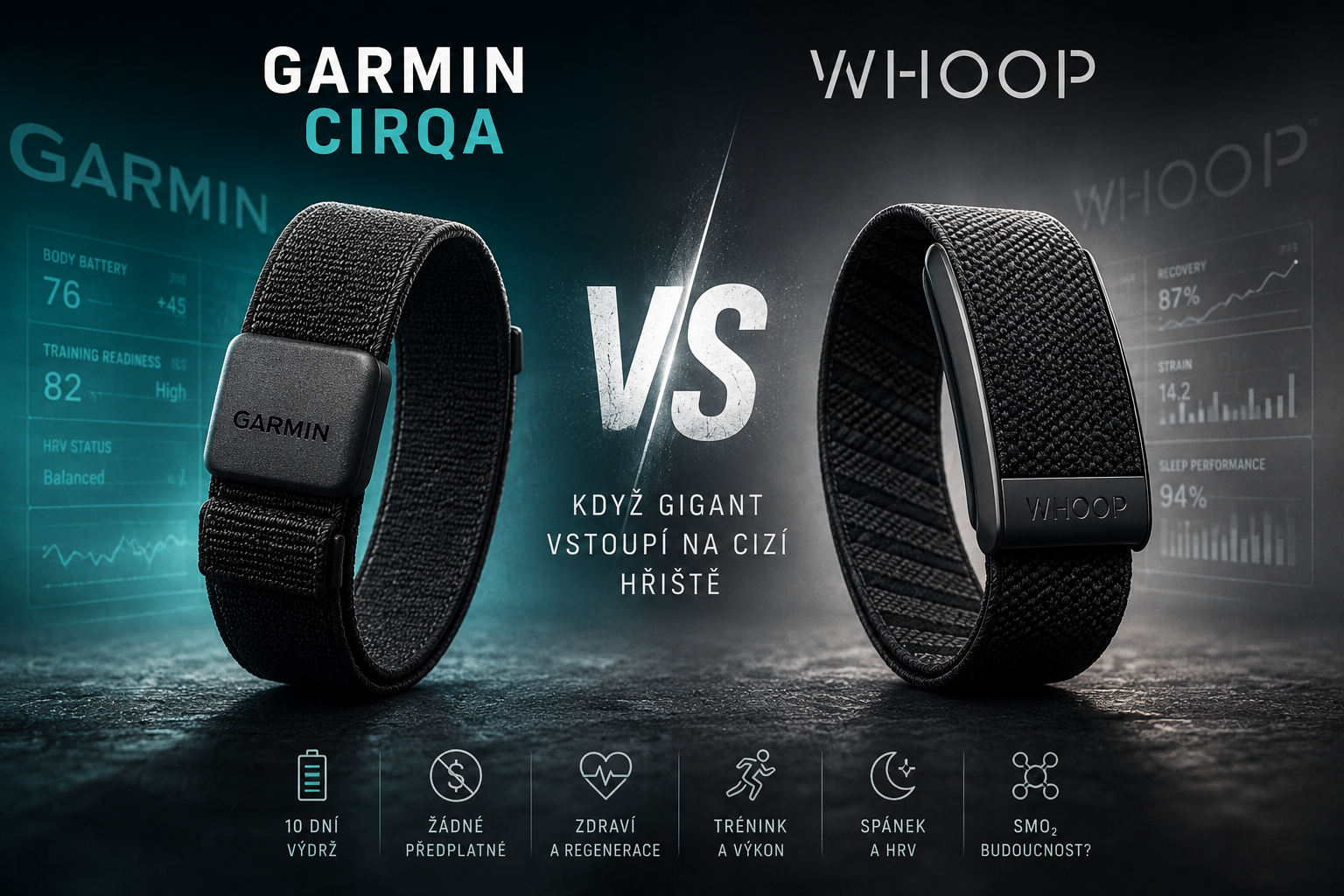
 Garmin entered the screenless fitness tracker market with the Cirqa and immediately drew comparisons to Whoop. Is this just a striking case of inspiration, or the beginning of a larger technological battle? We took a look not only at the similarities between the two products, but also at why the real battle is centered on the future measurement of muscle oxygenation (SmO₂), which could change the world of sports watches.
Or, a brief essay on what “inspiration” actually looks like in the watchmaking industry—and why the more interesting battle is taking place somewhere completely different from where everyone is looking.
Table of Contents
It’s a story that repeats itself in the tech industry with the precision of a Swiss watch: A specialized company creates a new product category, spends years refining it to perfection, and then a major player comes along with the same idea, a marketing budget a few orders of magnitude larger, and a form factor that looks as if it came off the same production line.
This time, it’s Garmin Cirqa versus Whoop. And it’s a great example of how the answer to a single question (“who copied whom”) can vary completely depending on whether you ask a lawyer, a historian, or a customer. Spoiler: By the time you finish reading, that question will have turned on its head.
Cirqa Takes the Stage
The Garmin Cirqa is a brand-new fitness tracker without a display. It costs 4,990 CZK, has a ten-day battery life, and requires no mandatory subscription. On paper, it looks like a well-thought-out, well-targeted move into territory that Whoop has so far defended with virtually no competition.
But then there was a detail that gave the whole thing the feel of a sitcom. Cirqa doesn’t use the latest Elevate Gen 5 sensor—the one found even in its cheaper sibling, the Garmin Index Sleep Monitor—but rather the older Gen 4, albeit with added skin temperature measurement. Unofficially, it’s already being called “Gen 4.1.” Garmin’s product manager justified this by citing the module’s thickness. Independent reviewers responded with a polite but clearly sarcastic “okay, if you say so,” since the aforementioned Index Sleep Monitor—which features the better sensor—is actually thinner. The more likely explanation, then, is price and battery life, not dimensions.
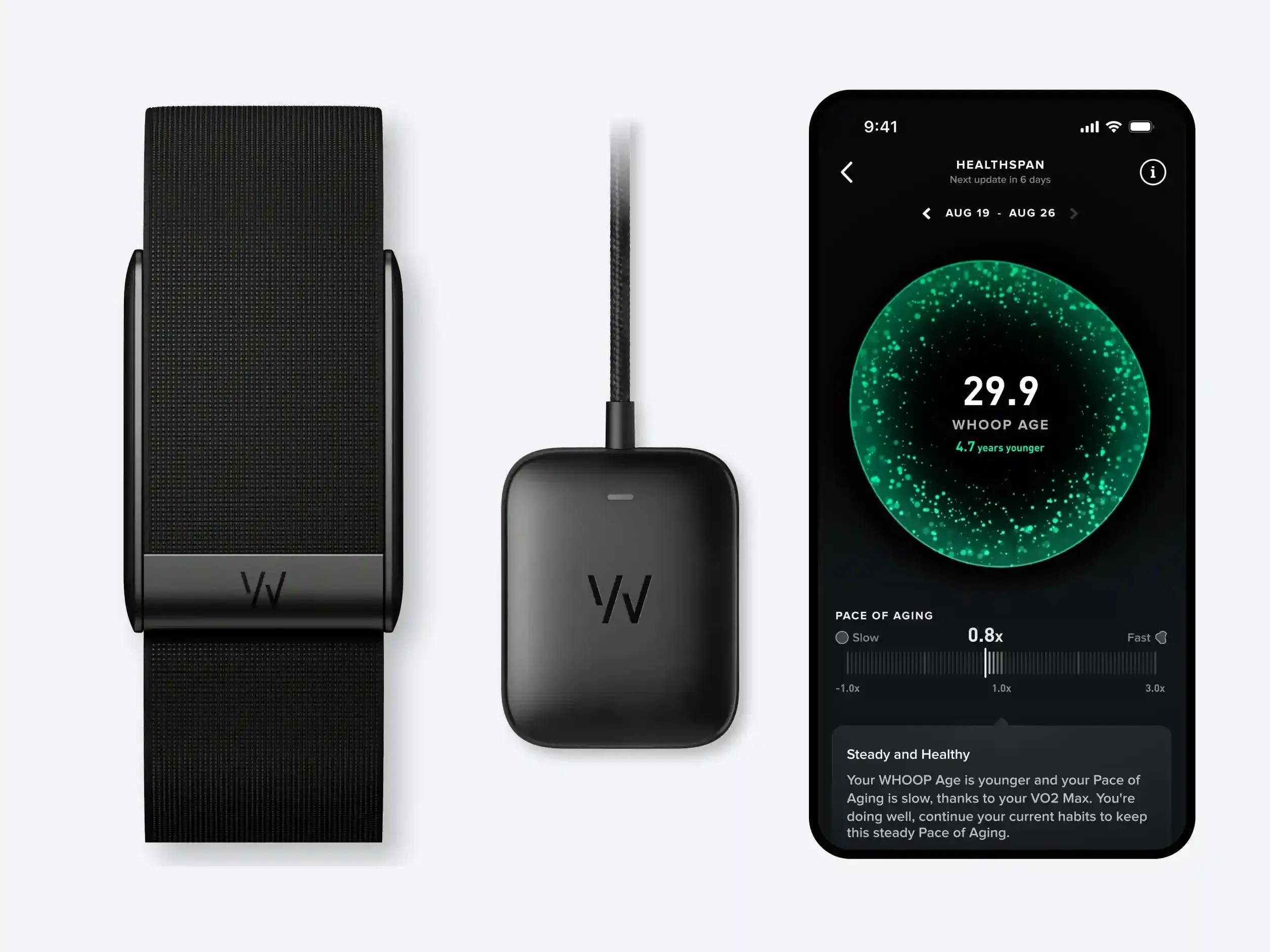
Add to that the form factor: a 24-mm-wide fabric strap, a Velcro fastener, and no display. The resemblance to Whoop is so striking that even an experienced gemologist wouldn’t be able to tell them apart on the street. This isn’t a dispute over antennas or patented methods of measuring respiration, where one could at least theoretically argue for engineering necessity. This is a visual resemblance that speaks for itself: Whoop created and popularized the category of display-less wellness bands; Cirqa arrives a few years later in a suspiciously similar guise.
The list of features is certainly impressive on paper: Body Battery, Training Readiness, HRV Status, Unified Training Status, watch connectivity, and Garmin Coach training plans. The question—one that only long-term independent testing will truly answer—is this: Will this wealth of features on paper work just as well in practice as they do on existing Garmin watches, or is this just a hastily cobbled-together fix for a form factor that Garmin has never tried before?
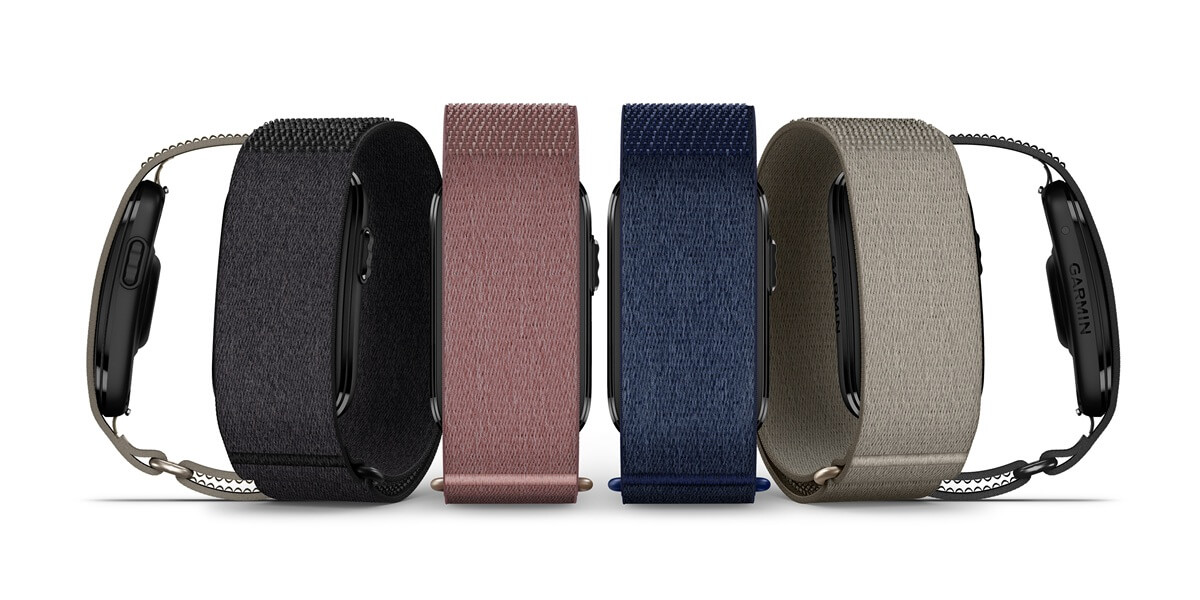
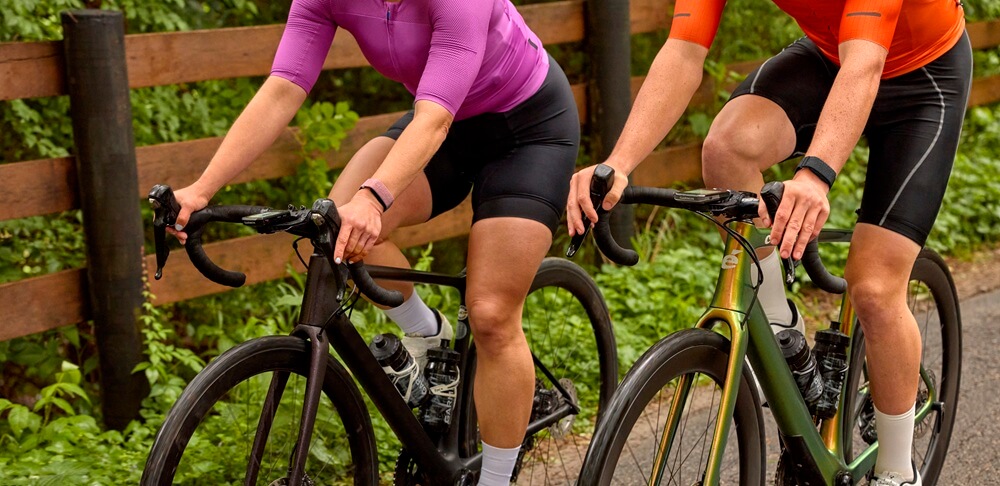
Moreover, Garmin’s own product manager has openly stated that it doesn’t make sense to wear Cirqu alongside a watch during a workout. Instead, it’s intended as a supplement for the rest of the day, while you use your watch for workouts. This is a different philosophy than Whoop, which aims to be your sole source of data 24/7, including during workouts. So, while it’s a “Whoop clone” in form, it doesn’t quite match Whoop’s philosophy of use.
Why Didn’t Garmin Use the Best It Has to Offer?
This naturally raises the question: if Garmin has a newer and better sensor sitting on the shelf, why didn’t it include it in a product designed to compete with a specialist in this very field?
The simplest answer is economic. The Elevate Gen 5 costs more and drains the battery faster, while the Cirqa is a band that costs just under five thousand and is supposed to last ten days. That’s a calculation, not physics, and Garmin just clumsily wrapped it up in an argument about thickness.
It’s worth noting, however, that one of the most vocal pre-launch theories suggested exactly the opposite: that the Cirqa would serve as a quiet, “soft” launch for an entirely new Gen 6 sensor ahead of its official debut in the Fenix. It sounded logical, had its supporters, and the product shattered that theory in a single afternoon. Inside is a Gen 4 with a thermometer. So much for speculation.
So the question remains: where has the flagship gone? The next Fenix still hasn’t been officially confirmed, and whether it will be a Gen 6 model is pure speculation. Until then, the old rule applies: a newly developed, expensive sensor with limited production capacity first appears in higher-priced products, not in the cheapest model in the lineup. Garmin’s behavior here is entirely predictable—it’s just that it doesn’t sound quite as good in a press release.
The fact that this launch generally didn’t go smoothly for Garmin is also suggested by the fact that the originally announced second-quarter 2026 window passed on June 30 without a single word, and the company made no comment on the delay.
The real—and less picturesque—difference between the two products lies elsewhere, however. Whoop has been refining its AI assistant for years, and it’s at the core of their user experience, while Garmin is likely planning a similar form of AI coaching for its next generation of flagship watches. This suggests that the Cirq won’t feature anything comparably mature just yet.
Meanwhile, deep within the code
And now for the interesting part. While the internet is busy comparing the Velcro fasteners on both wristbands, Garmin is quietly preparing something that has absolutely nothing to do with a wristband.
In April 2026, Garmin filed a trademark application for “Muscle Battery.” The description in the application refers to an algorithm that processes muscle oxygen saturation, marketed as an integral part of wearable trackers and smartwatches. And in July 2026, a teardown of the Garmin Connect app confirmed this: data entries for two biological markers—percent saturated hemoglobin and total hemoglobin concentration—were found in the code, each listed with average, minimum, and maximum values.
Translated into Czech: Garmin is planning to measure SmO₂, i.e., the oxygenation of a specific muscle.
And that’s in a whole different league from anything Garmin offers today. Body Battery is a modeled estimate derived from HRV—a smart extrapolation. SmO₂ is a direct physiological measurement taken at a specific location. A drop in muscle oxygen saturation signals the onset of muscle fatigue, so you could optimize rest periods between sets, fine-tune your pacing right at the limit, and monitor local muscle load instead of a whole-body average. Tracking minimums reveals the point of maximum muscle exhaustion, while maximums indicate the quality of recovery between intervals.
The shift from asking, “How am I feeling today?” to asking, “How is my left quadriceps doing right now?” is quite significant. And if the data were fed directly into existing algorithms—namely Body Battery, Training Readiness, and recommended recovery times—Garmin would gain a level of depth that no one in the mainstream currently has.
So, just put on the Cirqa 2 with the Muscle Battery on your wrist, and you’re all set, right?
Well, no.
A quick physics lesson that will decide the entire match
Here we need to talk about optics for a moment, because that’s what determines who can win this race and how.
The Elevate sensor emits three colors of light into the skin: green at around 530 nm for heart rate, plus red at roughly 660 nm and infrared at around 940 nm for Pulse Ox. The red and infrared LEDs were added in Gen 3 specifically for SpO₂. Oxygenated hemoglobin absorbs more infrared light and transmits more red light, while deoxygenated hemoglobin does the exact opposite, and the saturation level is calculated from the absorption ratio. Gen 5 teardowns reveal six green LEDs, two red or orange LEDs, and four photodiodes. As we know, Cirqa features Gen 4 plus a thermometer.
Why isn’t SmO₂ enough? For two reasons, and the second one is a deal-breaker.
First, a different method. SpO₂ measures the pulsatile component of the signal, thereby isolating arterial blood. SmO₂ requires a continuous signal from the entire tissue, as it is concerned with the balance between oxygen supply and consumption in the capillaries. NIRS for SmO₂ operates in the range of approximately 650 to 950 nm, with the main wavelengths being 760 nm (sensitive to deoxygenated hemoglobin) and 850 nm (sensitive to oxygenated hemoglobin), sometimes supplemented by 660 nm. Garmin simply doesn’t have these wavelengths on its wrist devices.
Second, and this is the more interesting part, is the geometry. The depth of light penetration is roughly half the distance between the source and the detector. The reference Moxy Monitor has detectors located 12.5 and 25 mm from the light source, giving it a penetration depth of about 12 mm. And generally speaking, a spacing of around 30 mm is needed to penetrate subcutaneous fat and reach the muscle. It is no coincidence that all functional consumer SmO₂ sensors—such as Moxy, NNOXX, Train.Red, and the now-defunct BSX—have independently arrived at the same form factor.
The wrist band has LEDs and photodiodes spaced a few millimeters apart. If you move it to your bicep, you’re still only measuring the skin and subcutaneous tissue—just in a different spot. Incidentally, this addresses the objection that both Whoop and Cirqa have straps long enough to be worn on the arm or thigh. They can be worn that way—and people do—but it’s for a better heart rate signal, not for depth. You can’t overcome the laws of physics with Velcro.
So Muscle Battery won’t be a feature of the wristband. It will be a separate optical module attached directly to a muscle—on a cyclist’s thigh, a runner’s calf or quadriceps, or a strength trainer’s arm—while the watch will serve as a display and data logger.
And now for the twist
Do you remember the point made in the first half of the article? That Whoop created the category and Garmin came along late with a similar product?
In the field of SmO₂, the opposite is true—and by a margin that is rarely mentioned.
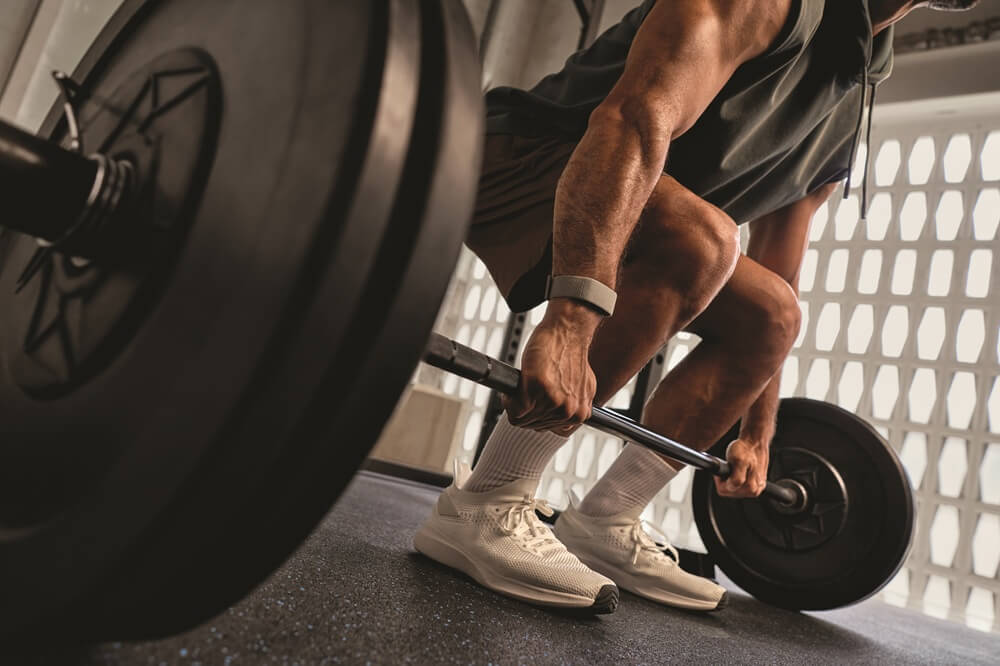
In April 2026—practically at the same time as Garmin’s trademark—Whoop was granted a patent for a NIRS wearable device with a pressure-sensing strap, designed specifically for the thigh, arm, or chest. In other words, not for the wrist. Whoop clearly understands the physics from the previous chapter just as well. The patent leaves open whether the company intends to repurpose the hardware from the existing band or build a dedicated sensor.
And the icing on the cake: the founding team of Humon is among the inventors. Humon Hex was one of two failed attempts to bring SmO₂ to the public, and Whoop acquired its assets and personnel back in 2020. Humon co-founder and CTO Daniel Wiese is now the director of development at Whoop.
So while Garmin is copying the form factor, Whoop has quietly been building up its expertise in this category for six years—a category Garmin is only now preparing to enter. Both companies are arriving at the same conclusion: a dedicated module attached to a muscle, a watch, or a strap that serves as a display. And what will matter isn’t who gets there first, but who can turn it into a metric that the average user will understand. Because SmO₂ is notoriously difficult to interpret. It doesn’t rise neatly with exertion like heart rate or power; its value only makes sense in the context of the absolute level, the direction of change, and the type of exertion. That’s exactly why Humon and BSX went under. Whoever can translate this into a single, easy-to-understand number with a green and red bar will win.
By the way, Garmin is also working with wavelengths on the wrist, but in a different direction. One of its patents describes SpO₂ measurement using three wavelengths—an infrared LED at 940 nm and two red LEDs at 630 and 660 nm—where two simultaneous measurements are compared for accuracy. This is a refinement of the existing technology, not a step into uncharted territory.
How long will Whoop maintain its lead?
This brings us to a question for which no one has hard data—only a framework for consideration.
One argument in favor of the “Whoop will pull ahead” thesis is that it’s a pure-play company whose entire business is built on providing the best recovery and strain diagnostics on the market. Garmin has dozens of product lines, and Cirqa is just one of many; therefore, it may not devote the same development priority to it as Whoop does to its sole product. And as we’ve seen, when it comes to SmO₂, Whoop is sitting on acquired know-how for the entire category.
The budget supports the opposite argument. Garmin has incomparably greater resources for development, a massive database of millions of existing users, and many years of experience with sensors. Historically, companies with a broader portfolio have eventually caught up with hardware specialists, even if it took them a few generations. In the case of Suunto versus Garmin, it took roughly three to five years for the differences to disappear. And most importantly: Garmin has an ecosystem into which a new metric can be integrated. A standalone number for muscle oxygenation is a puzzle for most people. The same number incorporated into Training Readiness, however, is already useful advice.
Realistically speaking, the first version of Cirqa probably won’t be on par with Whoop in terms of software. But the question of “how many generations behind” remains open. Cirqa 2 may come with a more refined interface and deeper integration, and in the meantime, Whoop won’t just sit idly by and rest on its lead. That’s just how a competitive market works: no one can maintain their position in the long run simply by being first, but the challenger also needs more than one generation to truly close the gap.
Summary
Cirqa is a fascinating case study of what happens when a giant enters a playing field created by a specialist. Strikingly similar in form, slightly different in philosophy, and with software depth yet to be tested.
But the truly interesting battle is taking place one level down, beneath the skin, in the capillaries of the quadriceps, where neither company has a working product yet—and both already have the paperwork. And there, it turns out that the “specialist versus giant” label doesn’t fit as neatly as the photos of two similar bands might suggest. The only thing that can be reliably predicted is that independent tests—not press releases or trademark applications—will determine the winner.
How is the Garmin Cirqa different from the Whoop?
The biggest difference lies in the business model and usage philosophy. Garmin Cirqa operates without a monthly subscription and is primarily intended as a complement to Garmin sports watches. Whoop, on the other hand, is designed as a standalone device for continuous health data tracking.
What does "Muscle Battery" mean?
“Muscle Battery” is the name of a trademark registered by Garmin. According to available information, it may be related to future measurements of muscle oxygenation (SmO₂), but Garmin has not yet officially unveiled any final product or feature.
What is SmO₂?
SmO₂ (muscle oxygen saturation) indicates the oxygenation of muscle tissue. Unlike SpO₂, which measures oxygen saturation in the blood, SmO₂ provides information on how a specific muscle utilizes oxygen during exercise and recovery.


Comments
No one has commented on this article yet. Be the first.