

 Patrik Zdvíhal
 In the first part, we showed that the Jaeger-LeCoultre Master Compressor Navy SEALs collection wasn’t just a single model, but a well-thought-out family of sports watches. Now it’s time to look at the rarest references. We’ll cover the Geographic, Automatic, and boutique limited editions, as well as the reason why the entire collection disappeared from the lineup after a few years. The story of one of the least-known chapters in Jaeger-LeCoultre’s modern history continues.
Table of Contents
The Diving Alarm followed in the footsteps of the famous Memovox models. The Chronograph GMT became the technological flagship of the entire line. But the story was far from over. On the contrary. Right now, we’re turning our attention to the models that are talked about the least. And perhaps that’s why they’re the most interesting to collectors today.
➡️ Did you miss the first installment? Start by going back to the story of how the Master Compressor collection came to be, the partnership with the Navy SEALs, and the Diving Alarm and Chronograph GMT models.
Master Compressor Diving Pro for Geographic Navy SEALs
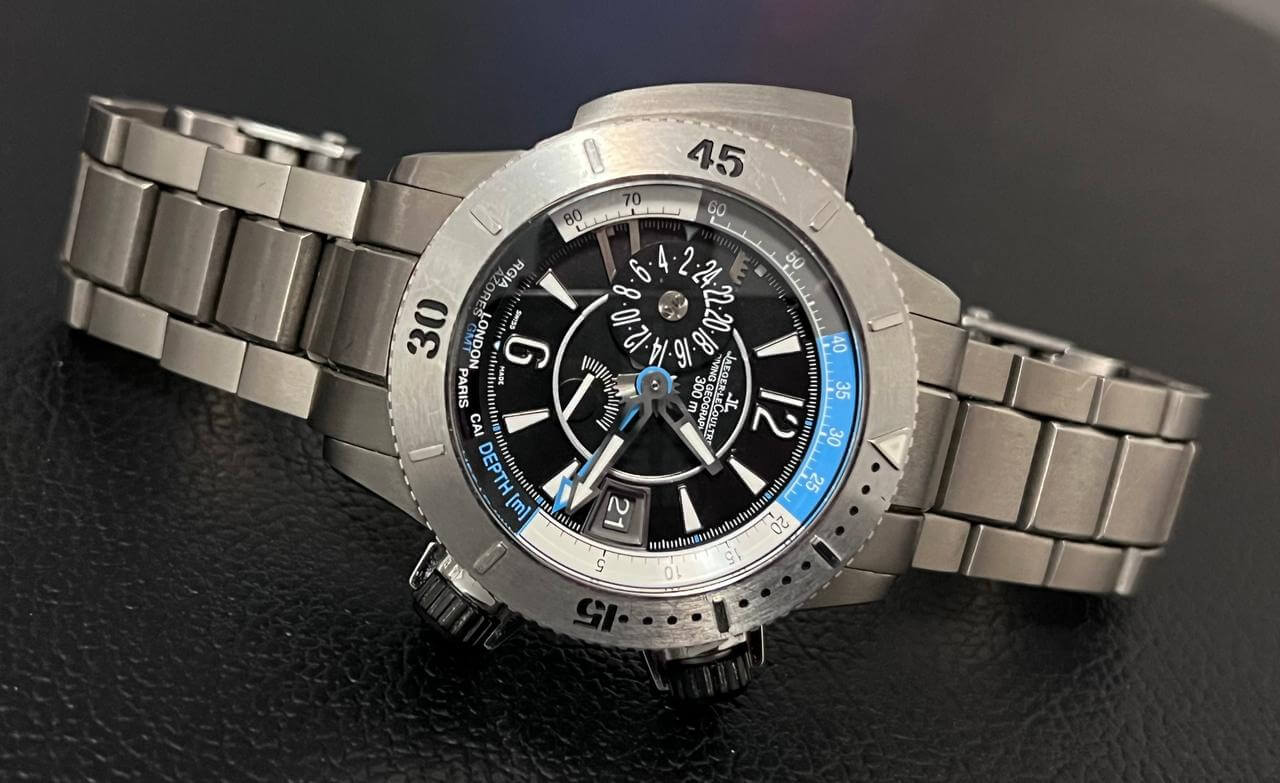
At first glance, the Pro Geographic looks almost identical to the Chronograph GMT. It shares the same robust 46.3-mm case, titanium construction, the distinctive Compressor Key crowns, and a distinctly technical look. But beneath the dial lies a completely different philosophy.
While most manufacturers would opt for another chronograph or a simpler three-hand design for professional diving watches, Jaeger-LeCoultre did something uniquely its own. It took a complication that it had perfected in its elegant models and brought it into the world of professional sports watches. The result was the Geographic complication.
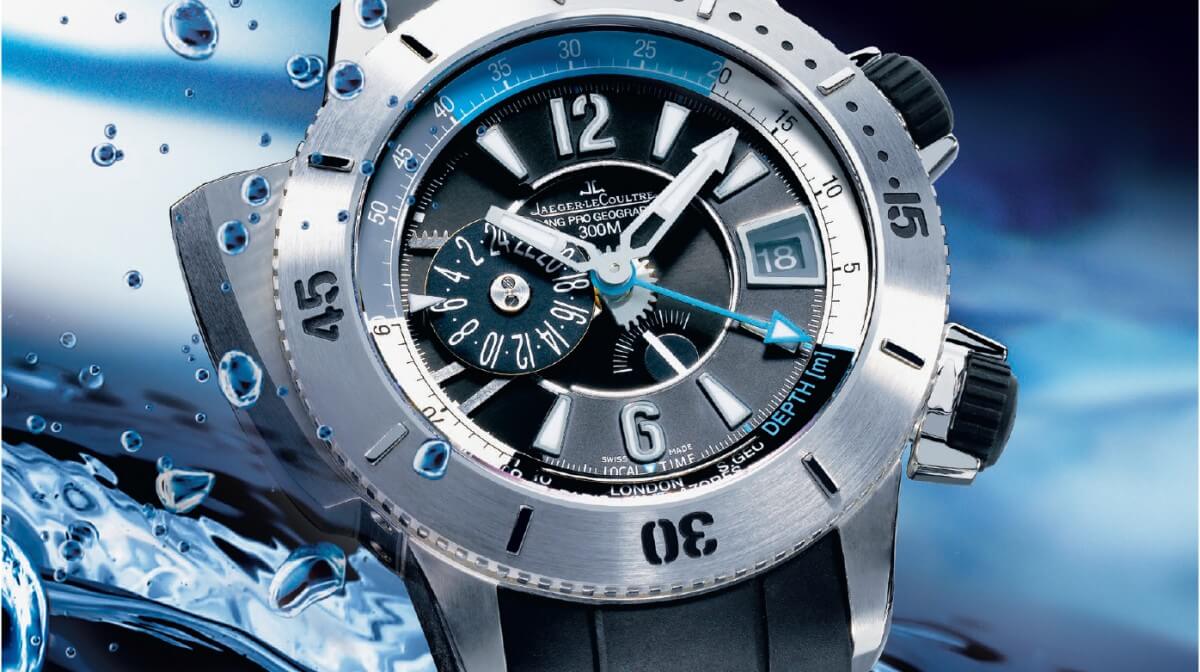
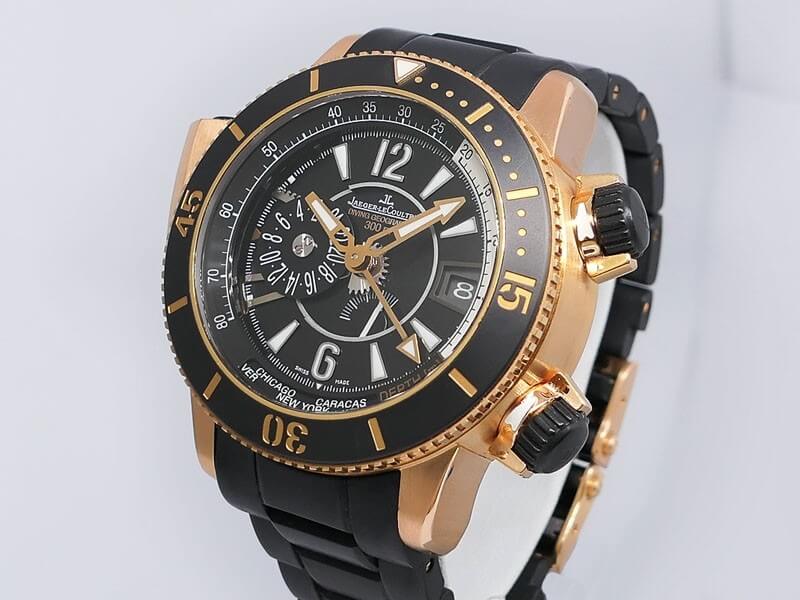
This isn’t a traditional world time function, as we know it from brands such as Patek Philippe or Vacheron Constantin. The Jaeger-LeCoultre system works differently. At the bottom of the dial is a rotating disc with the names of cities around the world. When a specific location is selected, the corresponding time in that time zone appears on a separate subdial, while the main hands continue to show local time. It’s an elegant, intuitive, and above all, very practical solution. It doesn’t clutter the dial with dozens of pieces of information, but provides exactly what most travelers actually need.
And this is precisely where Jaeger-LeCoultre’s distinct philosophy becomes apparent. Rolex would likely have opted for a GMT model. Omega would have offered another Seamaster variant. Jaeger-LeCoultre, however, drew on a complication that had long been one of the manufacture’s hallmarks. Instead of copying the competition, it reminded the world that even sports watches can bear the distinctive hallmark of fine watchmaking.
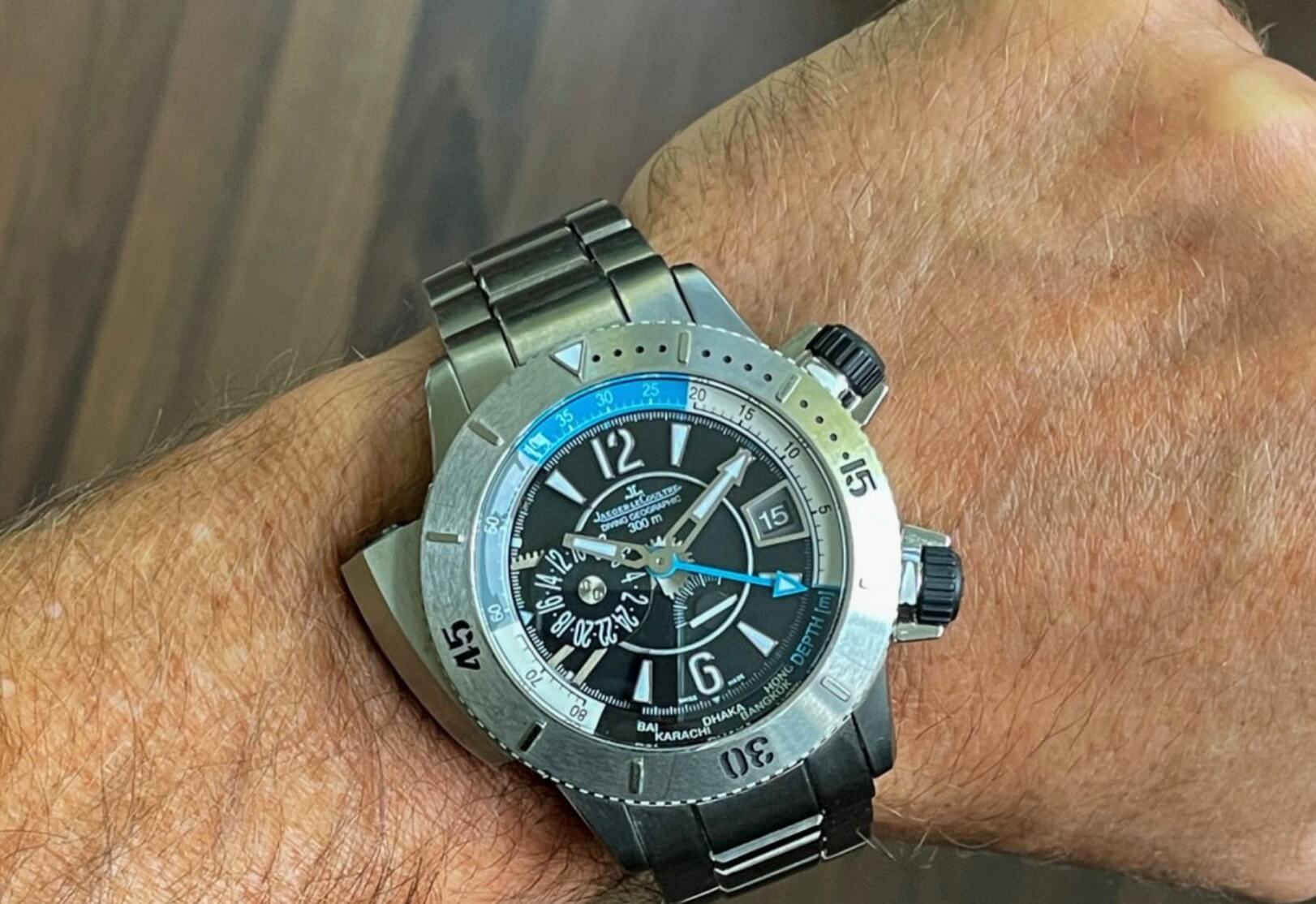
Inside was the in-house Caliber 979, which was among the most technically interesting movements in the entire Master Compressor line. It featured automatic winding, a date display, the Geographic complication for displaying a second time zone, and a depth gauge—yet it remained exceptionally easy to read. This, in fact, applies to the entire Navy SEALs collection. Despite its many functions, it never looked cluttered. The dials remained legible, high-contrast, and designed primarily for quick reading.
Compared to the Diving Alarm or Automatic models, the Pro Geographic appears only sporadically on the secondary market. Jaeger-LeCoultre has never disclosed exact production figures, so it is impossible to say whether production was lower or whether it is simply a model that owners tend to keep longer.
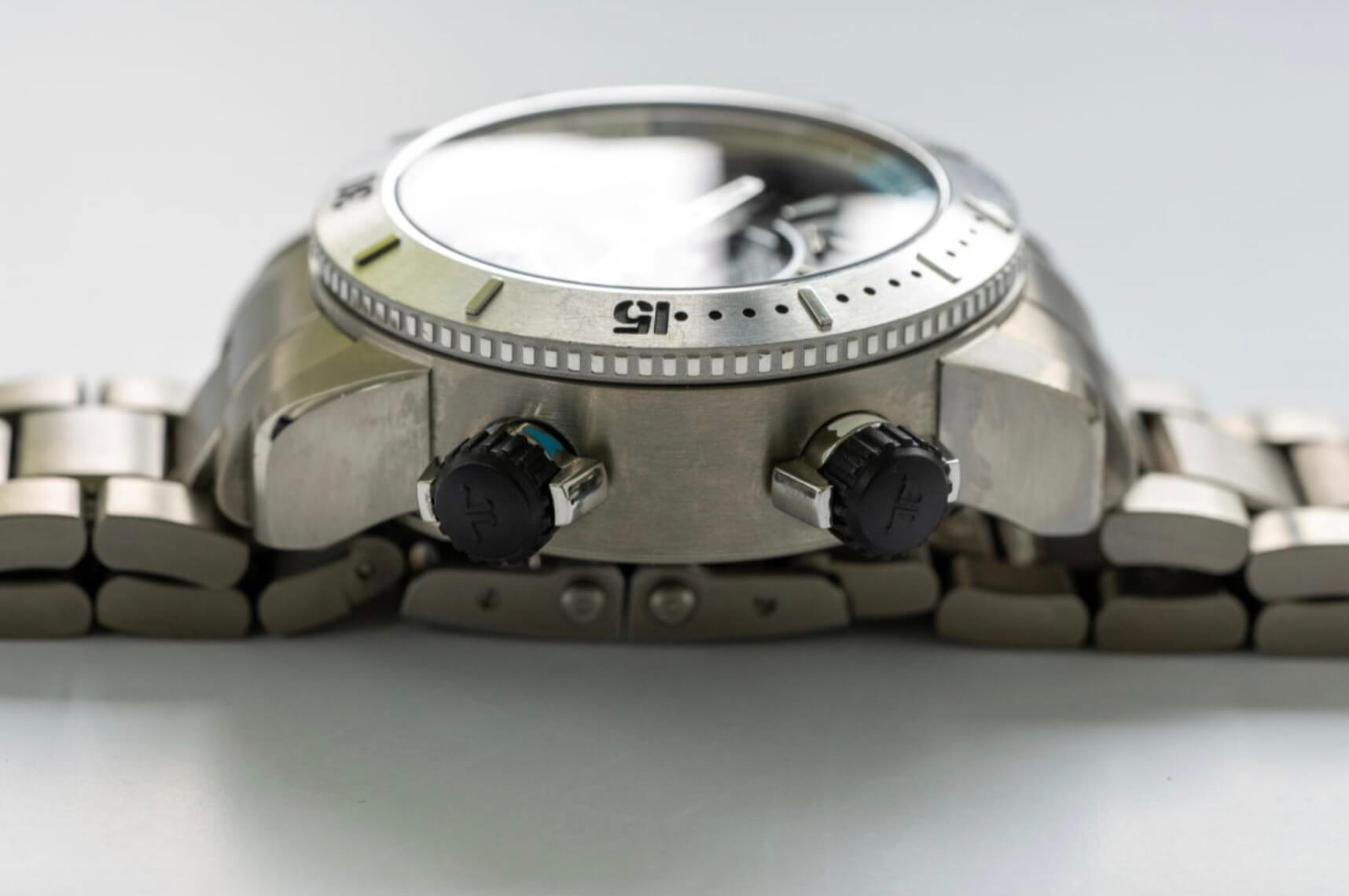
It’s a curious paradox. A model that was perhaps the least striking at its launch now clearly illustrates what set Jaeger-LeCoultre apart from most of its competitors. It wasn’t afraid to combine the world of professional instrument watches with complications that we would otherwise expect to find in elegant travel watches.
Gold watches for the Navy SEALs?
At first glance, this sounds like a contradiction. Nevertheless, Jaeger-LeCoultre has also introduced the Master Compressor Diving Pro Geographic Navy SEALs model in an 18-karat rose gold case. This limited edition of just 300 pieces combines a luxurious material with professional features, including a mechanical depth gauge, the Geographic complication, and water resistance to 300 meters. This watch was not intended for members of the unit, but rather to demonstrate that even a sports collection inspired by the Navy SEALs can represent the pinnacle of watchmaking artistry.
Master Compressor Diving Automatic Navy SEALs
When Jaeger-LeCoultre unveiled the Master Compressor Diving Automatic Navy SEALs model a year later, it might have seemed like a step backward. In reality, it was exactly the opposite.
Following the technically complex models came watches that best embodied everyday practicality within the entire collection. No chronograph, no alarm, and no Geographic complications. Just the time, the date, and everything that made the Master Compressor line exceptional. The case diameter was reduced to 42 mm. Suddenly, there was a watch that looked more balanced—not just on paper, but especially on the wrist. It retained the titanium case, ceramic bezel, Compressor Key system, and 300-meter water resistance. But something perhaps even more important was added—versatility.
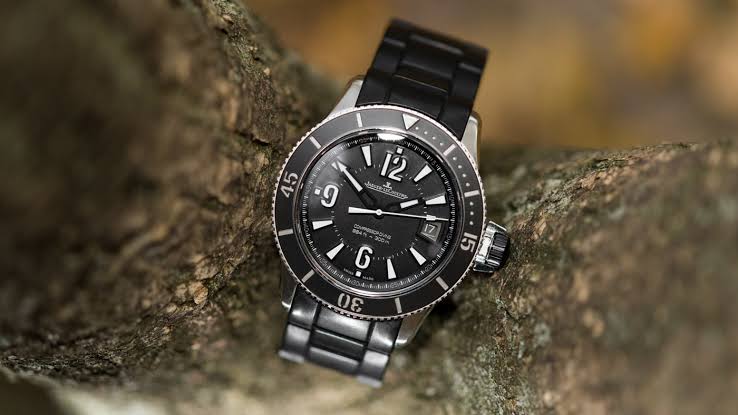
➡️ Tip. The 42-mm Automatic model is often considered the most versatile of the Navy SEALs watches. It embodies the same philosophy as its larger counterparts, but in a significantly more practical package. It’s therefore no surprise that this particular model is the one most frequently found on the secondary market.
Inside was the in-house Caliber 899, one of Jaeger-LeCoultre’s most reliable automatic movements. Its design was simpler than that of other models, which is precisely why it is often considered the ideal choice for everyday wear.
One of the most interesting details of the Automatic model was the bracelet. Jaeger-LeCoultre offered what it called an “articulated rubber bracelet”—a rubber bracelet whose individual segments mimicked the construction of a classic metal bracelet. It wasn’t just a design gimmick. Thanks to its movable links, the bracelet adapted perfectly to the wrist, retained the comfort of rubber, and at the same time looked much more luxurious than standard rubber straps. Combined with the butterfly clasp, it was one of the most ingenious solutions of its time.
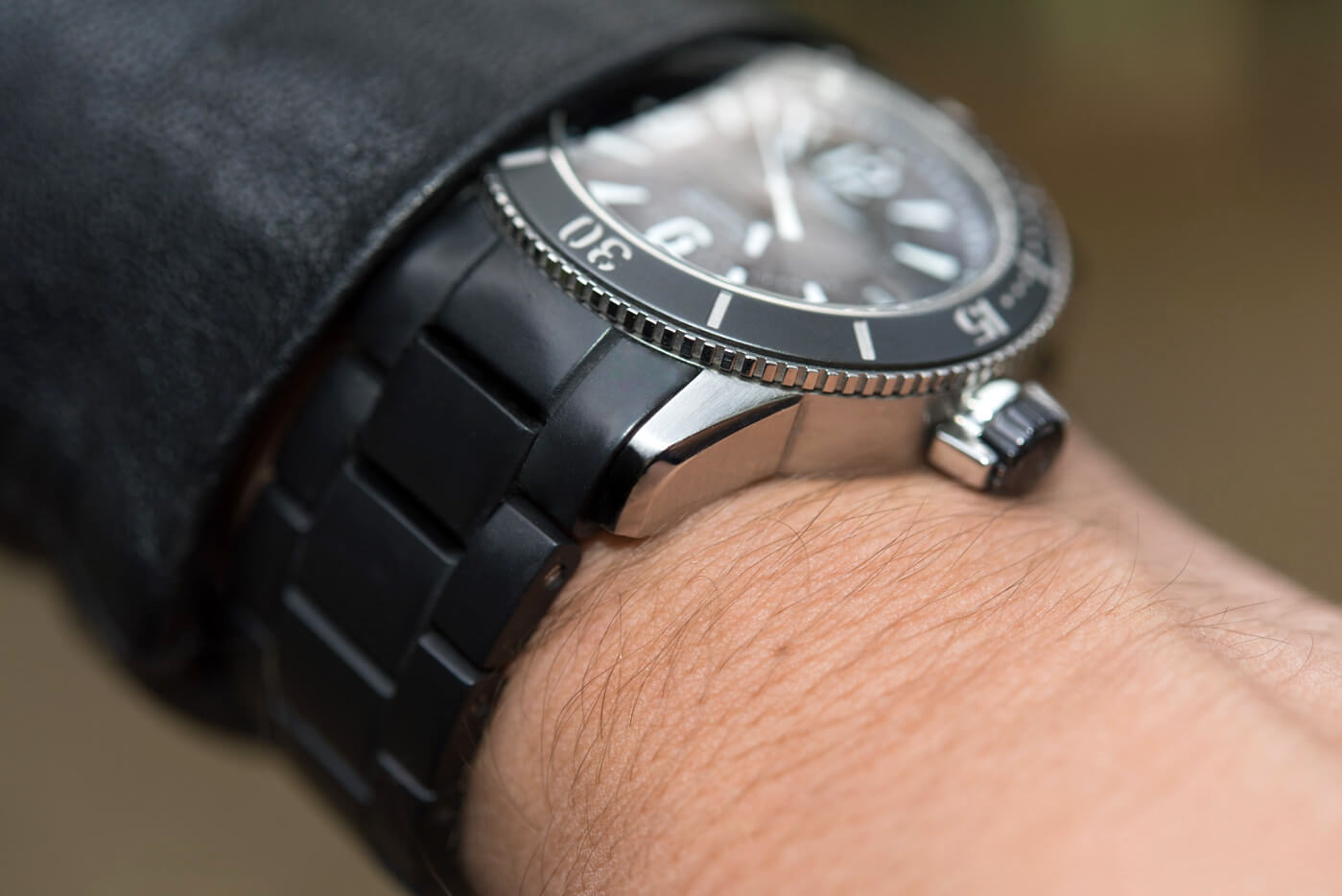
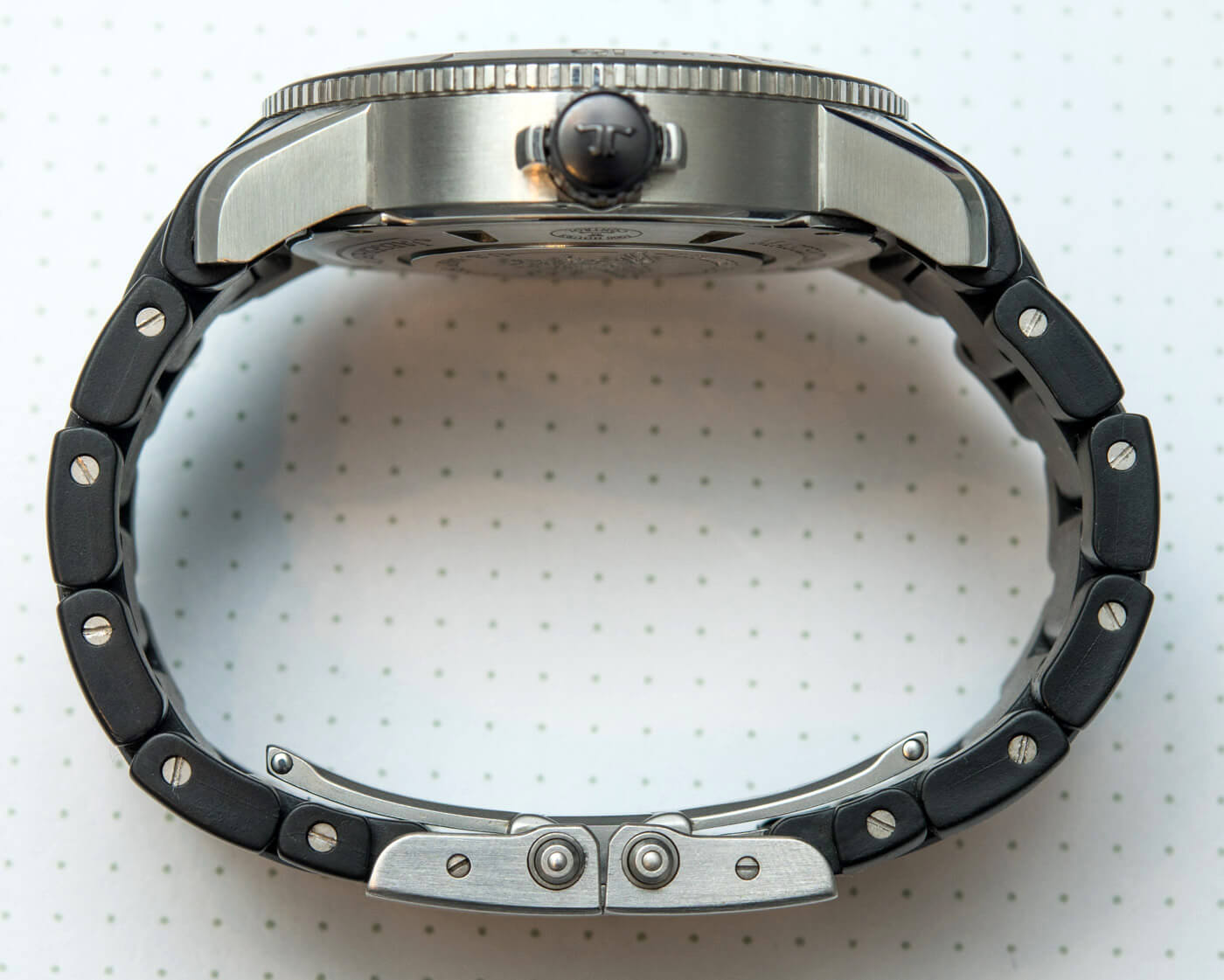
It’s no coincidence that the Automatic is currently the model that appears most frequently on the secondary market. That doesn’t mean it’s any less interesting. Quite the opposite, in fact. For many collectors, it represents the best entry point into the world of the Navy SEALs. It offers everything essential—a distinctive design, top-notch craftsmanship, and a connection to one of the most fascinating chapters in Jaeger-LeCoultre’s modern history—but in a form that doesn’t seem as extreme as its larger and more complicated siblings.
Master Compressor Diving Alarm Navy SEALs Incursion Edition
If you thought the story of the Navy SEALs collection ended with the four basic models, you’re in for a surprise.
Jaeger-LeCoultre has also produced several exceptionally rare editions about which very little is known to this day. They were not produced for the global market or for the standard distribution network. They were intended for a specific boutique or a single market, and their production numbers were so low that they appear at auctions only very rarely today. The best known of these is undoubtedly the Incursion Edition.
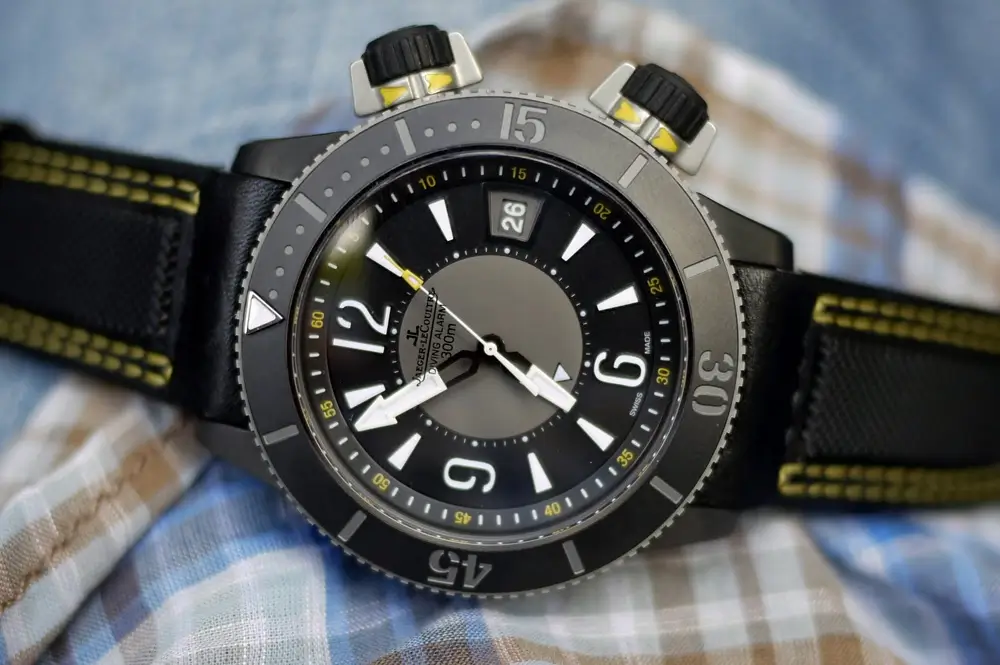
These watches differed from the standard Master Compressor Diving Alarm Navy SEALs model primarily in their dark case finish and even more tactical appearance. However, these were not merely cosmetic changes. These watches were designed exclusively for the Jaeger-LeCoultre boutique in Beverly Hills, and their production numbers are among the lowest in the brand’s modern history.
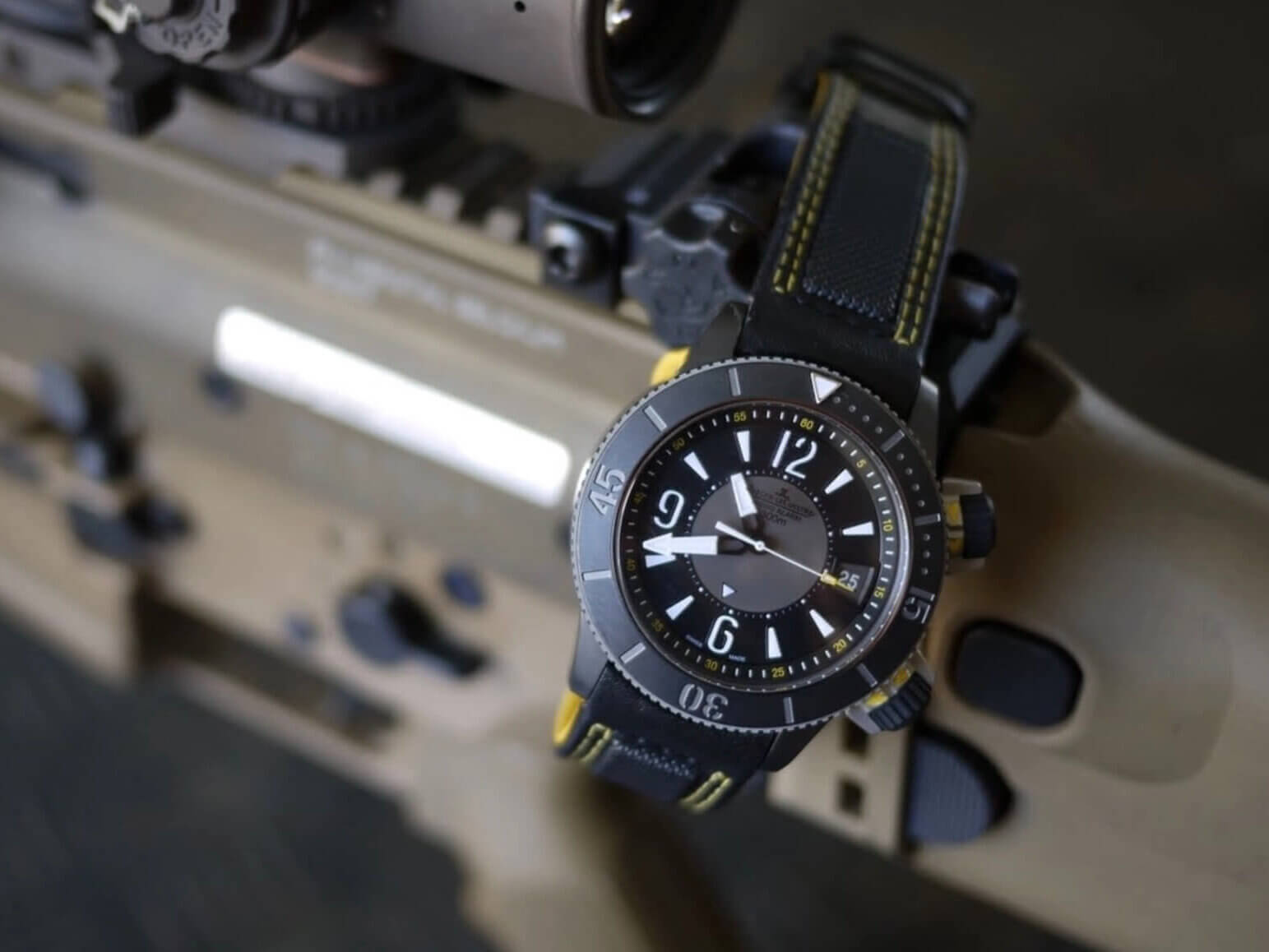
➡️ Did you know? Only 81 pieces of the Incursion Boutique Edition were produced. The number wasn’t chosen at random. It symbolically refers to the year 1962, when the U.S. Navy SEALs were officially founded. It is one of the most ingenious details of the entire collection and, at the same time, one of the rarest modern limited editions from Jaeger-LeCoultre.
A total of only 81 pieces were produced, divided into two distinctly different versions. The first was a limited edition of 62 watches featuring a titanium case with a matte dark gray PVD finish, a gray inner alarm ring, and contrasting yellow accents.
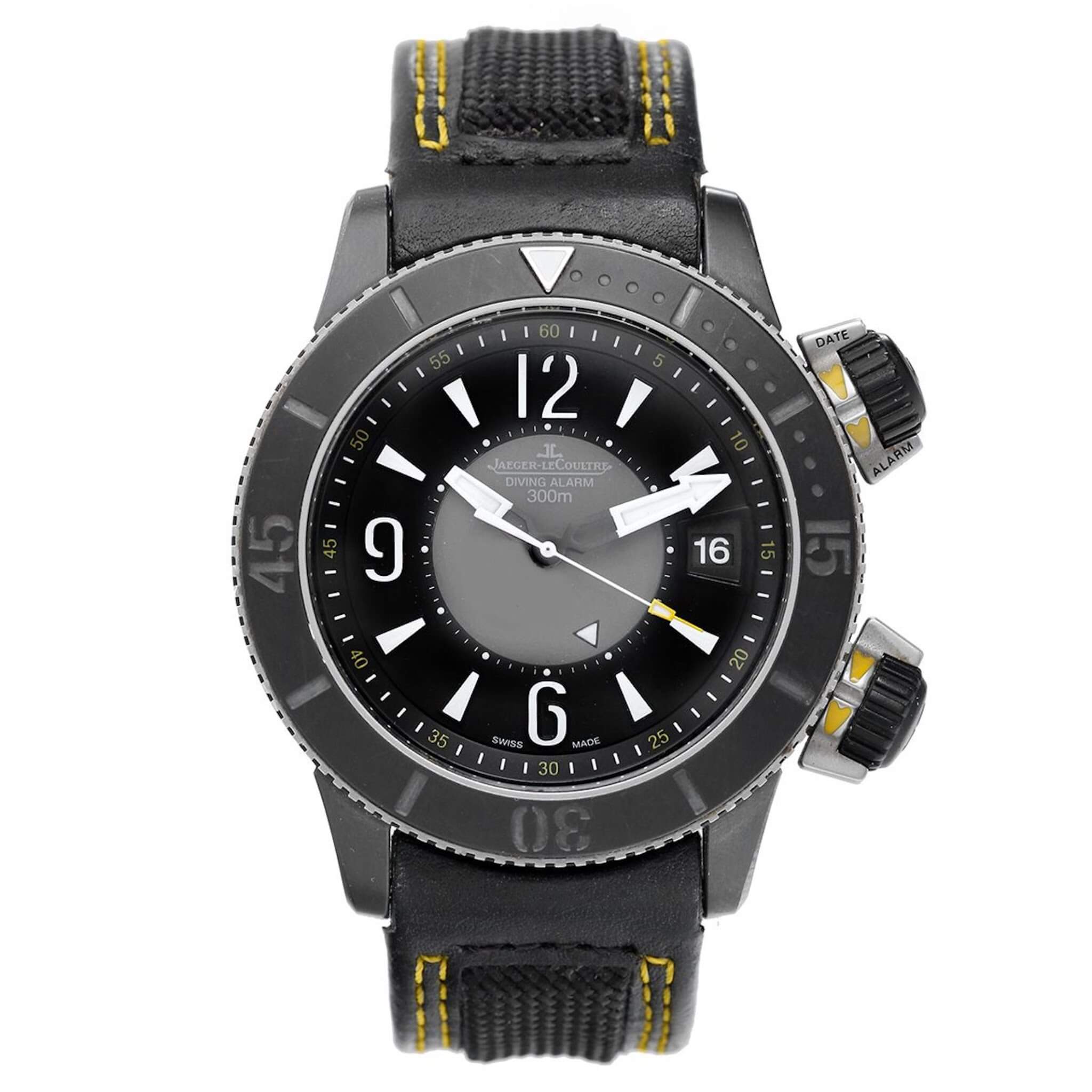
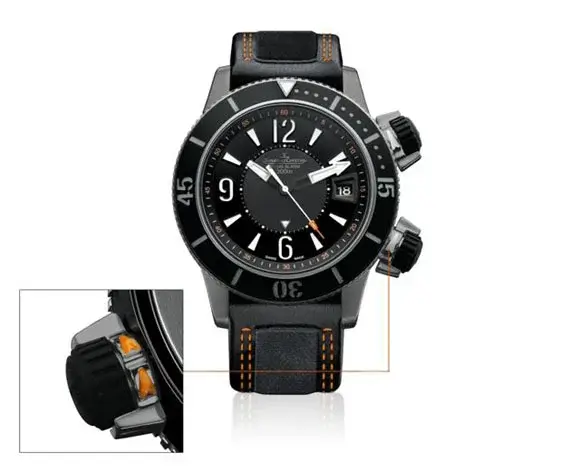
The second was an exceptionally exclusive edition of just 19 pieces crafted from 18-karat Black Gold—a material that Jaeger-LeCoultre used for the very first time. This version featured a solid black dial and orange accents that emphasized its even more “tactical” character. The division into 62 and 19 pieces was no coincidence. Together, they form the number 1962—the year the U.S. Navy SEALs were founded—and beautifully demonstrate the care with which the brand considered even the seemingly smallest details.
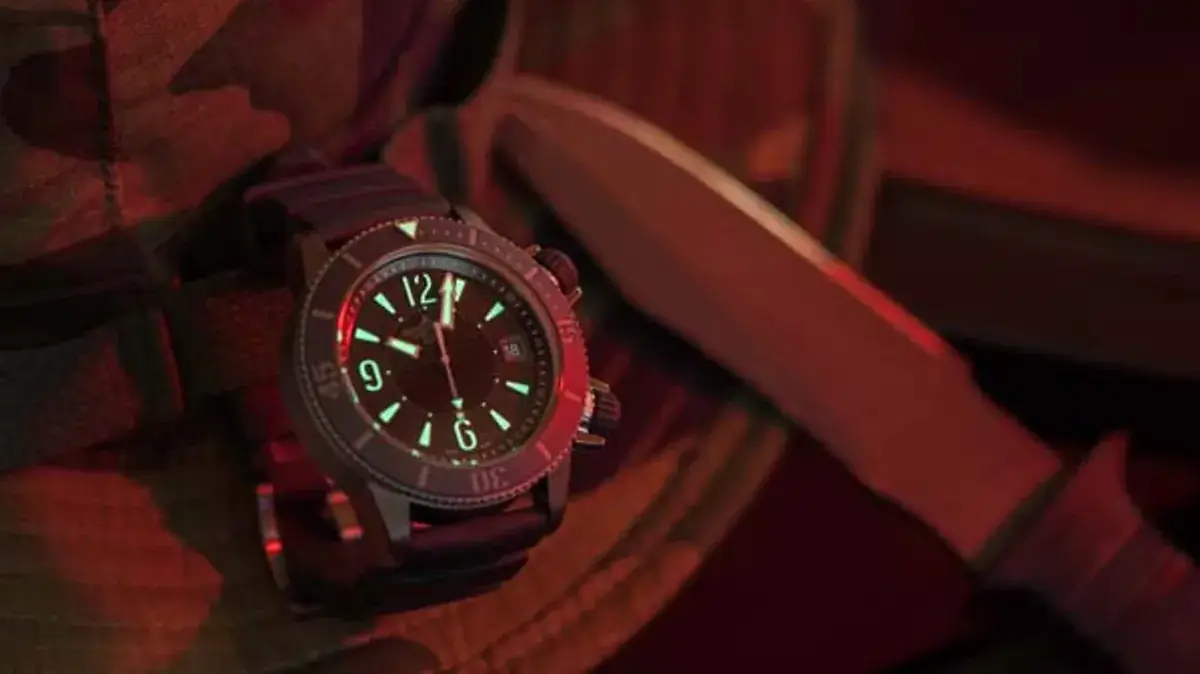
Today, these boutique editions are considered among the brand’s rarest modern sports watches. They appear on the market only very rarely, and most collectors are familiar with them more from archival photographs than from seeing them in person.
Why did the mission end?
Looking at the entire collection, a logical question arises. Why did Jaeger-LeCoultre discontinue a project in which it had invested so much development effort after just a few years? Surprisingly, there is no clear-cut answer to this question.
The manufacturer never issued a statement explaining the end of its partnership with the Navy SEALs or the discontinuation of the entire Master Compressor line. But when we look at the brand’s evolution in the years that followed, it all starts to make sense. After 2013, Jaeger-LeCoultre gradually returned to its greatest strengths. The Reverso models, the Master collection, and increasingly daring high complications once again took center stage. The sporty Master Compressor line slowly disappeared from the catalogs, and a few years later, a new generation of Polaris models took its place.
It was a shift in philosophy. The Master Compressor had a robust, technical, and perhaps even uncompromising feel. Polaris, on the other hand, draws more on the historical legacy of the 1960s and aims to appeal to a broader customer base. It is more elegant, more versatile, and fits better with Jaeger-LeCoultre’s current identity. That does not mean, however, that the Master Compressor represents a dead-end in the brand’s evolution.
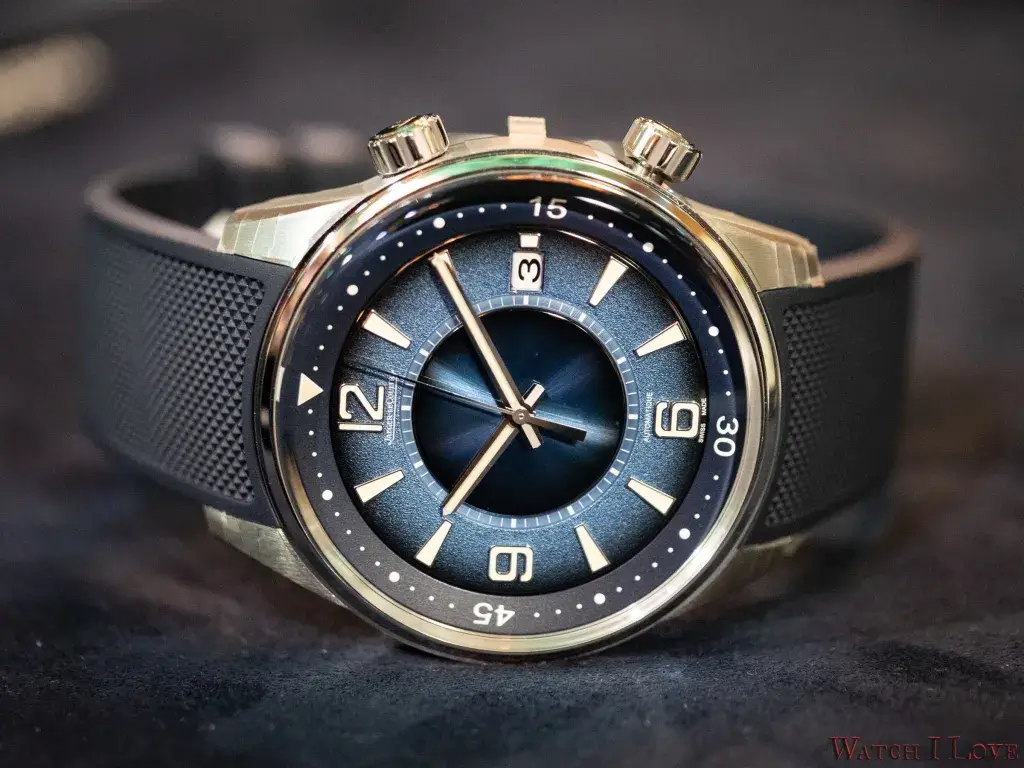
It demonstrated that the manufacturer, known primarily for its intricate dress watches, is also capable of designing exceptionally capable professional timepieces. It wasn’t afraid to experiment with materials, proprietary technical solutions, or complications that seemed unusual for diver’s watches.
With the passage of time, it no longer seems like a marketing experiment, but rather a reminder of a period when Jaeger-LeCoultre sought to push the boundaries of what we even consider a luxury sports watch. They didn’t achieve iconic status like the Reverso. They didn’t sell in the same numbers as the Polaris. And they never became a symbol of the brand. Yet they represent one of the boldest chapters in Jaeger-LeCoultre’s modern history.
Epilogue: The Forgotten Mission Accomplished
When people hear the name Jaeger-LeCoultre today, most enthusiasts think of the Reverso, the Master Ultra Thin, or one of the brand’s breathtaking high-complication watches. But very few people remember the period when the manufacture decided to prove that it could also build some of the most ambitious sports watches of its time.
That’s why the Master Compressor Navy SEALs collection is so fascinating. It didn’t redefine the history of diving watches like the Rolex Submariner. It didn’t sell in the millions like the Omega Seamaster. And it didn’t become a brand icon like the Reverso remains to this day. Yet it represents something that is perhaps even more characteristic of Jaeger-LeCoultre: the courage to forge its own path.
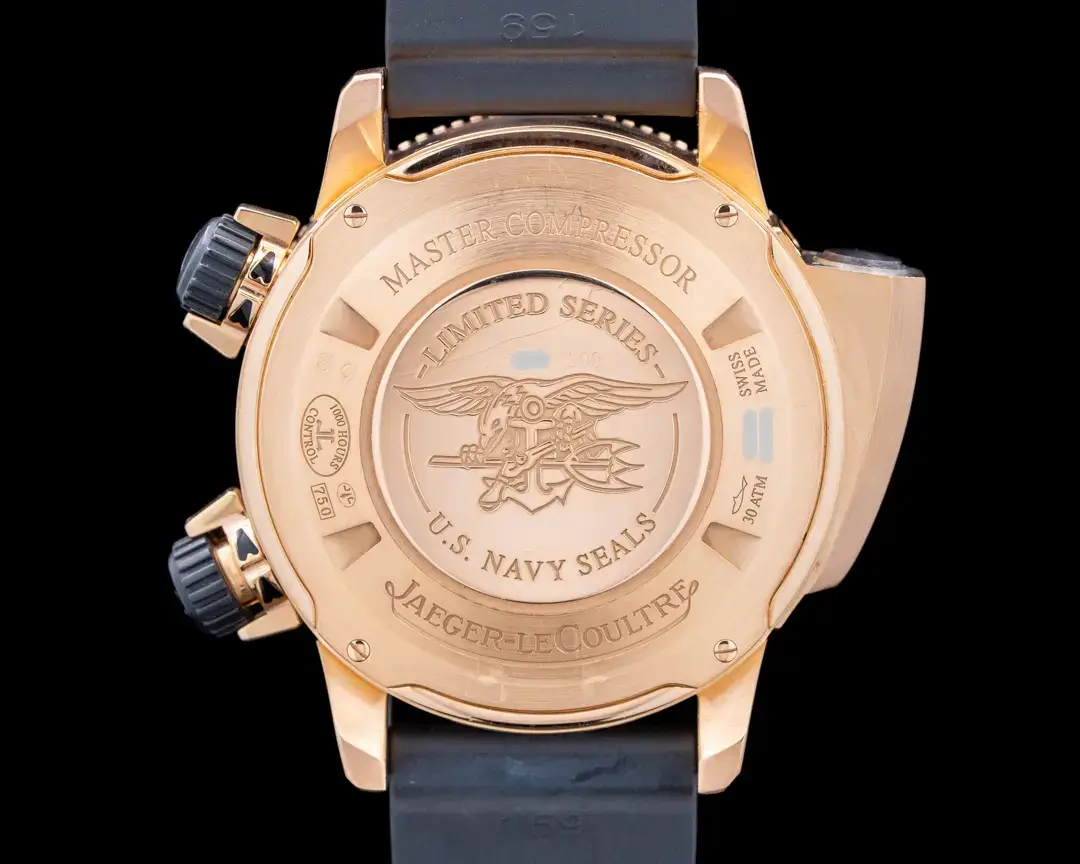
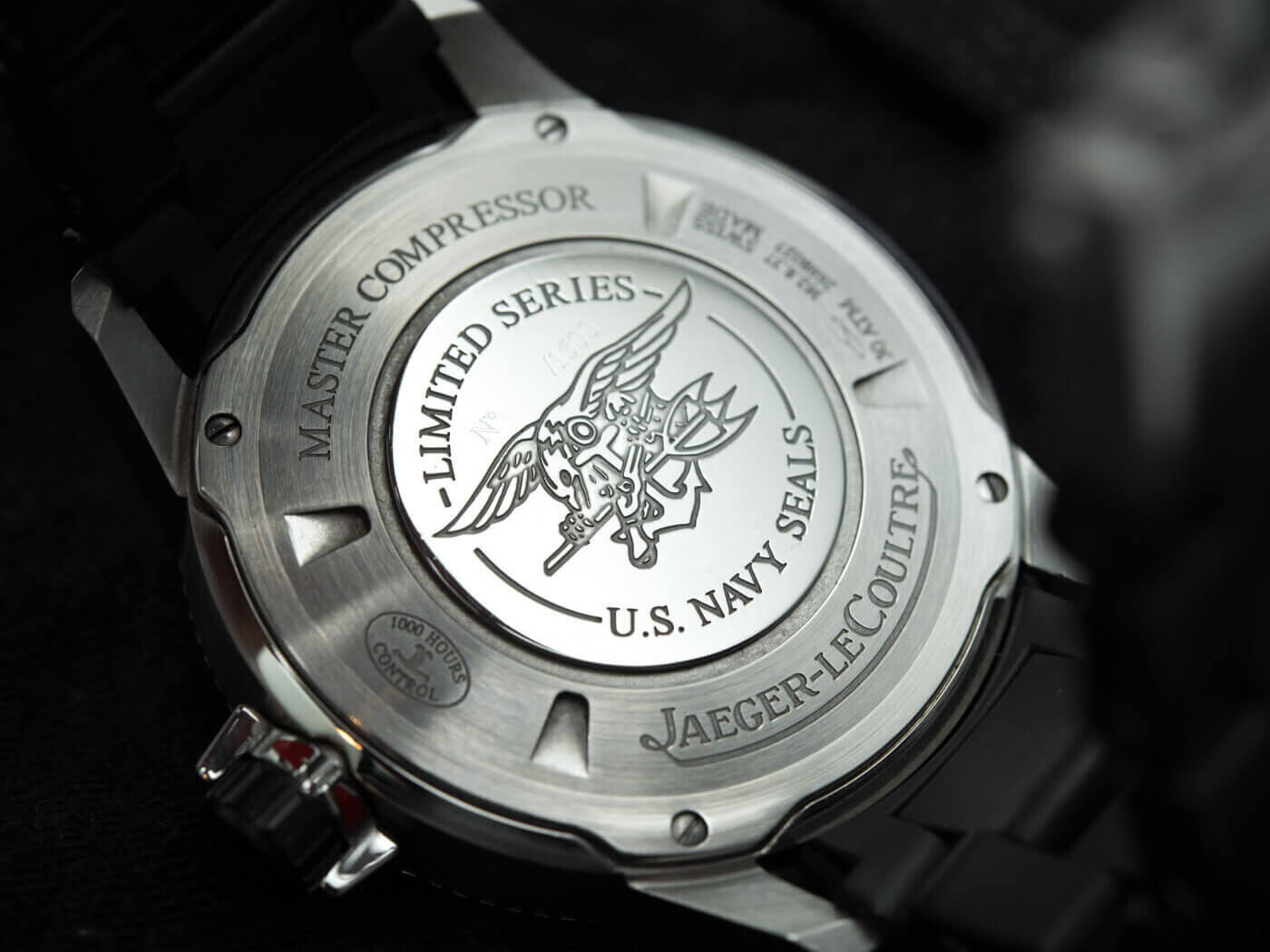
While other manufacturers relied on tried-and-true formulas, Jaeger-LeCoultre experimented. It incorporated the Geographic complication into professional diver’s watches. It revived the mechanical alarm, which was of real importance to divers. It developed its own Compressor Key system instead of simply using a classic screw-down crown. And it subjected every model to the rigorous 1,000 Hours Control test, believing that luxury watches must be as reliable as they are meticulously crafted.
All of this happened in just a few years. And then… it was as if the entire collection had vanished into thin air. The Master Compressor disappeared from the catalogs. The partnership with the Navy SEALs came to an end. Attention turned once again to the Revers, Polaris, and high-end watchmaking. Today, this chapter is remembered mainly by collectors, archival catalogs, and occasionally one of the models that pops up on the secondary market.
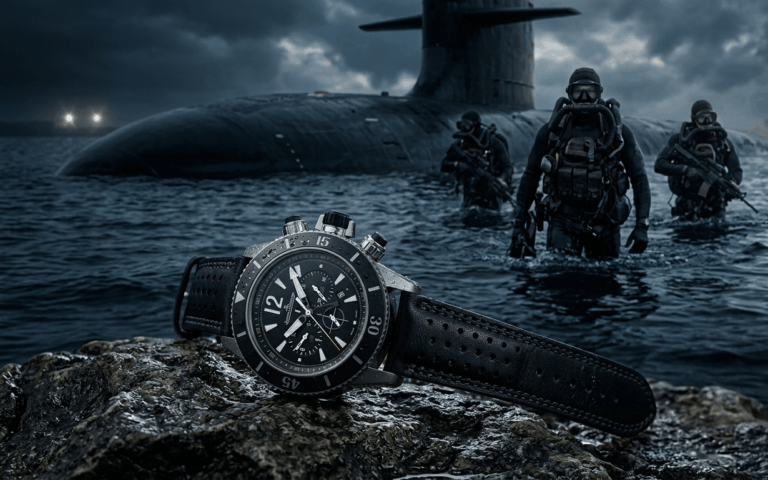
Maybe that’s a shame. Not because the Navy SEALs are the best diving watches of their generation. It’s not that simple. Their true value lies elsewhere. They serve as a reminder that Jaeger-LeCoultre has never been just a maker of elegant dress watches. Just as the Reverso was born out of the practical needs of polo players and the Memovox Deep Sea aided divers long before the era of dive computers, the Master Compressor Navy SEALs also represented an effort to create a tool with a real purpose.
It wasn’t created to follow a fashion trend. It was created because one of Switzerland’s most respected watchmakers decided to remind the world that fine watchmaking and truly functional sports watches are not mutually exclusive. A forgotten mission that best illustrates why Jaeger-LeCoultre has earned the nickname “the watchmaker’s watchmaker.” Not by doing things the same way as everyone else, but by doing them its own way.



Comments
No one has commented on this article yet. Be the first.