

 Patrik Zdvíhal
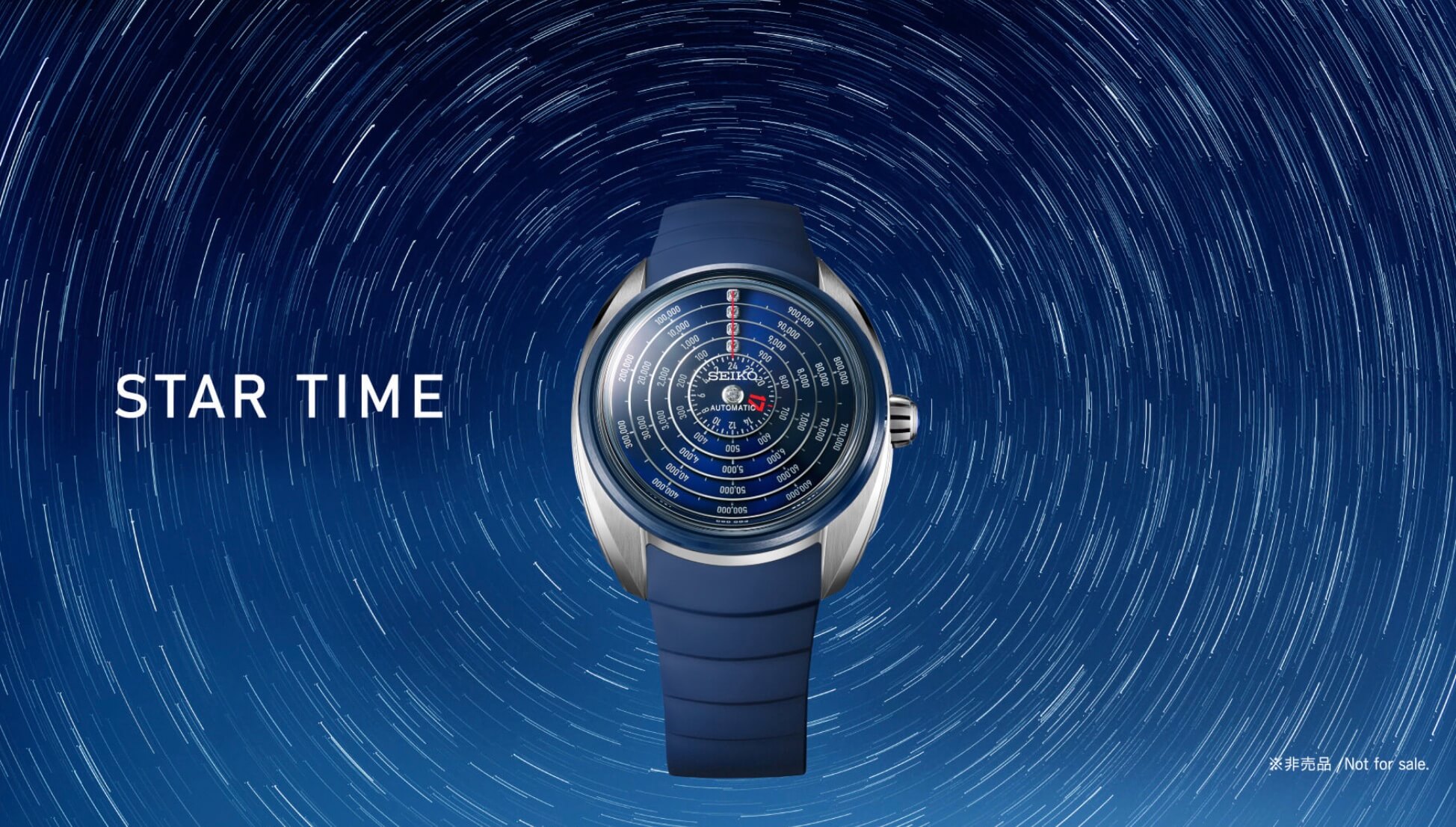
 Seiko Star Time is a unique project created by the Japanese brand Seiko in collaboration with baseball star Shohei Ohtani. The watch was crafted as a one-of-a-kind piece designed specifically for him, and its concept is based on the idea of accumulating time up to one million hours. The first part of the article explains the story behind this project, the connection between Japanese watchmaking culture and baseball, and the philosophy behind the very concept of time.
The Seiko Star Time is a unique watch created by the Japanese brand Seiko for baseball player Shohei Ohtani in 2026, based on the concept of one million hours as a symbol of long-term human achievement.
Table of Contents
The Story of Seiko Star Time
There are watches created to commemorate a brand’s anniversary. Others celebrate a historical event, a sporting achievement, or a famous brand ambassador. But then there are projects that spring from a single idea so bold that even their creators aren’t sure at first whether they’ll be able to turn it into reality.
When I first opened the materials Seiko had released about the watches, I was expecting a standard press release. A new, one-of-a-kind watch for Shohei Ohtani, a few photos, some technical specifications, and a story about the collaboration between one of Japan’s biggest brands and one of today’s best baseball players.
Instead, however, I stumbled upon something completely different.

A group of watchmakers who openly admit on camera that they were afraid during the development process. That they spent several years working on a mechanism that no one had ever built before. And that if they failed, it wouldn’t just be a failed project. In their own words, they risked everything—even Seiko’s reputation.
I have to admit that at that very moment, I stopped thinking about what the watch’s specifications would be. I became interested in the stories of the people who were willing to take such a risk.
And perhaps that’s why this new model struck a chord with me more than most of the watches introduced in recent years. Not only because it combines two things I love—watchmaking and baseball—but mainly because it reminds us of something that’s often forgotten these days: that behind every extraordinary achievement lies a tremendous amount of work that remains hidden from the eyes of most people.
And that’s exactly what Star Time is all about. Not baseball, not luxury, and not even the act of measuring time itself. It’s about the thousands of hours that no one sees.
In a country where perfection is born of patience
If I had to choose a single characteristic that best describes Japanese watchmaking, it wouldn’t be precision. Nor would it be innovation. Not even technical sophistication.
Japanese culture has always been based on the belief that true mastery does not come from a single great idea, but from thousands of small steps repeated until they become second nature. Just look at the traditional craft of sword-making, pottery, or the tea ceremony. The final product is important, but the journey that leads to it is just as important.
The same philosophy can be found in watchmaking. While Swiss manufacturers spent centuries perfecting the complications we now admire as the pinnacle of mechanical artistry, the Japanese sought their own path. They didn’t want to be a second Switzerland. They wanted to be the best version of themselves. That is precisely why Seiko’s story is so exceptional.
Ever since Kintarō Hattori founded a small watchmaking workshop in Tokyo in 1881, the brand has never rested on its laurels. The quartz revolution, Spring Drive, Credor, Grand Seiko… Each of these milestones came about because someone within the company dared to ask a question that others had not yet asked.
What if we did it differently? That same question was posed at the start of the Star Time project. Only this time, it was much bolder. What if mechanical watches didn’t show the current time? What if they could tell the whole story of humanity?
Baseball as a School of Life
For most Europeans, baseball is a distant sport. They know that Major League Baseball (MLB) exists, and they may know a few famous names, but that’s usually the extent of their familiarity with the sport. In Japan, it’s a completely different story.

Baseball isn’t just the most popular sport there. It’s part of the national identity. Children grow up believing that success doesn’t come from talent, but from discipline, humility, and hard work every day. Nowhere is this more evident than at the legendary Koshien high school tournament, where stories unfold every year that resemble movie scripts more than sports matches.
Shohei Ohtani grew up in this very environment. It was clear from the start that he was an extraordinary talent. But in Japan, talent is just the beginning. You earn true respect through what you do every day, when no one is watching. And perhaps that is precisely why his story has so naturally intertwined with Seiko’s.
Shohei Ohtani
⚾️ right-handed pitcher / left-handed hitter ⚾️
Born in 1994 in Iwate Prefecture, Japan. He entered professional baseball as an exceptional talent capable of playing both as a pitcher and a hitter.
2012 – He was selected as the No. 1 overall pick in the NPB draft and joined the Hokkaido Nippon-Ham Fighters. He began to attract attention with his performances in both roles.
2016 – He led the Fighters to victory in the Japan Series and won the Pacific League MVP award.
2018 – He was traded to the Los Angeles Angels and won the AL Rookie of the Year award.
2021 – He hit 46 home runs and recorded 9 wins as a pitcher. He was named American League Most Valuable Player (AL MVP).
2023 – He became the first player in MLB history to record double-digit wins as a pitcher and double-digit home runs in two consecutive seasons. He won his second unanimous American League MVP award.
2024 – He signed a contract with the Los Angeles Dodgers. He became the first MLB player to hit 50 home runs and steal 50 bases in a single season, won the World Series, and was named National League MVP.
2025 – He made 14 starts as a pitcher and hit a career-high 55 home runs. He helped the Dodgers win their second consecutive World Series. He won his third consecutive unanimous MVP award and his fourth overall MVP award in MLB.
At first glance, the only thing Shohei Ohtani and Seiko have in common is their Japanese heritage. But when we take a closer look at their stories, we discover that there are many more similarities. Both have forged their own paths, even though the world around them long believed that there was only one right way to succeed. Ohtani has redefined what a single baseball player is capable of. Seiko, in turn, has repeatedly demonstrated that world-class watchmaking doesn’t have to come exclusively from Switzerland. In both cases, the result is the same—respect that cannot be bought, but only earned through hard work.

I’ll admit that baseball was the reason I clicked on the article. But after just a few minutes, I was no longer reading about baseball. I was reading about time. Shohei Ohtani has changed the way people think about baseball. Seiko, with Star Time, has changed the way we think about watches.
How do you measure a million hours?
There comes a point when a good idea turns into a problem.
That seems to be exactly what happened at Seiko as well. The idea of creating a watch that would represent a million hours of Shohei Ohtani’s life sounded wonderful on paper. But between the idea and the actual mechanical watch lay a question to which there was no answer.
How do you actually display that time?
Since their inception, mechanical watches have been based on a simple principle. They indicate the passage of time. Hours give way to minutes, minutes turn into seconds, and after twenty-four hours, the entire cycle repeats itself. Time flows in a circle, and the dial starts over from the beginning every day.

But that’s not how human life works. None of us starts from scratch every morning. Every hour we live becomes part of our story and remains there forever. It is precisely this idea that the watchmakers decided to translate into a mechanical movement.
They didn’t want to create a watch that would simply tell the time. They wanted to create a watch that could accumulate it.
A mechanism that no one had ever built before
It was at that very moment that the Star Time project shifted from a design exercise to a true watchmaking challenge.
In a video Seiko released about the project, one of the designers admits that at first they couldn’t even imagine that it would be possible to actually create such a mechanism. Nevertheless, they decided to attempt something that, according to the company, no one had ever attempted before—to design a wristwatch capable of mechanically displaying a cumulative time of up to one million hours.
Such a solution could not be derived from any historical design. There was no existing mechanism that simply needed to be modified or refined. It was necessary to start from scratch and design an entirely new movement architecture.
That’s exactly why the creators say they risked everything during development. It wasn’t just about three years of work or development costs. If the project had failed, it would have damaged the credibility of a brand that has spent decades building a reputation as a technological innovator. Their words carry all the more weight now that they’re holding the finished watch in their hands.
To be continued tomorrow
Originally, this text was meant to be a brief introduction to the new Seiko Star Time, but the deeper I delved into the entire project, the more obvious it became that it couldn’t be reduced to a few paragraphs of technical description. Not because it’s complicated, but because it’s based on an idea that unfolds gradually—just like time itself, which it seeks to capture.
Seiko Star Time is not just a watch project. It is a story that brings together a sports career, Japanese watchmaking philosophy, and the idea of time as something measured not in seconds, but in experiences.
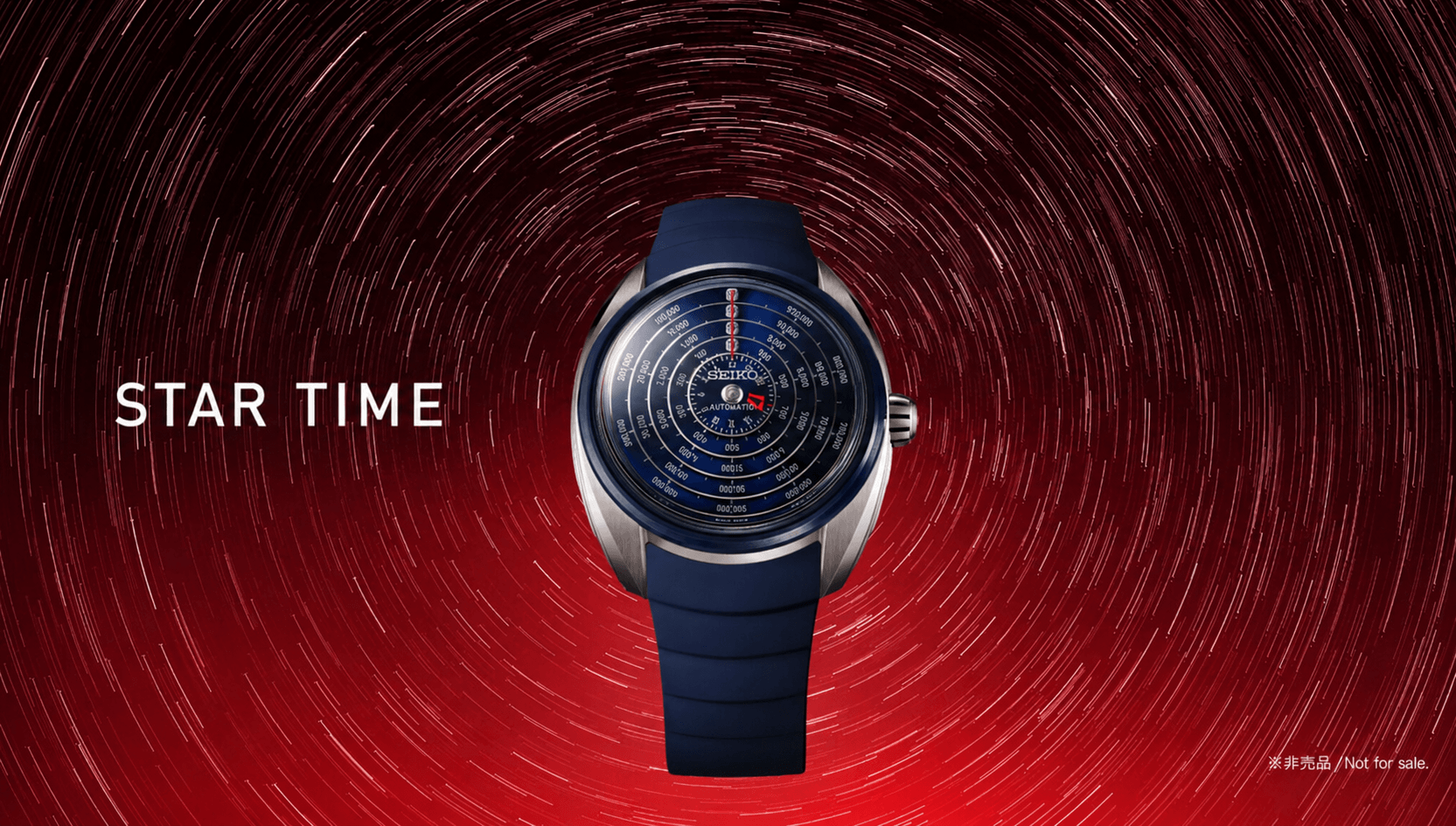
To ensure this story doesn’t lose its depth or structure, I’ve divided it into two parts. In the first part, we explored the origins of the idea and the context that connects Seiko and Shōhei Ōtani. In the sequel, which will be published tomorrow, we’ll delve into the watch’s mechanism itself—the five layers of rotating discs, the symbolism of the North Star, and the details that make this project one of the most remarkable achievements in modern watchmaking.


Comments
No one has commented on this article yet. Be the first.