

 Patrik Zdvíhal
 The second part of the article focuses on the technical and symbolic design of the Seiko Star Time watch, which the Japanese brand Seiko created for Shohei Ohtani as a one-of-a-kind piece outside of mass production. It describes the construction of the five-layered rotating discs, the method of displaying cumulative time, and the symbolism of the stars, the North Star, and the diamond details that connect watchmaking with a story of athletic excellence.
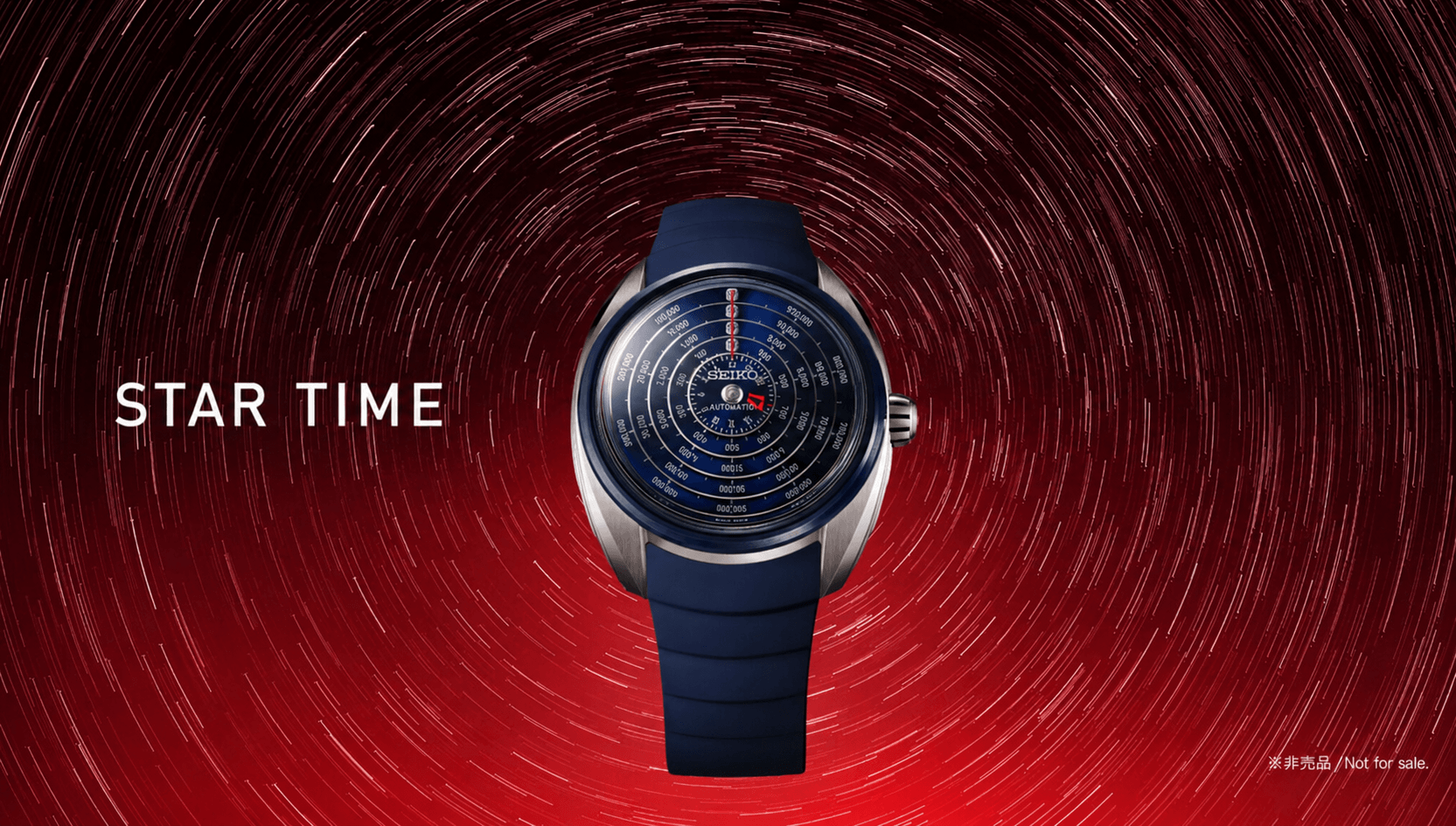
The Seiko Star Time is a unique watch from the Japanese brand Seiko, created for baseball player Shohei Ohtani in 2026. As a one-of-a-kind piece not produced in series, it displays a cumulative time of up to one million hours using a system of five layered rotating discs.
Table of Contents
- Pět disků, jeden příběh
- Polárka jako cíl, který se nemění
- Když design vypráví příběh
- Jeden kus, jediný člověk
- Hodinky, které neměří čas, ale způsob, jak ho prožíváme
- 114 let
- Hodinky, které posunuly otázku času
- Největší luxus
- Poslední pohled na Star Time
- Technické specifikace Seiko Star Time
- Závěr: čas, který zůstává
Five Discs, One Story
At first glance, the dial looks almost futuristic. It lacks the classic hands and traditional dial layout we’re used to seeing on mechanical watches. Instead, a system of five rotating discs layered on top of one another unfolds before your eyes—their purpose is not to display the time, but to tell an entire story.
Each of the discs represents a different level of accumulated time, and together they form a mechanism capable of displaying up to one million hours. The numerals gradually appear below the red reference line on the inner side of the domed sapphire crystal, while the central disc simultaneously displays the current time in 24-hour format. Thus, the present coexists on the dial alongside the past—one indicates what time it is right now, the other how many hours have already been lived.

But the most interesting thing isn’t the arrangement of the discs itself. Their movement is so slow that the human eye can hardly perceive it. Yet they rotate constantly and gradually change the displayed time. They resemble stars in the night sky. When we look at them for a few minutes, they seem motionless, yet they continue ceaselessly along their path.
That’s where the name “Star Time” comes from. It’s not just a poetic metaphor. It’s a reminder that some of the most important changes around us happen so slowly that we don’t notice them until much later. Just as the night sky changes imperceptibly, so too does mastery—hour by hour, day by day.
The North Star as a constant goal
A diamond is set on each of the rotating discs to mark the completion of a full rotation. Even more important, however, is the diamond located at the center of the entire system. Unlike the others, this one never moves.
It represents the North Star—the star that has guided sailors and travelers for centuries. While other stars appear to move across the night sky, the North Star remains a fixed point of reference. That is precisely why Seiko chose it as a symbol of a destination that remains unchanged even when everything around it is constantly shifting.

It’s a beautiful metaphor not only for Shohei Ohtani’s career, but really for anyone striving to achieve something extraordinary. Circumstances change, time passes, and experiences and obstacles accumulate. But the direction remains the same. And perhaps that is precisely why the entire dial feels more like a mechanical narrative than a classic timepiece.
Thus, the present coexists on the dial alongside the past—one reminds us what time it is right now, the other how many hours have already passed.
When Design Tells a Story
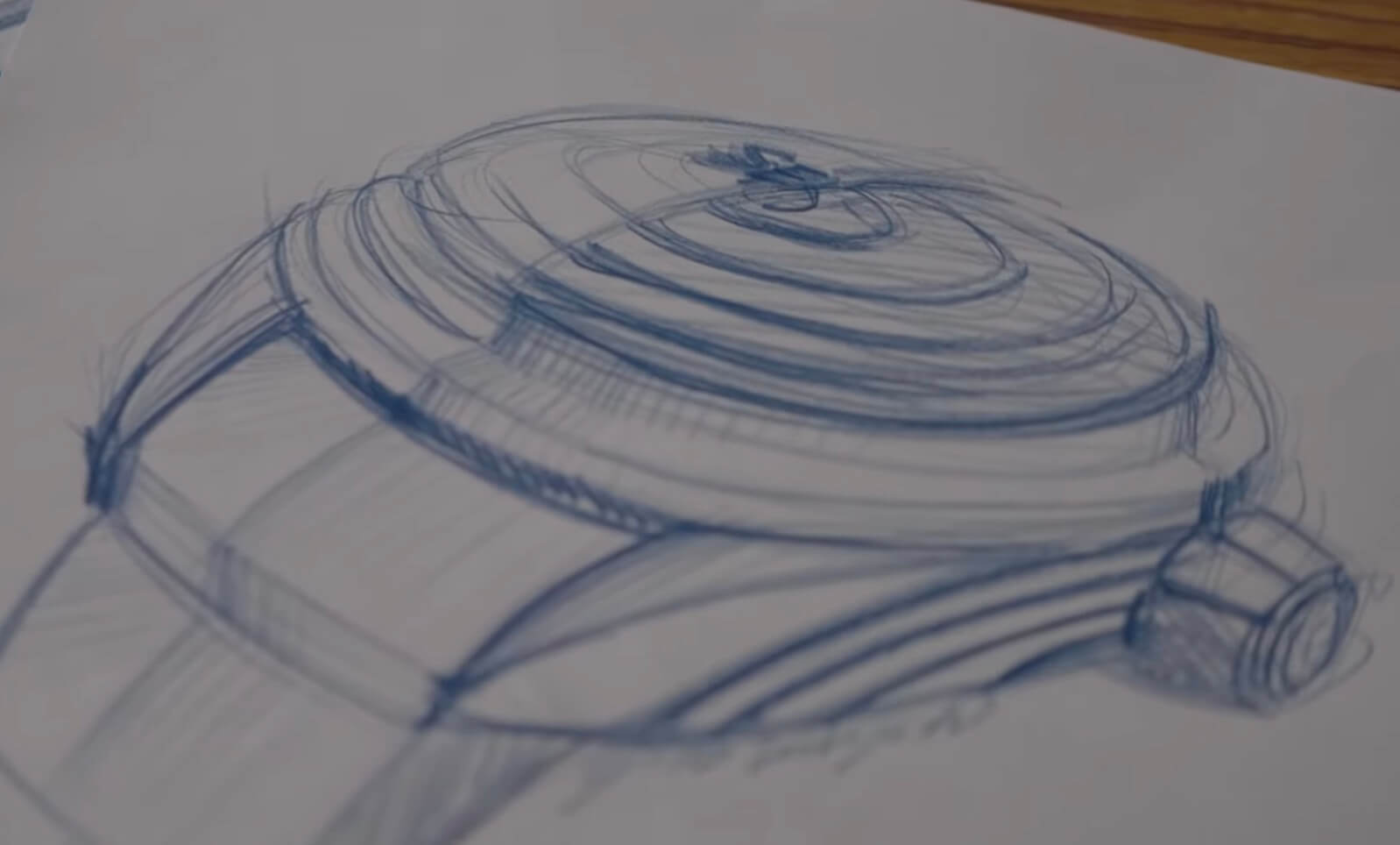
The longer you look at the Star Time, the more subtle details begin to emerge. The arcs extending from the rotating discs to the ceramic bezel resemble the paths of stars in the night sky; the same motif also appears on the sides of the titanium case, and the blue sapphire set in the crown symbolically brings the whole story full circle.


Even the color scheme is no accident. The combination of blue, white, and red accents subtly references the colors of the Los Angeles Dodgers, the team for which Ohtani now plays. This isn’t a superficial tribute or a marketing ploy. Rather, it’s a quiet reminder of the next chapter in his journey.

The choice of materials is just as well thought out. High-strength titanium helped keep the watch’s weight at an acceptable level despite the complex design of the layered discs, and the silicone strap was custom-made for Shohei Ohtani. After all, for a watch that exists as a one-of-a-kind piece, a standard size wouldn’t make sense anyway.
One person, just one person
There are watches in the world that are produced in the thousands. Others are released as limited editions of just a few hundred pieces and immediately become a collector’s dream. The Seiko Star Time, however, does not fall into either of these categories. There is only one.
They were never included in the catalog, never assigned a retail price, and were never intended for sale. They were created for one person and one moment. On July 3, 2026, Seiko Chairman, CEO, and CCO Shinji Hattori personally presented them to Shohei Ohtani as a memento of their ten-year journey together.

At a time when most new models are designed with sales figures, marketing campaigns, or waiting lists in mind, Star Time seems almost like a revelation. They aren’t just products. They’re personal stories translated into mechanics. And perhaps that’s exactly why they matter so much.
A watch that doesn’t measure time, but the way we experience it
The longer I thought about the Seiko Star Time project, the less I was able to see it as a classic watch in the sense we usually associate with that term. And maybe that sounds a little strange at first glance, because we’re used to thinking of watches primarily as tools—precise, reliable, and ever-present indicators of time that tell us where we are in the continuous flow of hours and minutes.
Most mechanical watches—whether simple three-hand models, sophisticated perpetual calendars, or technically complex tourbillons—share the same fundamental purpose. Regardless of the complexity of their design or their aesthetic appearance, they ultimately always answer a single question for us: what time is it right now? That is both their strength and their purpose—they are an accurate reflection of the present moment, which is constantly changing but never stops.
Seiko Star Time, however, does not deny this fundamental principle; rather, it shifts it to another plane—one where it is no longer just about the present, but about the sum of all the moments that preceded it. It does not come across as a tool that seeks to capture the current state of the world, but rather as a quiet reminder that every moment we have ever experienced remains within us and gradually creates something greater than just a single day or a single hour.


And that is precisely where their greatest difference lies. Star Time doesn’t ask how much time we currently have available. It isn’t interested in how many minutes are left until the end of the day, how many hours have passed since morning, or what day of the week it is. Instead, they ask a much quieter—but all the more fundamental—question: what have we actually managed to do with the time we’ve already had?
At first glance, it’s just a slight shift in wording, an almost imperceptible change in perspective that could easily be overlooked. But in reality, it’s a difference that changes the very way we think about watches. Because while some constantly bring us back to the present moment, others force us to look back and realize that time isn’t just what’s currently ticking away on the dial, but also everything that has already passed—and that can never be brought back.
114 years
One million hours, 114 years. At first glance, this number seems almost unreal, even abstract—as if it belonged more to theoretical musings than to the world of mechanical watches or human life. But when you start to translate it into concrete terms, it suddenly takes on a different dimension—approximately 114 years of uninterrupted time, a period that no human being has any chance of experiencing under real-world conditions.
And yet it is precisely this number that lies at the very heart of the entire Seiko Star Time project. Not because anyone actually expects Shohei Ohtani to play baseball for 114 years, nor because anyone is trying to mechanically calculate the length of human life down to its very limits. Here, one million hours functions neither as a prediction nor as a limit, but rather as a symbolic axis around which the entire story revolves.

It’s a way of reminding us that no extraordinary achievement arises as a single, isolated moment that can be captured in a single season, a single game, or a single exceptional year. In the reality behind great stories, nothing happens overnight—everything comes together gradually, unobtrusively, in small pieces that often don’t seem exceptional on their own.
It’s a single training session that seems ordinary in the morning because it’s followed by another one the next day, and the day after that. A single decision to get up a little earlier, even though it would be easier to stay in bed. One mistake that, instead of being ignored, is reconsidered and corrected. One extra repetition that doesn’t change anything at all in the moment, but in the long run changes everything. And that is precisely the paradox that Star Time subtly reveals.

Each of these individual moments, when viewed in isolation, seems perfectly ordinary—sometimes even insignificant. There is nothing about it that sets it apart from the thousands of other moments that quietly unfold every day. Only when a sufficient number of them begin to accumulate does something emerge that, from the outside, appears to be talent, an extraordinary ability, or an exceptional achievement. In reality, however, it is simply a different way of looking at the same thing—at time that has been persistently, patiently, and without pause transformed into something greater than what was visible in each individual moment.
A watch that redefined the concept of time
At the beginning of this article, I wrote that what impressed me most about the Seiko Star Time project was the courage of the people who decided to bring it to life in the first place. Gradually, however, I realized that this courage isn’t limited to the technical level—to the design of a new movement or the sheer complexity of the idea itself. It lies even deeper—in the willingness to challenge something that had been considered unchangeable and self-evident for generations.
The question that most watchmakers have never asked aloud: What exactly are watches supposed to show?

After more than four hundred years of mechanical timekeeping, Seiko has come up with an answer that is neither straightforward nor predictable—and that is precisely why it is so powerful. Perhaps a watch need not be limited to the present moment and its precise measurement.
Maybe they can do more than that. Maybe, instead of focusing on a single point in time, they can tell the whole story—a story that doesn’t unfold in seconds, but in the sum of all the moments that gave rise to it.
The Ultimate Luxury
But if we look at it from a slightly different angle, none of these things is actually truly unattainable. All materials can be mined, processed, or substituted, and even the most complex machines are ultimately the result of human ingenuity, which can—at least in theory—be replicated.
Time is completely different in this regard. Every minute that has just passed while you were reading this article will never come back. It cannot be saved, bought, or replaced with anything else. It can only become part of something we carry forward, without being able to influence it in any way. And that is precisely why watches seem so special. They aren’t just objects that showcase the value of materials or technical skill. They are silent reminders of what is, in fact, the rarest commodity of all—time, which is slipping away unnoticed right now, without any way to stop it or get it back.
It may be a paradox, but that is precisely where their greatest value lies—not in what they show us, but in the fact that they constantly remind us that what they show us cannot be possessed.
A Final Look at Star Time
It’s quite possible that Seiko will never create anything like this again. And it’s equally possible that some of the ideas that emerged during the development of the Star Time will one day find their way into mass-produced watches in a less radical form. But that doesn’t really matter.
Because the true value of this project does not lie in whether it will become a new trend or remain a unique experiment. It lies in what it leaves behind as we look at it today. Perhaps that is precisely why, at the start of this project, the watchmakers were risking more than just their reputation. They risked something far more valuable—attempting to capture through mechanics something that cannot be captured. And when we look at the Seiko Star Time today, we may find that, after all, they succeeded—at least for a moment.


And that is precisely the paradox. A watch that was created as an attempt to capture a million hours of human performance ultimately comes across neither as a technical triumph nor as a design extravagance. Rather, it serves as a quiet reminder that some things in life cannot be measured or precisely described—only experienced and, in hindsight, appreciated for their significance. In the end, Star Time does not conclude as a product or a complication, but as a question that lingers in the air long after we take our eyes off it.
Maybe it’s not about how much time we’ve been given. Maybe it’s about what happened during that time. And maybe that’s exactly why it makes sense to return to watches like these—not because they tell us what time it is, but because they sometimes remind us why that time actually matters.
Seiko Star Time Technical Specifications
- Case: high-strength titanium
- Clip: high-strength titanium
- Glass: sapphire, box-type, with an anti-reflective coating on the inside
- Water resistance: 10 bar
- Case diameter: 41.8 mm
- Thickness: 17.4 mm
- Strap: silicone, custom-fit for Shohei Ohtani's wrist
- Price: a one-of-a-kind item not for sale

Conclusion: The Time That Remains
Ultimately, Seiko Star Time watches aren’t designed to compete in terms of how accurately we can measure time. Its significance lies elsewhere—in the quiet reminder that time itself is not just a number on a dial, but the sum of all the moments we have ever experienced and that will never return.
The entire project has such an unusually serene feel to it, even though it is technically extremely complex. This is because it is not a demonstration of what watchmaking is capable of, but rather a question it poses: what can time actually mean if we stop perceiving it merely as something that passes by?
And perhaps that is precisely why Seiko Star Time watches are not the kind that answer the question, “What time is it?” Rather, they serve as a reminder that some questions remain valid even when there is no answer to them.





Comments
No one has commented on this article yet. Be the first.