

 Jakub Nedvídek
 At a time when the Swiss watchmaking world was engulfed by the quartz crisis, one brand decided to go against the grain. The Swiss brand EPOS was founded during this pivotal era. However, instead of cheap battery-powered watches, it chose the path of tradition, craftsmanship, and mechanical perfection. And it has remained true to that path.
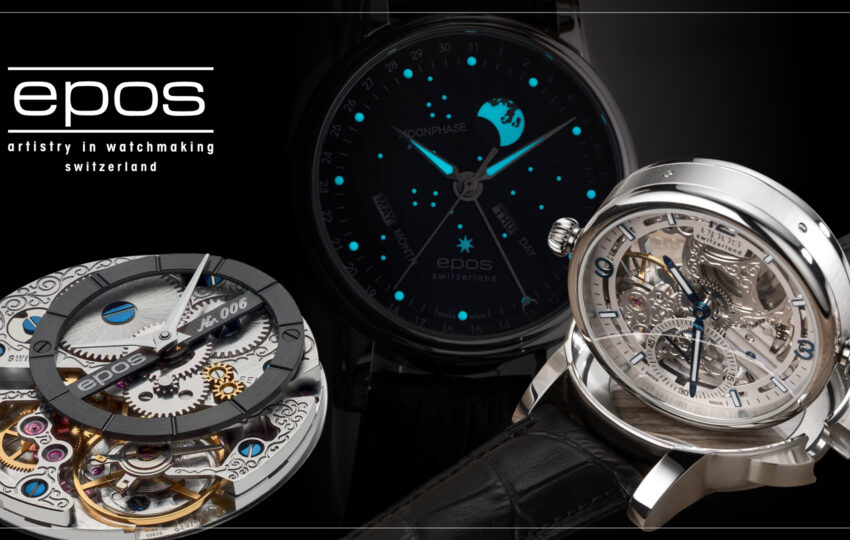
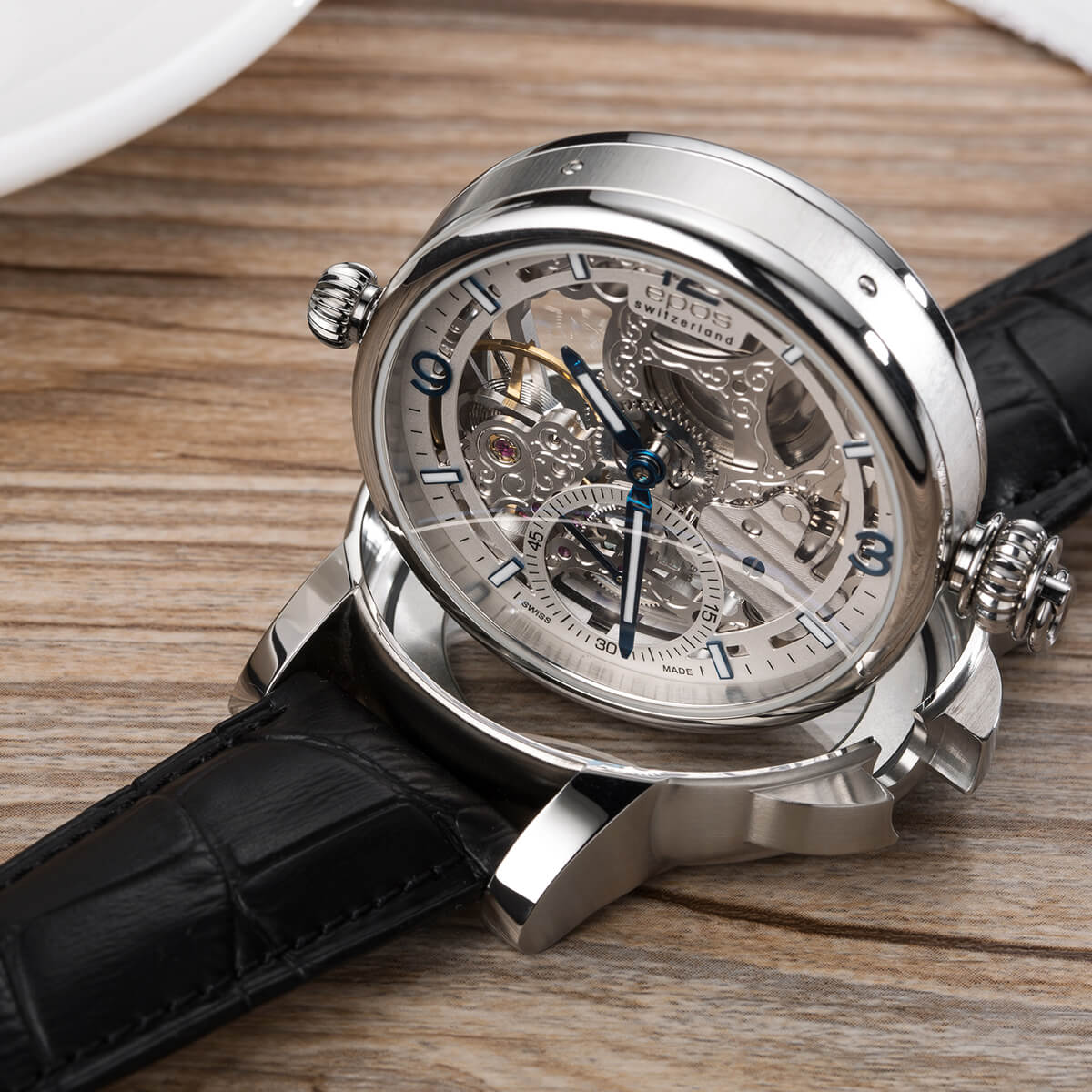
To this day, EPOS manufactures exclusively mechanical watches that celebrate the art of traditional watchmaking. Whether you choose an elegant model, a sporty style, or even a stylish and more eccentric pocket watch, you can be sure you’ll make the right choice. And you certainly won’t be bored! A distinctive feature of many models is their skeleton design, which allows you to literally look into the heart of the watch and watch the graceful movement of the precisely finished Swiss movements.
EPOS may not manufacture its own movements, but that doesn’t diminish its value—quite the contrary. It selects the finest Swiss movements and imbues them with its own distinctive style and unique character. The result is a watch that combines traditional craftsmanship with modern elegance and appeals to anyone looking for more than just a timepiece on their wrist. In what other ways does Epos go against the grain?
Article Contents
Table of Contents
Epos has a century-old history

To tell the story of Epos, we must go back even before the brand was founded. James Aubert was a master watchmaker who dedicated his entire life to the craft. In 1925, he founded the company James Aubert SA. He passed on his knowledge and experience to his son-in-law, J. Fillon. When the company was forced to file for bankruptcy during the quartz crisis, Peter Hofer bought what remained of the business. And from what had withstood changing fashions and the relentless passage of time, he founded Epos in 1983.
From the very beginning, Hofer was supported by Jean Fillon, who became Epos’s chief watchmaker and was also responsible for many innovations. In 2002, the Chonge-Forster family took over the company. They have owned and managed Epos ever since. Even though Epos was not officially founded until 1983, we can, with a bit of leniency, consider 1925 to be its founding year, as there is a clear connection through the acquisition of James Aubert SA and the watchmaker J. Fillon. Although operating under a different name, the tradition and spirit of the manufactory have been preserved.
▶️ What was the Quartz Crisis? The term “Quartz Crisis” refers to a period in the 1970s and 1980s when watches with quartz (battery-powered) movements—cheaper, more accurate, and easier to manufacture than traditional mechanical watches—flooded the market.
This technological revolution hit the Swiss watchmaking industry particularly hard; built on mechanical craftsmanship, it suddenly faced a massive drop in demand. Many traditional brands went out of business or had to make major adjustments. However, the quartz crisis also set apart those who decided to go against the tide and preserve the classic art of watchmaking—such as the EPOS brand.
The Art of Watchmaking

Just as it did when it was founded, Epos strives today to preserve traditional watchmaking. The individual watch components are manufactured in the Jura Mountains and assembled in Lengnau. The entire process thus takes place in Switzerland. Thanks to this and other regulations, Epos watches proudly bear the SWISS MADE designation.
The ETA and Sellita movements used in Epos watches first undergo appropriate modifications. These are mechanical modifications that add certain watchmaking complications to the base movement, such as a 24-hour time display.
In addition, there are visual enhancements that make the movement more attractive and interesting. Examples include heat-treated blue screws and Geneva stripes. Among the complications found in Epos watches are the moon phase, Big Date, and even a minute repeater—a complication considered to be among the finest in watchmaking.
▶️ ETA and Sellita are among the largest manufacturers and distributors of watch movements. Their movements can be found in countless watches, including those from truly prestigious brands. Without the legendary ETA 2824 movement, the entire world of watches as we know it would certainly look completely different. If you’re interested in learning more about these Swiss giants, check out the article “ETA & Sellita Movements—History, Top Models, and a Comparison.”
The Most Interesting Watches from Each Model Line
Artists in the Collection
Artistry is the most interesting line from Epos. All watches in this line are exceptional in some way. It could be a watch complication or a special case featuring an unusual crown position, or one where a part of the case can even be removed from the case frame, allowing the watch to double as a table clock. In addition to these unique features, there are also models with skeletonized dials. In short, this collection features the wildest and most extravagant ideas Epos has to offer.
The collection’s price range is wide, from 47,400 to 80,550. The price depends primarily on the complexity of the movement.
▶️ Extravagance—though in a different sense—is also a hallmark of another brand available on Helveti.cz. Try comparing Epos with Alexander Shorokhoff: Alexander Shorokhoff: A harmony of wild designs and artisanal watchmaking.
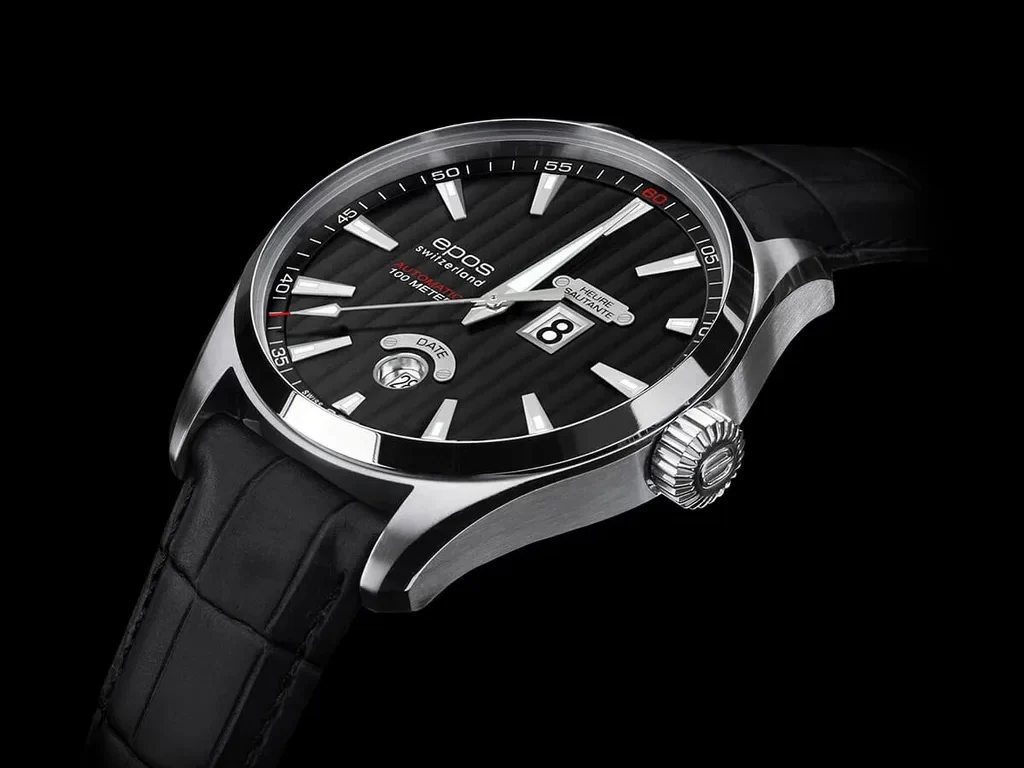
Epos Passion 3405.672.20.15.25
This watch features a jumping hour complication, which displays the hour using a disk that jumps rather than rotating slowly. This means you can always clearly see what time it is. The hour indicator resembles a date window. This is an unusual complication that makes the watch a truly original and unique piece.
The watch has a case diameter of 43 mm, so it’s a bit larger and therefore not suitable as a classic dress watch. It’s an automatic watch with a decorated ETA movement. It features a sapphire crystal and is water-resistant to 100 meters. So they’re not delicate at all—you don’t have to worry about wearing them; they’re ready for all the challenges of everyday life.
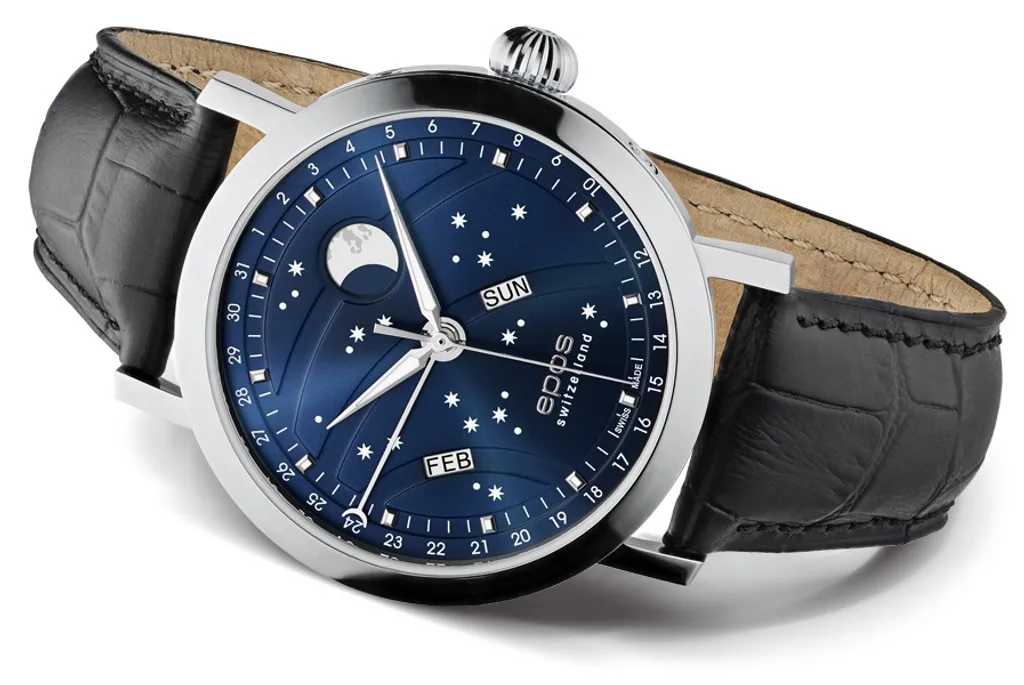
Epos Oeuvre D’Art 3440.322.20.16.25
At first glance, this is a very interesting model with a dial depicting the night sky—one that takes a moment to get used to. In addition to the stars, the watch also features the moon in the form of a moon phase complication. It also displays the day, date, and month of the year, offering a full calendar. The case on this model is on the larger side, with a diameter of 42 mm. It features sapphire crystal and is water-resistant to 50 meters.
▶️ It was practically an impossible task to choose just a few watches from this collection. It’s full of interesting pieces. So I decided to choose these two models, since we haven’t talked about them on our blog yet. I’d also like to direct you to articles about two other Epos watches from the Artristy line that would be a shame to overlook. One is the limited-edition Epos Oeuvre D’Art, with a dial that is sure to completely amaze you. The second watch is the Epos Emotion 3390, which displays the time on a 24-hour cycle.
Sports
This line differs quite a bit from the previous one. The watches in the Sport collection are designed to serve you well even in more demanding conditions. Unlike the Artistry collection, which sought to inspire awe with its designs, the Sport line aims to offer watches that can keep up with you even in situations where other models fall short.
So, all the flashy frills are set aside, and functionality takes center stage. The watches are more rugged, often a bit larger, and all models are water-resistant to at least 100 meters. But don’t worry—there’s still a touch of something special, such as a skeleton dial, which often appears here despite the watches’ sporty focus.
The price range for this series is 23,940 to 68,800.
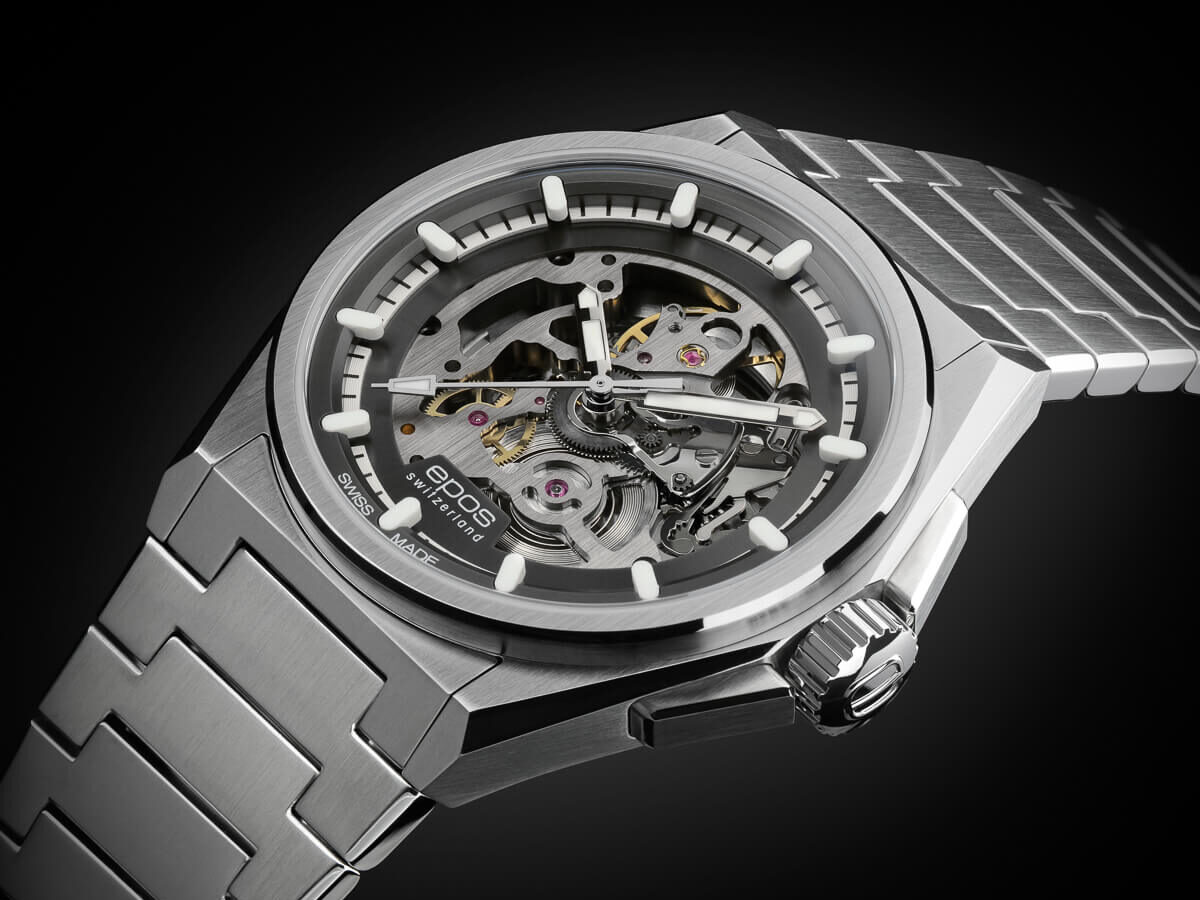
Epos Sport 3505 SK 3505.139.20.14.30
At first glance, the watch appears to have an integrated bracelet, which has become very popular recently. Upon closer inspection, however, you’ll notice that Epos has simply matched the bracelet perfectly to the case. As a result, the watch has the advantage of a cohesive look—something we really appreciate in models with integrated bracelets. At the same time, it retains the option to swap the bracelet for a leather strap.
In addition to its cleverly designed bracelet, this model also features a skeleton dial that offers an intriguing view of the movement. The watch case has a diameter of 41 mm. It is also water-resistant to 100 meters, so you can swim with it without any problems. This model is powered by an automatic Sellita movement and features a sapphire crystal.
▶️ The idea of a seamless transition from the case to the bracelet isn’t unique to this Epos watch. For example, the innovative brand Formex—which you can also find here at Helveti—has introduced the Essence collection, which uses the same trick in its metal bracelet version. However, Formex has a few more tricks up its sleeve with this model. You can read more about the 39 mm Formex Essence watches in the article “Formex Essence ThirtyNine: A Lesson in Innovation.”
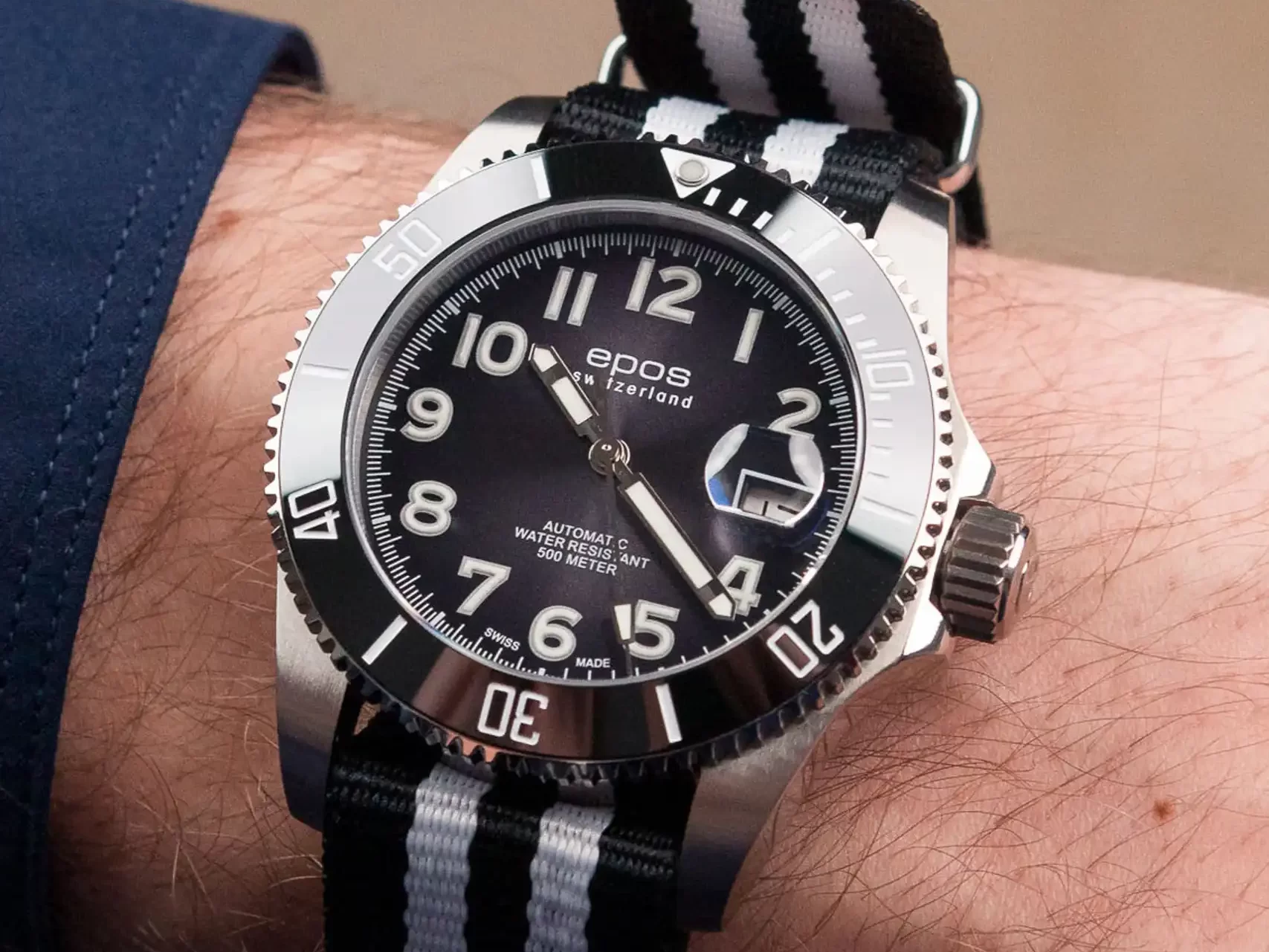
Epos Sportive Titanium 3504.131.80.35.90
This watch could be considered the perfect diving watch. It is water-resistant to 500 meters, which is more than enough. The dial is very easy to read thanks to the large numerals, which, of course, are luminescent. The watch features a sapphire crystal and a Sellita automatic movement. The bezel is made of ceramic, making it highly scratch-resistant.
The 41.5-mm case, like the bracelet, is made of titanium, which ensures the watch is lightweight. Taken together, all these features make for the perfect diver’s watch. While its appearance is inspired by the Rolex Submariner, it has enough unique design elements of its own that no owner needs to worry about wearing a watch that’s passing itself off as something else. Those who aren’t particularly fond of the weight of metal watches will appreciate the case material—titanium, which is significantly lighter than steel.
Timeless Collection
If you found both the Artistry and Sport lines to be too focused in one direction or the other, then the Timeless collection is for you—it strikes the perfect balance. It features watches for everyday wear—ones that won’t make you feel out of place in most situations. The Timeless line offers both models that are a bit more elegant and those that are a bit more sporty.
More elegant watches with a design suitable for important meetings or social occasions have a low water resistance rating—30 meters—which is really only enough to protect against hand washing or rain. The sportier models would also hold their own in social settings, but they’re designed for outdoor activities and even swimming, thanks to their 100-meter water resistance. It’s entirely up to you whether your lifestyle calls for more sophistication and elegance, or more freedom in how you wear your watch and the ability to handle water.
The watches in this collection range in price from 23,940 to 87,690.
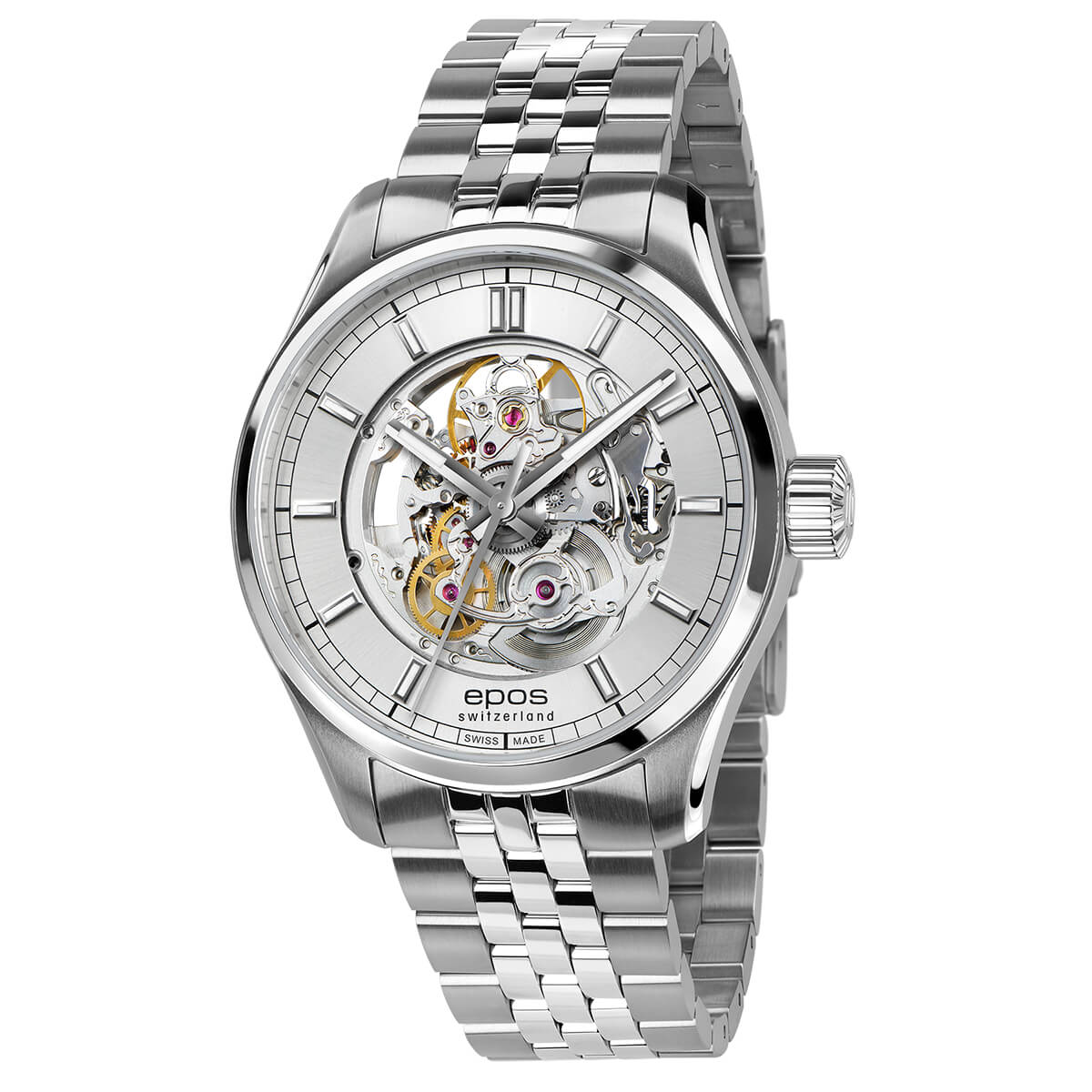
Epos Passion SK 3501.135.20.18.30
From this collection, I’ve once again chosen a watch with a skeleton dial. This model is a great example of a watch you can wear anywhere—whether you’re out on the town or out in nature. Of course, it’s not a watch designed for adventures in extreme conditions, but aside from that, it will serve you well as a companion anywhere.
The elegant look is due both to the case—which is polished in several places—and, above all, to the dial, which once again offers an eye-catching view of the movement. Durability is ensured by sapphire crystal and 100-meter water resistance, so you don’t have to worry about any recreational contact with water—except for diving. The case diameter is 41 mm, and this model is powered by an automatic Sellita movement.
Pocket Watches
The Pocket Watch Collection is a slightly different category. It isn’t defined by the situations in which the watches are appropriate; rather, it’s a distinct product. Of course, you wouldn’t go swimming with a pocket watch, so it’s not really meant for sports. But I can imagine that there are many people who wear pocket watches every day.
I’d say it’s a matter of style in this case—what do you think? There’s something romantic about pocket watches; they’re a living piece of history that can’t be replaced by wristwatches. The fact that you wind the watch by hand every morning and then have to take it out of your pocket every time someone asks you the time is certainly an interesting contrast to today’s modern digital age. Mechanical wristwatches can come pretty close to replacing that, but I’d still say it’s not quite the same.
Epos pocket watches cost between 37,710 and 49,950.
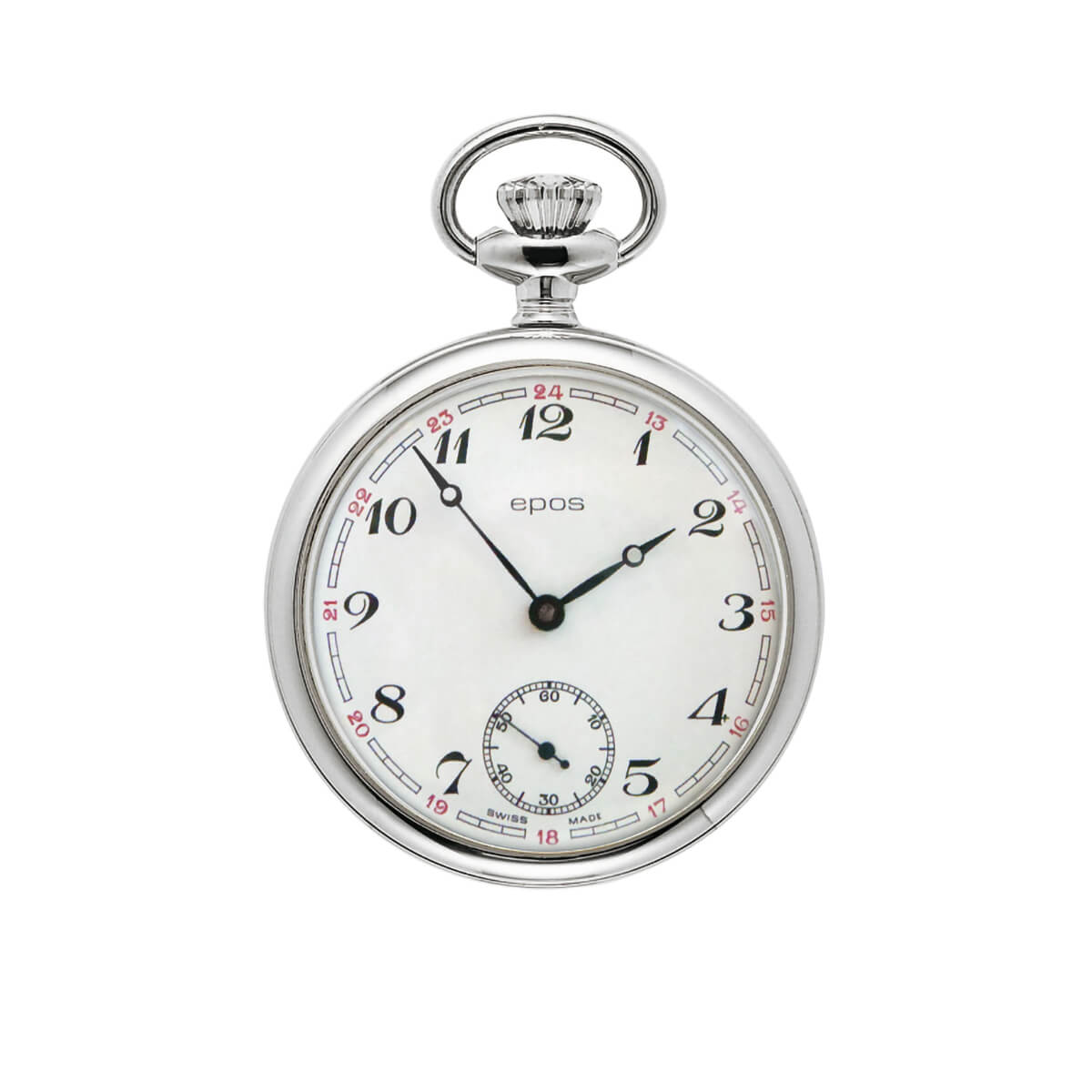
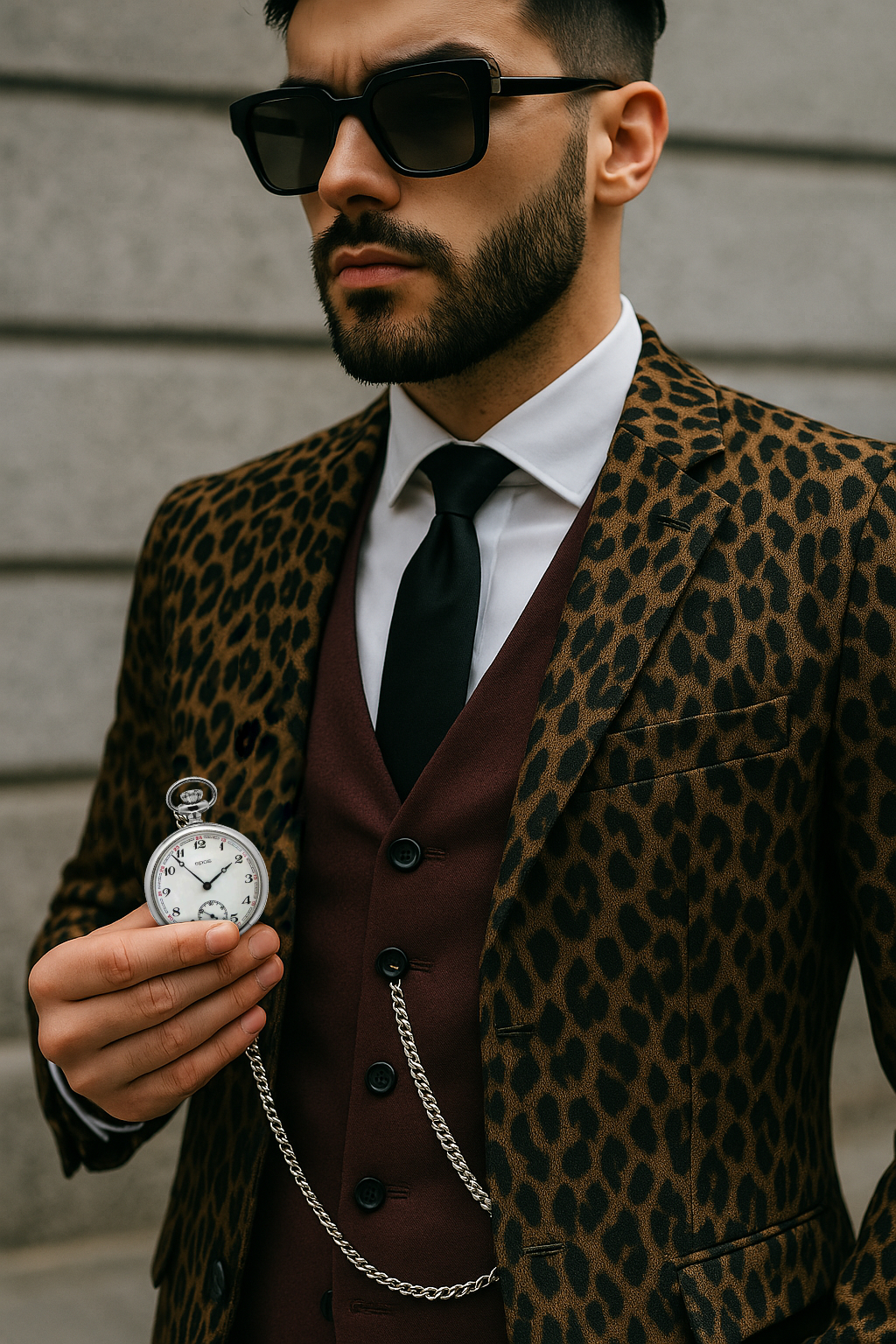
Epos Pocket Watch 2003.188.29.30.00
This model beautifully illustrates just how timeless a design can be, since it’s not at all original—quite the opposite, in fact. This is exactly what pocket watches from countless brands looked like. Even though this watch design has been used so often and is so old, it still has its charm today and is definitely not outdated.
So if you’re looking for a vintage pocket watch but don’t want to deal with all the hassles that come with older timepieces, this watch is a perfect fit. If you’re fascinated by watch movements, as I am, then you’re in luck, because this watch has a glass case back. However, both the front and back crystals are made of mineral glass. The watch has a diameter of 42 mm and is powered by a Unitas hand-wound movement. This means you can fully enjoy all the rituals associated with using a pocket watch.
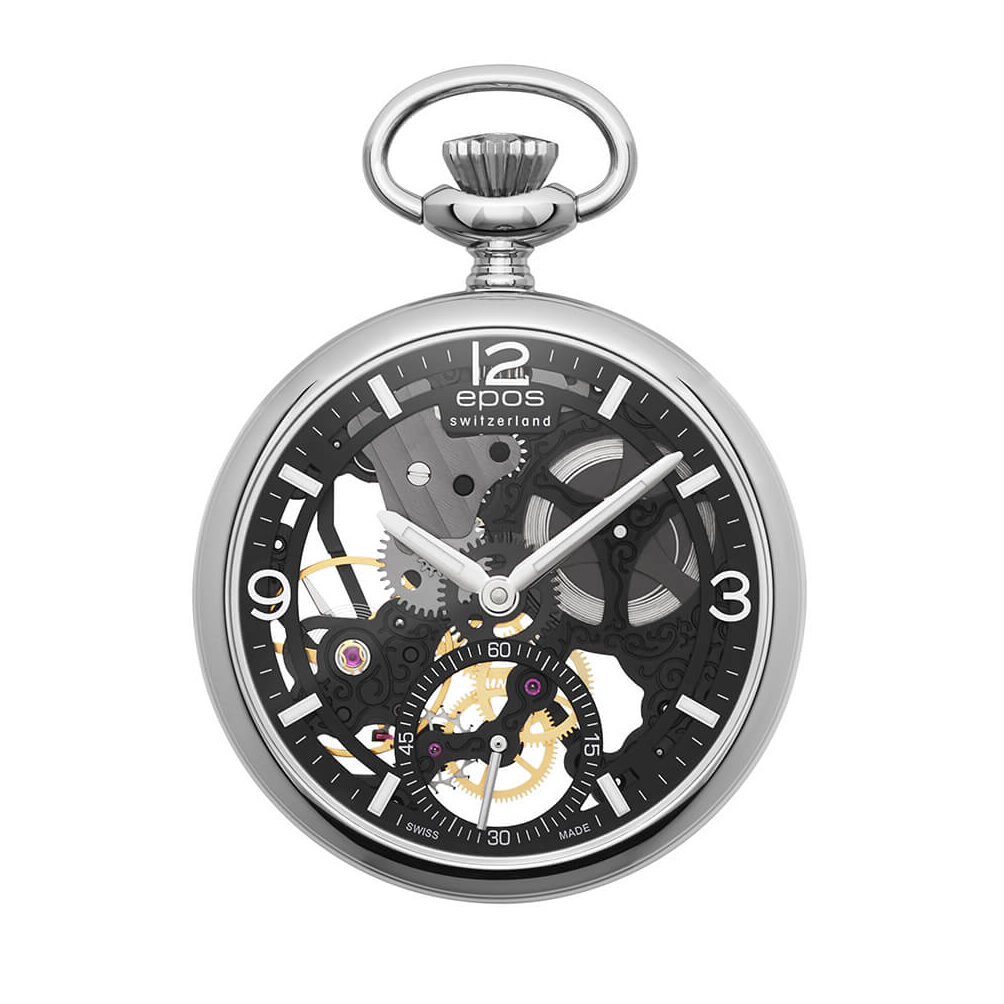
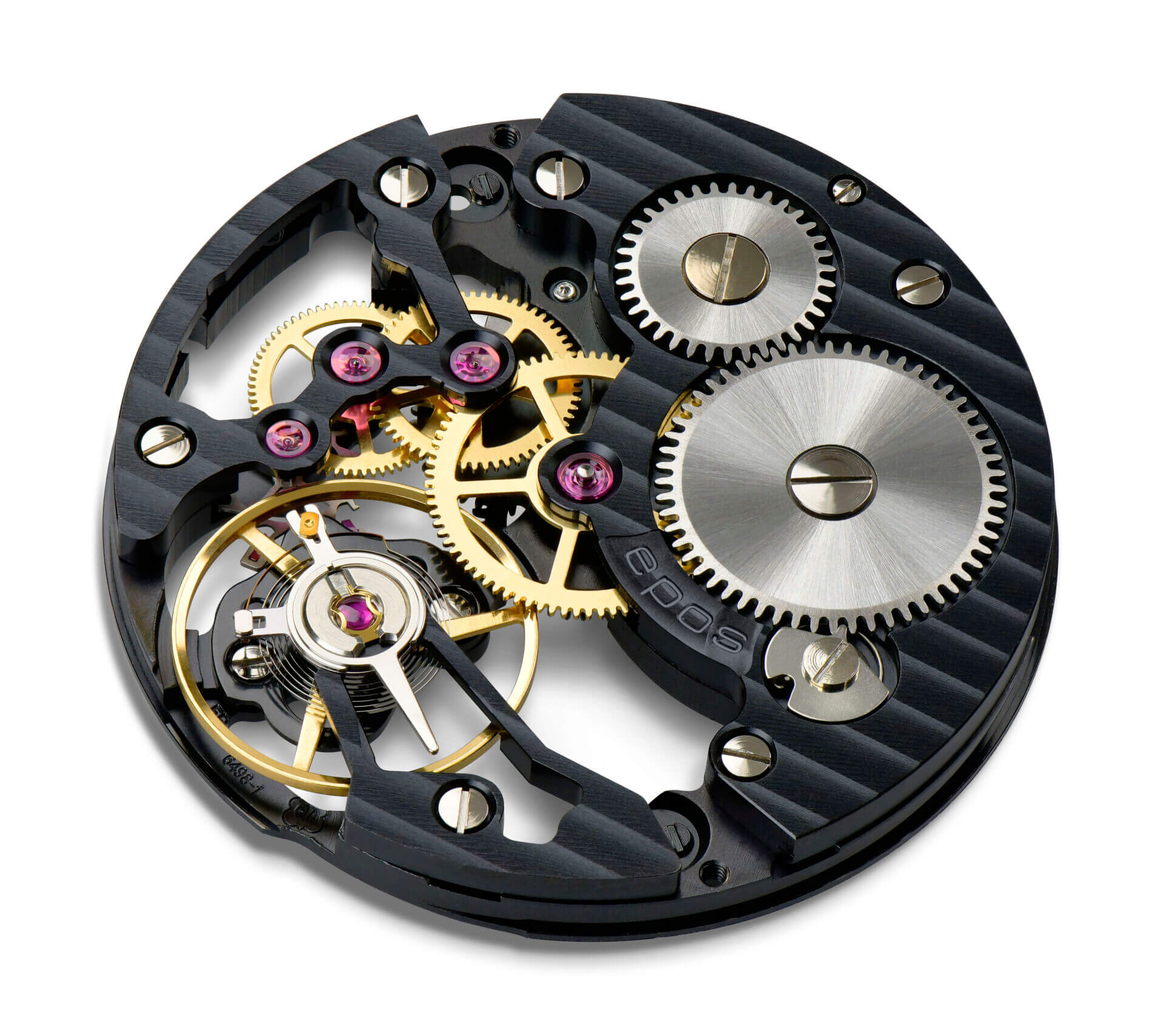
Epos Pocket Watch 2003.189.29.55.00
If you’re not a fan of vintage watches and their look, but you still like pocket watches, then this model will be a good fit for you. It stands out with its more modern design, and combined with the skeletonized dial, it has a slightly futuristic look. The case size is the same as in the previous watches, with a diameter of 42 mm. The type of glass is also identical—mineral glass—as is the Unitas hand-wound movement, which, unlike in the previous watches, has been finished in black.
▶️ Pocket watches are quite different from wristwatches. You don’t have to worry about many of the factors that are crucial for wristwatches, because you keep them in your pocket and they aren’t attached to your wrist. There’s simply no need to worry about bracelets or straps. Of course, you can discuss different types of chains, but that’s not quite the same thing. The
shape of the case isn’t as important as it is with classic watches, either. Generally speaking, comfort takes a back seat with pocket watches. So it cannot be said that there are no fundamental differences between wristwatches and pocket watches, which is why a large portion of watch enthusiasts isn’t particularly interested in pocket watches. However, if you’re not part of this group, you can expand your knowledge of pocket watches with our article “Pocket Watches: What Turned a Sensible Person into a Punctual One?”
Who will find Epos appealing?
The Epos brand creates watches that offer everything you could possibly want. It’s the ideal choice for lovers of mechanical timepieces who appreciate handcrafted work and precise craftsmanship, yet don’t want to blend in with the crowd. It appeals to both elegant gentlemen and modern individualists who have an eye for detail. You’ll often find skeletonized dials in this brand’s collection. All watches are mechanical, so you won’t find any quartz or solar-powered models.
This is also reflected in the price of the watches, which starts at around 25,000 CZK. So while they don’t offer the cheapest watches, in my opinion they’ve justified the price and even earned extra points for their originality. Epos is for those who see watches not only as a practical accessory, but as an expression of personality, taste, and respect for the art of watchmaking.
Epos is a proud Swiss brand that uses exclusively Swiss movements, which it often modifies itself—that alone speaks volumes. The watches tend to be on the larger side (complications = extra components that take up space), so it’s good to keep that in mind. If you’re a fan of skeletonized watches, or if you’re simply looking for a high-end Swiss mechanical watch—perhaps one with a complication or two—then I’d definitely recommend checking out Epos.
▶️ Skeletonization is a technique that literally reveals the beauty of a watch’s mechanical heart. Instead of a solid dial, it offers a view into the inner workings of the movement—often through meticulously engraved bridges and gears. This process not only highlights the technical precision and craftsmanship but also gives the watch a distinctive aesthetic dimension. For the EPOS brand, skeletonization is one of its signature features—not only does it allow you to admire the movement of the components in real time without having to turn the watch over to view the case back, but it also lends each model a touch of uniqueness and spectacularly showcases the art of watchmaking.



Comments
No one has commented on this article yet. Be the first.