

 Patrik Zdvíhal
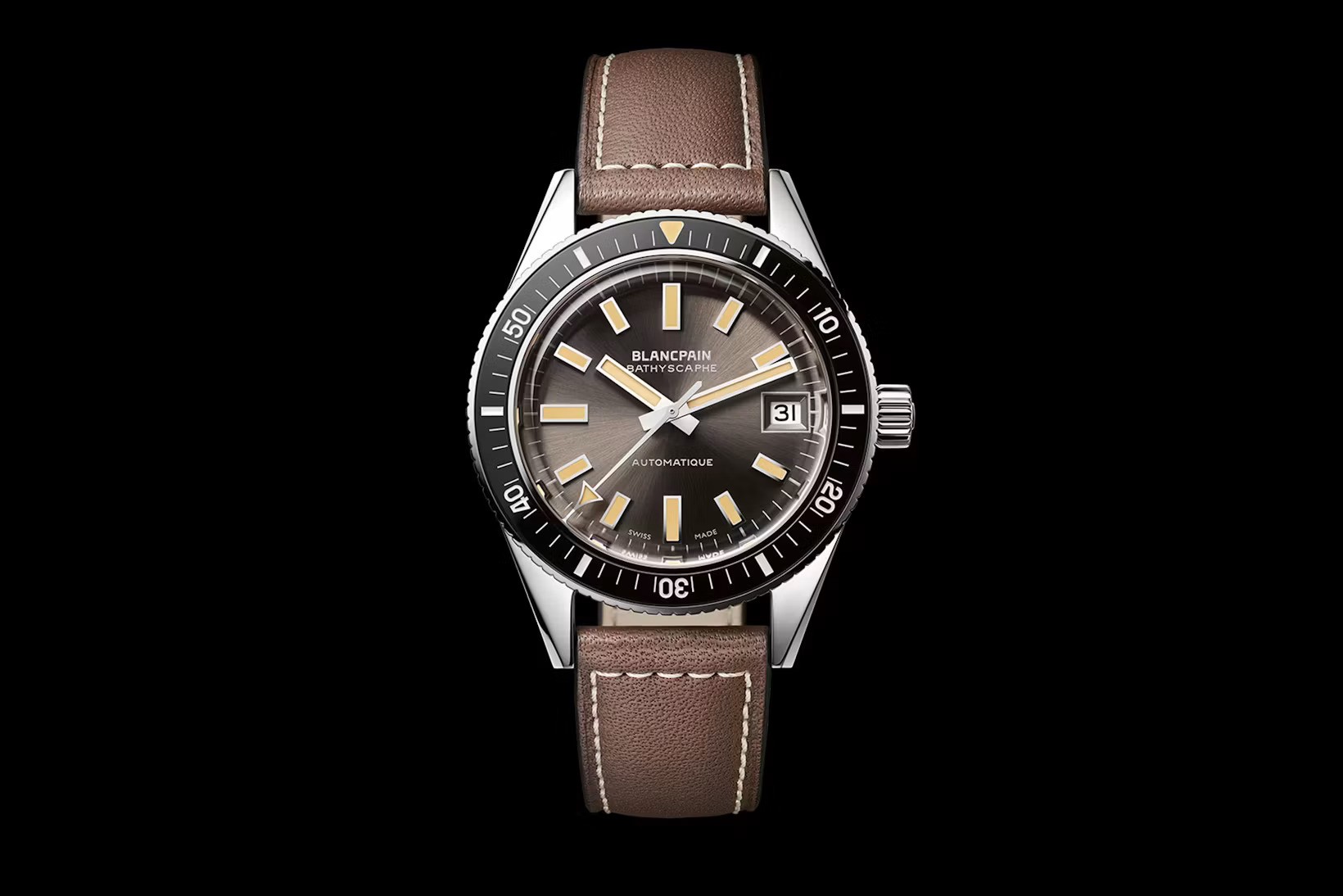
 The Blancpain Fifty Fathoms Bathyscaphe 70th Anniversary builds on the iconic 1968 model and demonstrates how a timeless design can still hold up after nearly six decades. But is the $18,300 price tag justified?
Table of Contents
What exactly is timeless design?
It’s not always easy to recognize timeless design. Some watches look great when they’re first released, but after a few years they already seem outdated. Others, on the other hand, manage to stay so far removed from fashion trends that their look remains timeless. And it’s precisely with these watches that we see that truly good design doesn’t need to be constantly updated.
Perhaps the best way to find out is to conduct a simple test: take a design that’s several decades old, build it today, and see if it still works. If it does, you’ve got something that’s ahead of its time.
The Blancpain Bathyscaphe is currently undergoing exactly this test. Its new anniversary edition returns to the design of the 1968 model and adopts some of its elements almost verbatim. And yet the new watch doesn’t look like a museum piece. Quite the opposite. At first glance, it looks like a modern luxury diver’s watch. That is precisely where its greatest strength lies.
“Bathyscaphe” Returns to 1968
The Bathyscaphe model holds a special place in Blancpain’s history. While the Fifty Fathoms from 1953 was a professional-grade diving watch, the Bathyscaphe was introduced in 1956 as its more civilian counterpart at a time when diving was beginning to move beyond purely professional settings. However, this anniversary model does not trace its roots all the way back to 1956. It is based on the 1968 Bathyscaphe.

At first glance, it’s clear where the inspiration comes from. The new model features Blancpain’s distinctive vintage logo, a gray dial with a sunburst finish, baton hands, and hour markers in 18-karat white gold. The color of the Super-LumiNova was also chosen to evoke the naturally aging luminescence of vintage watches.


The design of the bezel is also interesting. The steel bezel extends all the way under the domed sapphire crystal, creating a distinctive ring that pays homage to the original model. While the historic Bathyscaphe used Hesalite, the modern version features sapphire and a black ceramic insert with lacquered numerals.
This is exactly the kind of modernization that I think makes sense. Blancpain didn’t have to change what was already working. It simply adapted the old design to use materials and technologies that are in line with today’s standards.
37.4 mm: A Return to the Proportions of the Past
One of the most interesting details is the size itself. The new Fifty Fathoms Bathyscaphe features a stainless steel case with a diameter of 37.4 mm, which matches the size of the historic 1968 model. It is therefore not a scaled-down version of today’s large diver’s watches, but a deliberate return to the original proportions.

On its website, Blancpain lists the case thickness as 10.6 mm on its own, and 12.3 mm including the domed crystal. The lug-to-lug width is 18 mm, and water resistance reaches a very respectable 300 m. The dial is in a shade of meteorite gray—not made from an actual meteorite, which is so popular in watches today—and is complemented by hands and applied hour markers in 18-karat white gold. It also features a date window at the 3 o’clock position.
In terms of proportions, I think this is one of the most interesting features of the entire new model. Dive watches today often exceed 40 mm in size, whereas here Blancpain shows that a truly sporty character doesn’t necessarily mean a large case.
The Blancpain Caliber 1150: Does Haute Horlogerie Need a Diver’s Watch?
Hidden behind the sapphire crystal case back is the Blancpain 1150 in-house caliber. The automatic movement operates at a frequency of 3 Hz, features 28 jewels, 210 components, a silicon balance spring, and, most notably, a 100-hour power reserve. The movement itself measures 26.2 mm in diameter and just 3.25 mm in height.

A 100-hour power reserve is undoubtedly impressive. Furthermore, the Caliber 1150 is one of Blancpain’s long-standing movements, and its design with two mainsprings was already a highly efficient solution when it was introduced in the 1990s. But the question is a bit different: does a diving watch need such a luxurious movement? Technically, of course not. For diving itself, reliability, durability, readability, accuracy, and water resistance are far more important. A diver doesn’t need hand-engraved bridges or a gold rotor. And certainly not in order to safely descend to a depth of 300 meters.
However, I would be cautious about criticizing Blancpain here. Buyers of this model aren’t just buying a timepiece. They’re buying a Blancpain. And in this price range, the watchmaking craftsmanship is just as much a part of the watch’s value as its design, the brand’s history, or its limited edition status. Moreover, the Caliber 1150 isn’t just a decorative movement—it’s on par with Haute Horlogerie standards.

Still, it’s interesting to ask ourselves how much of a watch’s price we’re paying for features we’ll actually use, and how much for the feeling of having a small work of art on our wrist. And it’s perhaps with luxury diving watches that this difference is most evident.
Why a leather strap, specifically?
But I have an even bigger question about something else. The strap. The new anniversary edition comes with a brown calfskin strap. And this is for a watch that’s water-resistant to 300 meters and whose very identity is rooted in the brand’s diving heritage. Of course, I understand what Blancpain is going for here. The brown leather emphasizes the watch’s vintage character, complements the warmer shade of the luminescent markings well, and at the same time makes the new Bathyscaphe a more elegant timepiece suitable for wear even out of the water.
Here, form and function diverge somewhat. Leather isn’t a material I would naturally associate with a watch designed to be in the water on a regular basis. That doesn’t mean a watch with a leather strap can’t come into contact with water. It does mean, however, that with regular submersion and prolonged exposure to water, leather will age significantly faster than rubber or a suitable fabric.
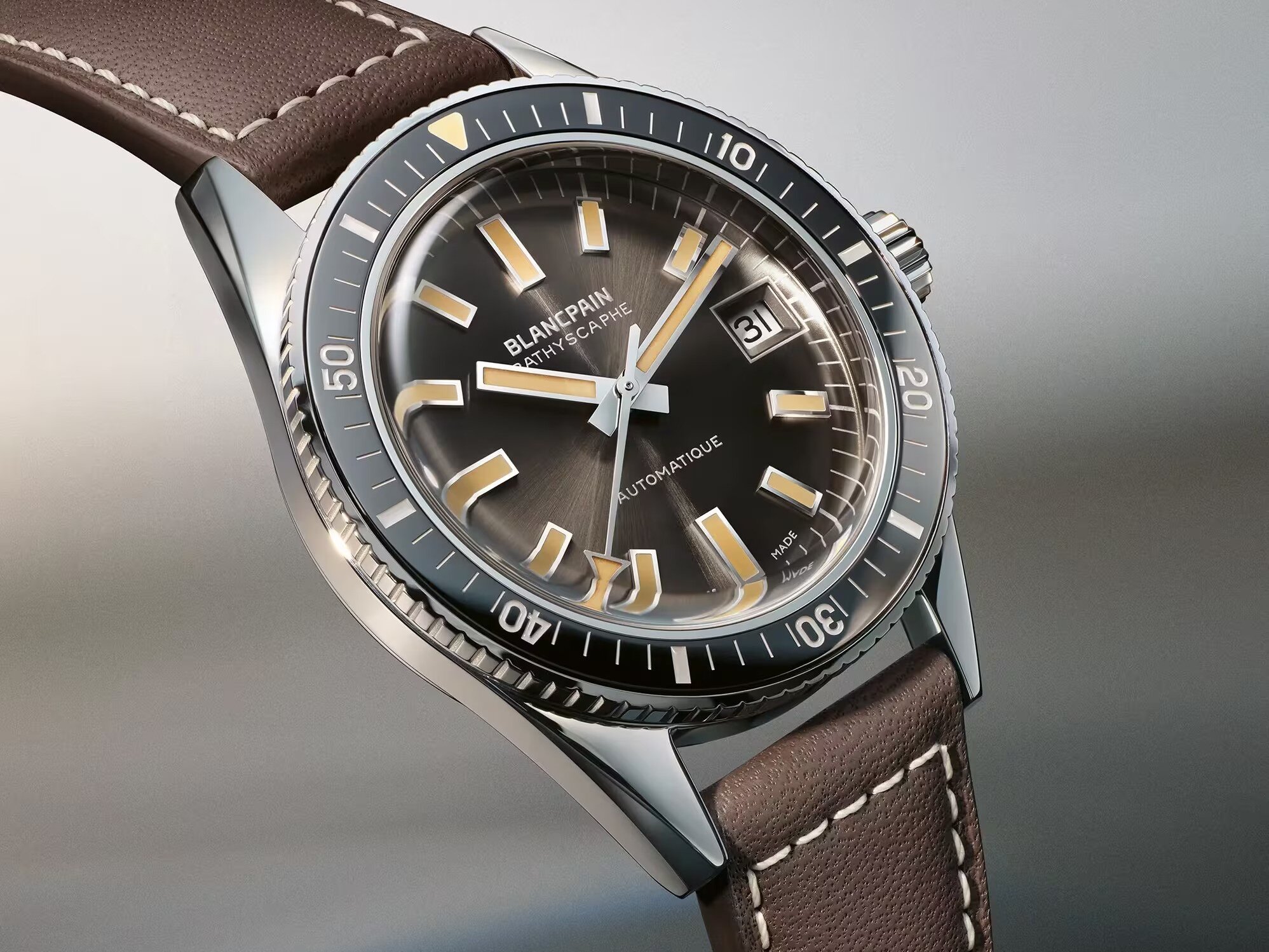
And yet Blancpain itself offers a solution right in its own lineup. The current Bathyscaphe, for example, is commonly available with a sail-canvas strap or a NATO strap. Blancpain, in fact, emphasizes their water resistance. In my opinion, a high-quality fabric strap—or perhaps a vintage-style rubber strap—would suit them much better. Leather is aesthetically pleasing, but in terms of the watch’s story, it feels a bit like a compromise made in the name of elegance.
And perhaps that is actually symbolic of the entire model. Today’s Bathyscaphe is no longer a tool that someone would purchase in order to use it regularly underwater. It is a luxury watch inspired by a tool. And if we accept this fact, the leather strap begins to make much more sense.
Five More Affordable Alternatives
The Blancpain Fifty Fathoms Bathyscaphe 70th Anniversary costs $18,300—roughly €16,500—and only 300 numbered pieces will be produced.
Of course, at this price point, you’re no longer just buying technical specifications. You’re paying for the brand, its history, the craftsmanship, the hand-wound movement, and—above all—a very specific design and collector’s experience. But if you’re drawn to the concept itself—that is, vintage diver’s watches, sensible proportions, historic design, and solid water resistance—there are significantly more affordable options. From Helveti’s lineup, I’ve selected five models that make the most sense in this context.
Oris Divers Date 01 733 7795 4057-Set
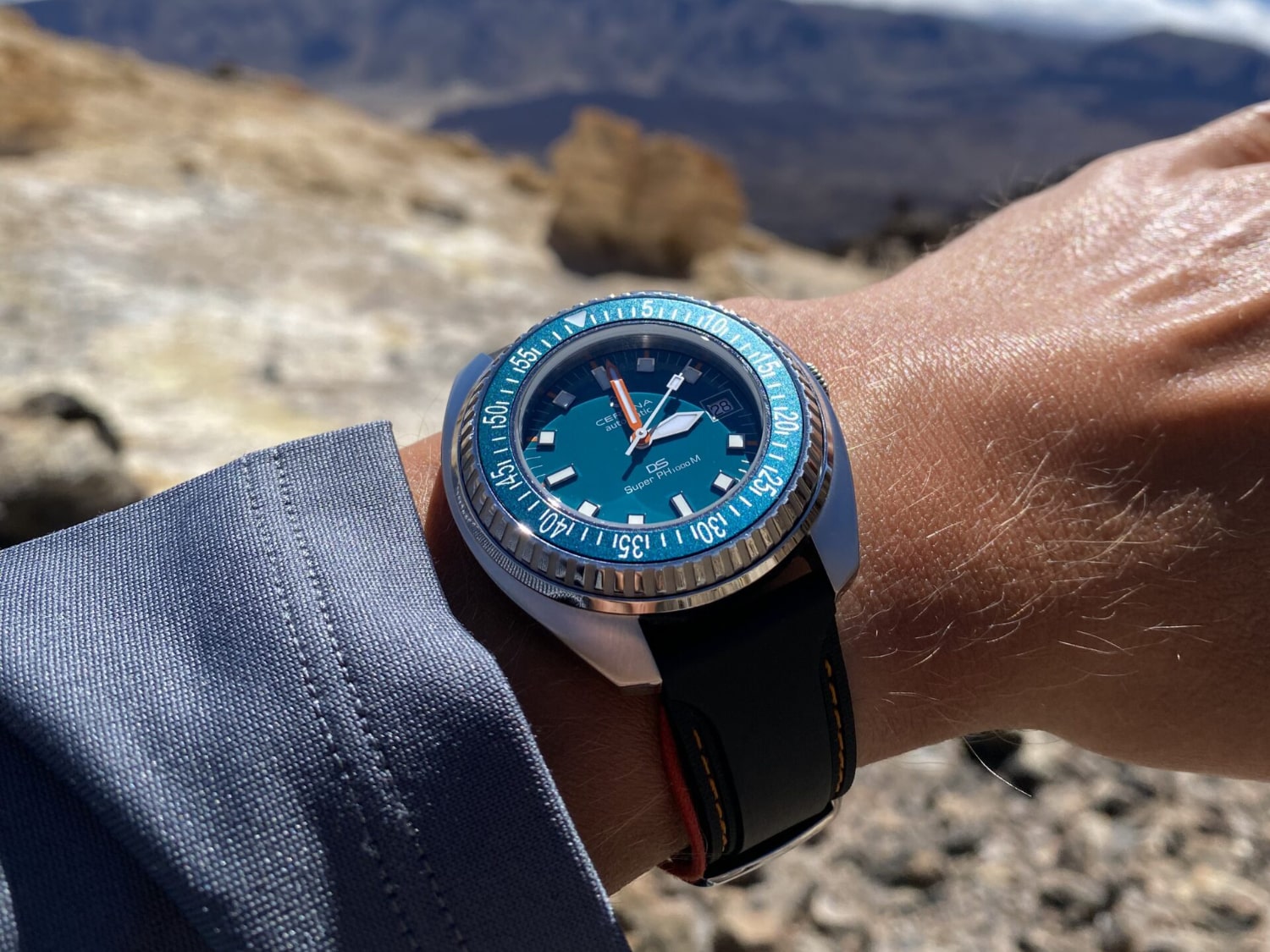
The Oris is probably the most versatile option of the five. Like the Bathyscaphe, it combines a retro diver’s look with modern materials while remaining reasonably compact. The steel case measures 39 mm in diameter, 46 mm from lug to lug, and 12 mm in height; sapphire crystal protects the green dial, and the watch is water-resistant to 200 m. Inside, it is powered by the Oris 733-1 automatic caliber, based on the Sellita SW200-1, with a 41-hour power reserve. Another major advantage is the stainless steel bracelet and the included rubber strap. For 64,990 CZK, you get a full-fledged Swiss diver’s watch that, while it may not feature a Blancpain in-house movement, offers a very similar philosophy of retro design adapted to the present day.
Seiko Prospex HBC010J1 1965 Heritage Diver European Limited Edition 2026
Seiko is an interesting alternative, especially for fans of vintage diving watches. Like Blancpain, it draws inspiration from a return to its own historic model—in this case, the first Japanese Seiko 6217-8001 diving watch from 1965, known as the 62MAS. The model features a 40 mm case, a 46.4 mm lug-to-lug width, a height of 13 mm, and water resistance to 300 m, so it even matches the Blancpain in terms of durability. Inside, it is powered by the automatic 6R55 caliber with an impressive 72-hour power reserve. The green dial, sapphire crystal, steel bracelet, and included silicone strap round out this limited edition of 1,400 pieces. At 43,990 Kč, the price puts it in a completely different league compared to the Blancpain.
PRIM Orlík Meteorite LE 95-112-557-00-1
In terms of design, it is not a copy of the Bathyscaphe, but, like Blancpain, it combines diving history with artisanal craftsmanship and collectible appeal. The Orlík was originally commissioned for the Czechoslovak Army in 1965, and the current edition features a genuine Muonionalusta meteorite, a handcrafted bezel made of HyCeram®, and the Czech-made PRIM 95.00 caliber. The case measures 42 mm in diameter, with a lug-to-lug width of 52.6 mm, a height of 13.6 mm, and is water-resistant to 200 m. The power reserve is 48 hours. The price of 119,000 CZK is certainly not “cheap,” but it is still significantly lower than that of a Blancpain and, at the same time, offers something that most common alternatives lack—Czech in-house manufacturing, a strong historical narrative, and true collector’s appeal.
Vulcain Skindiver Nautique Black with Khaki-Brown Lum
If the vintage character of the Bathyscaphe is what interests you most, Vulcain is a very compelling alternative. The Skindiver Nautique is based on a 1960 Vulcain model and features a 38mm steel case, a lug-to-lug width of 44.5 mm, a thickness of 12.2 mm, a sapphire crystal, a ceramic bezel, and water resistance to 200 m. It is powered by the tried-and-true Swiss ETA 2824 automatic movement with a 38-hour power reserve. An interesting detail is the khaki-brown Super-LumiNova, which visually fits well with the same vintage aesthetic that Blancpain uses for its anniversary luminescence. At 39,500 CZK, it is one of the most appealing options for anyone seeking the atmosphere of a historic diver’s watch without the price tag of haute horlogerie.
Nivada Grenchen Aquamar Black
Nivada is perhaps the most interesting choice for those looking for a small, retro, and truly Swiss diver’s watch. The Aquamar measures 38 mm in diameter, 45 mm lug-to-lug, and 12.9 mm in thickness. The steel case is complemented by a sapphire crystal, a screw-down crown, and water resistance to 200 m. Inside, it is powered by the Swiss automatic Soprod P024 caliber with a 38-hour power reserve. Furthermore, Nivada Grenchen has long been committed to a return to its design heritage from the 1950s and 1960s, so its philosophy is very much in line with that of the Bathyscaphe. The black version, priced at 31,560 CZK, offers perhaps the purest answer to the question of what you really need from a Bathyscaphe: proportions, a retro vibe, a diver’s bezel, and a mechanical movement—without the extra cost of haute horlogerie or a famous name on the dial.
Timelessness comes at a price. But not always that much
The new Blancpain Fifty Fathoms Bathyscaphe 70th Anniversary is interesting precisely because it doesn’t try to be “new” at all costs. On the contrary. It takes the 1968 design, retains its characteristic proportions, logo, dial, and other details, and simply adapts them to the modern world. And that, in my opinion, is exactly what demonstrates what truly timeless design can mean.

When you look at a watch after nearly sixty years and it still looks natural, there’s no need to redesign it just to make it look modern. All you need to do is replace the Hesalit with sapphire, add ceramic, modern luminescence, a contemporary movement, and a transparent case back. The rest can remain surprisingly unchanged. So the question isn’t whether the Blancpain Bathyscaphe 70th Anniversary is good. It is. The question is rather whether you’re willing to pay $18,300 (approximately 380,000 CZK) for its combination of history, design, and haute horlogerie.
And if the answer is no, the good news is that the very concept of a timeless diving watch design is available for significantly less.




Comments
No one has commented on this article yet. Be the first.