

 Patrik Zdvíhal
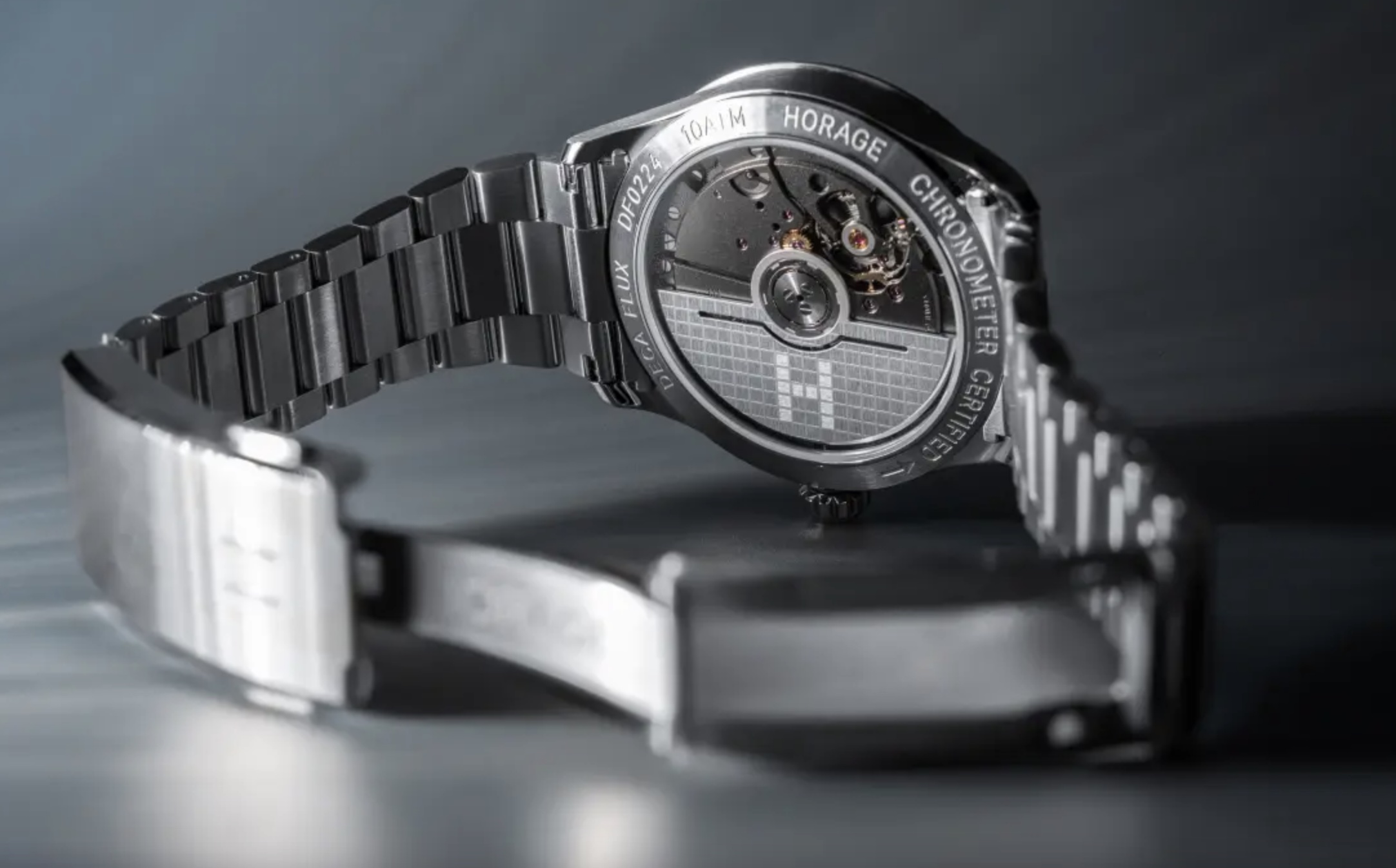
From the first K1 caliber, through the micro-rotor K2, to its own K-TOU tourbillon and the combined K-TMR caliber, Horage demonstrates how modern independent watchmaking can combine traditional mechanics with advanced manufacturing technologies. In this article, we’ll take a look at Horage’s history, its most notable models, and its collaboration with Formex, which led to the creation of the ultra-thin FX01 caliber.
Table of Contents
- Proč vůbec Horage vzniklo?
- Omnium: první hodinky, ještě bez vlastního kalibru
- Rozhodnutí začít od nuly
- K1: základ, na kterém stojí dnešní Horage
- Jonas-K1 a návrat Horage
- K1 jako stavebnice: Autark, Solar Wind a Multiply
- Když se z problému stane tourbillon
- K-TOU: vlastní létající tourbillon
- K2: když se Horage pustilo do mikro-rotoru
- Supersede: mikro-rotor jako každodenní nástroj
- Omnium se vrací s K2
- Lensman: když hodinářství potká fotografii
- Když se mikro-rotor spojí s tourbillonem
- Autark Tourbillon: když se technika stává designem
- Bubbles: když nestačí přidat nový ciferník
- Značka hodinek, nebo vývojová manufaktura?
- Od vlastních hodinek ke spolupráci s Formexem
- Moderní švýcarské hodinářství
We recently introduced the new Formex Aria, an elegant Swiss watch that stands out for its exceptionally thin case and the in-house FX01 caliber with a micro-rotor, among other features. The movement itself is one of the most interesting elements of this new model. Formex collaborated with the Swiss company Horage on its development, drawing on Horage’s expertise in designing ultra-thin micro-rotor calibers. So if you read our previous article on the Formex Aria, the name Horage may have stuck in your memory.
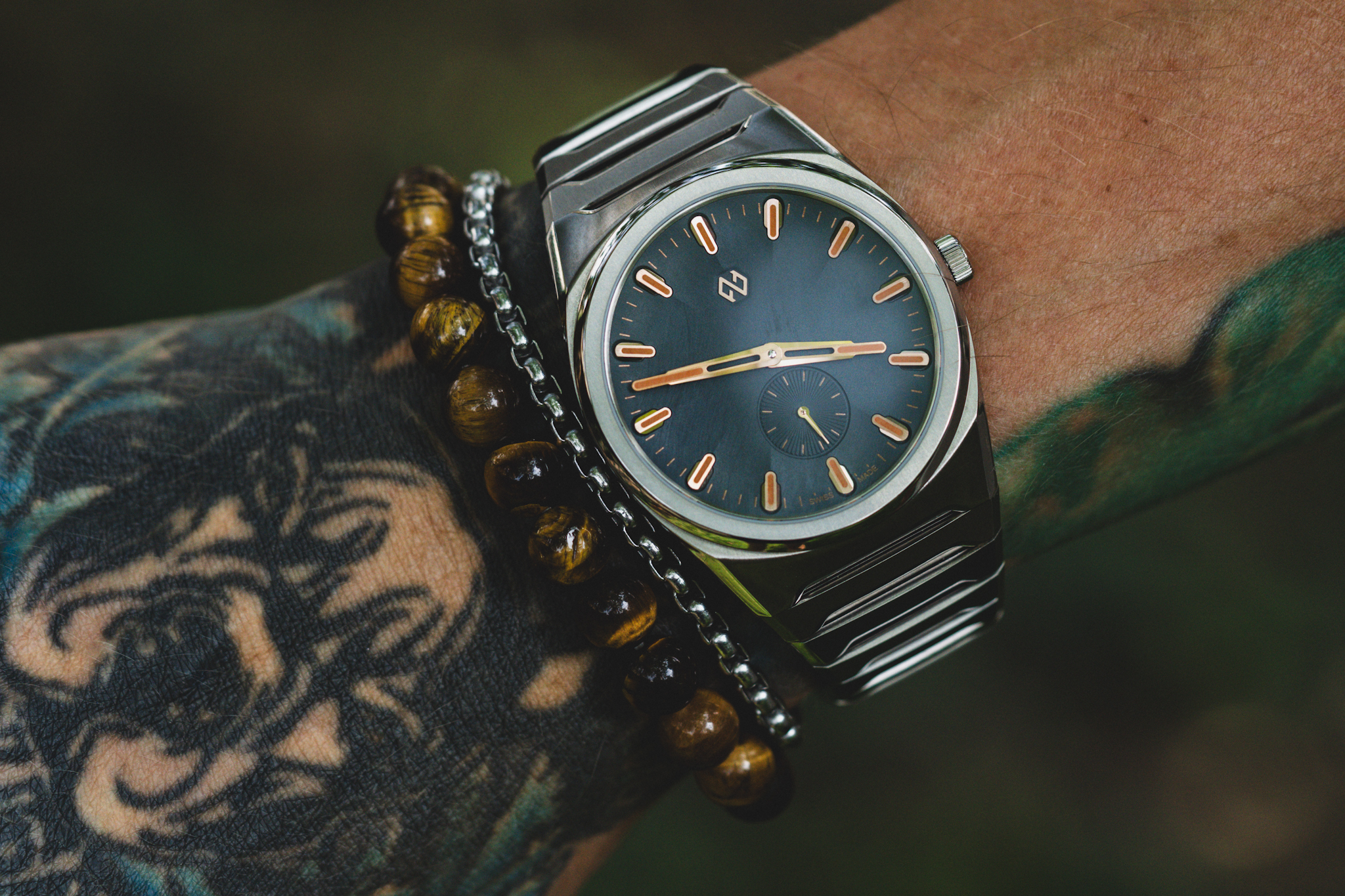
Formex Aria: An Elegant New Model with an Ultra-Thin Handcrafted Movement
So this time, we’ll take a closer look at this brand. And it’s worth noting right from the start that Horage isn’t exactly a typical example of a Swiss watchmaking manufactory. It doesn’t have several centuries of history behind it, nor does it have a founding legend from the 18th century or generations of watchmakers who passed down their know-how from father to son. On the contrary, Horage is a relatively young brand. Its story began as recently as 2007.

Nevertheless, today it develops its own mechanical calibers, manufactures complex tourbillons, works with micro-rotors, silicon components, titanium, and 904L steel, while also providing its technological know-how to other brands. Its history is therefore much less a story of gradually building a classic watchmaking tradition and much more a story of the quest for independence.
Horage didn’t develop its own in-house movement because it was a long-cherished marketing goal from the start. An in-house caliber became a necessity. That necessity gradually became the foundation of the entire brand, and from that foundation, a unique watchmaking ecosystem eventually emerged.
Why was Horage created in the first place?
When one thinks of Swiss watchmaking, one of the places that comes to mind is Biel/Bienne. This city on the northern shore of Lake Biel is one of the most important centers of the Swiss watchmaking industry, and it is here that Horage is headquartered today.


The brand’s roots date back to 2007, when husband and wife Andreas Felsl and Tzuyu Huang began thinking about creating a new watch brand. For Tzuyu, however, the watch industry was nothing new. Even before Horage was founded, she had established a company in Biel focused on OEM sourcing that collaborated with a number of watch brands. It was precisely this experience that later proved crucial in understanding why Horage chose to pursue in-house manufacturing.
An OEM supplier can indeed be very successful, but its success is always linked in some way to the success of others. If you manufacture or supply components for other brands, you are also dependent on their orders, their strategy, and their supply chain. Felsl and Huang therefore sought a way to create a brand that would be truly independent.
➡️ Did you know: An OEM (Original Equipment Manufacturer) is a manufacturer that develops or produces components or entire products for another brand. In the case of watches, for example, a specialized manufacturer may supply a finished movement that is subsequently branded with the customer’s name. For smaller watchmaking companies, OEM collaboration is a way to offer their own watches without having to build a complete in-house movement development and manufacturing operation. It was precisely from this model that Horage gradually moved away and began investing in its own development of mechanical calibers.
Even the name itself hides a small detail. HORAGE was created by combining the Latin word *hora* (meaning “hour”) and the English word *age* (meaning “age” or “period”). The letter H is silent, just as it is in the Latin word *hora*. The name is therefore pronounced roughly like “orage.” The early years, however, were certainly not easy. Horage had the ambition to create its own watches, but at the same time was entering an industry in which independence from mechanical movement suppliers is a rather critical issue. The first answer to this challenge was the Omnium.
Omnium: the first watch, still without its own movement
Horage’s first actual model was the Omnium, whose development began even before the brand’s public debut; the watch was unveiled at Baselworld in 2009. At that time, however, Horage did not yet have its own mechanical movement, and the Omnium used a movement sourced from an external supplier. It was precisely this dependence on external movements that ultimately became one of the reasons why the founders decided to embark on a much more challenging path and develop their own base caliber from scratch.

At first glance, there would be nothing unusual about this. Even today, the use of an external movement is not something that automatically diminishes the quality of a watch. For Horage, however, this experience served as a major catalyst. The brand began to realize that if it wanted to operate as a truly independent Swiss manufacturer in the long term, its future could not depend on the availability of movements from large manufacturers.
The Decision to Start from Scratch
Developing a mechanical movement is one of the most challenging tasks a watchmaking company can undertake. It is not enough to design a mechanism that works in a single prototype. It must be possible to manufacture the movement in large quantities; individual components must have very precise tolerances; and the mechanism must be reliable, serviceable, and sufficiently efficient.
In 2009, Horage therefore decided to set its existing activities largely aside and focus on developing its own automatic movement. The project was designated K1. According to Horage, the development itself took seven years. Initially, Stephen Kussmaul, a former engineer at Eterna, worked on the project; after about three years, he handed it over to Jonas Nydegger and Florian Serex. They subsequently brought the caliber to production.
The symbolism behind the name is also interesting. K1 refers to Mount K1, one of the most challenging peaks in the Himalayas. Horage wanted to convey that developing its own mechanical movement presents a similarly demanding challenge. And it wasn’t just a marketing metaphor. Horage did, in fact, practically disappear from the market for several years. The brand itself describes this process as a period of hibernation. Instead of constantly introducing new watches, it focused on developing its own movement. Thus, the original watch brand gradually transformed into primarily a development and engineering firm. After seven years of work, the result finally emerged.
K1: The foundation upon which today’s Horage stands
The K1 is perhaps the most important caliber in Horage’s history today. Not necessarily because it is the most technologically advanced of all the brand’s movements, but because Horage has built all of its subsequent expertise upon it. The production K1 debuted in 2015, and according to the manufacturer, the current version is already the tenth generation of this caliber. From the outset, Horage designed it as a modular automatic movement that would not be limited to a single specific model.

The K1’s basic dimensions are 25.6 × 4.95 mm, and its power reserve is 65 hours. The movement operates at a frequency of 3.5 Hz, or 25,200 half-oscillations per hour. Horage also uses silicon components in its escapement, and the design is engineered to accommodate various complications. It is precisely this modularity that is essential to understanding Horage.
The company did not want to simply create a single in-house movement and then consider the entire project complete. From the outset, the K1 was conceived as a sort of foundational building block. Horage lists 18 basic configurations and five main functional variants, including, for example, small seconds, date, large date, and power reserve indication. For a small manufacturer, this approach is very practical. If every new model required a completely new movement, development would be extremely costly and time-consuming. The modular architecture, on the other hand, makes it possible to use an already developed base and add additional functions as needed.

Jonas-K1 and the Return of Horage
The year 2015 was significant not only for the completion of the K1. It was also the year Horage returned to the scene after a hiatus of several years. The new watch was aptly named the Jonas-K1, after Jonas Nydegger, who played a key role in finalizing the movement’s development. Horage launched the watch via Kickstarter, and crowdfunding played a significant role in the brand’s comeback. Today, crowdfunding may be a relatively common tool in the watch industry, but at the time, it represented a way for Horage to bypass part of the traditional financing model while connecting directly with its customer community.

The Jonas-K1 subsequently evolved into the Array model, which utilized the K1 movement in a configuration featuring a central seconds hand, a power reserve indicator, and a large date display. For Horage, this was much more than just the launch of a new watch. After years of development, the company finally incorporated its own mechanical movement into an actual product and was able to observe how the K1 performed in everyday use. The experience gained from these first watches was crucial for further development.
K1 as a Construction Set: Autark, Solar Wind, and Multiply
The K1 gradually made its way into other models as well, such as the Autark and Solar Wind. This gave Horage the opportunity to test how its basic design performed in different types of watches and to explore the additional possibilities offered by the modular architecture.

One of the most interesting projects was Multiply. With this project, the K1’s modularity came even more to the forefront. Horage wanted to offer customers the opportunity to customize their watches according to their own preferences. It wasn’t just a matter of choosing one of several colors, but of combining different elements to create a more personalized result. Multiply also became Horage’s second successful Kickstarter project. Today, this approach may seem obvious, but for Horage at the time, it had another important significance. The brand was learning how to work directly with its customer community, how to gather feedback, and how to translate the technical modularity of the movement into the product itself.

In fact, that’s one of the recurring themes in Horage’s history to this day. Once you’ve established a technological foundation, you try to make the most of it.
When a Problem Becomes a Tourbillon
The K1 was a major milestone, but Horage certainly had no intention of stopping there. On the contrary, the company began applying the experience it had gained to the design of other in-house mechanisms. One of the most notable of these was the tourbillon.
The original plan, however, looked completely different. Horage wanted to use an external Swiss tourbillon movement for its first tourbillon watch and incorporate its own concept of a silicon escapement into it. But the agreement with the supplier ultimately fell through. For a typical brand, such a situation would likely have meant postponing the project or looking for another supplier. Horage, however, opted for a significantly bolder solution. With orders and prototypes already in place, it began developing its own tourbillon caliber, the K-TOU.
According to Horage, it took just eight months from the initial design concepts to a fully functional movement. That is an exceptionally short time for an in-house tourbillon, especially considering that this was a production movement and not just a one-off prototype. Moreover, development took place during the pandemic. Within a few months, Horage thus created another in-house mechanical movement—this time, however, one that was significantly more complex.
K-TOU: its own flying tourbillon
The K-TOU caliber is a hand-wound flying tourbillon. It operates at a frequency of 3.5 Hz, and its most notable technical feature is its exceptionally long power reserve. Horage claims a power reserve of more than 120 hours, or approximately five days. The company paid particular attention to the efficiency of the entire mechanism. According to the manufacturer, the silicon escapement is significantly more efficient than conventional designs, and the low weight of the titanium tourbillon cage also contributes to this efficiency. It weighs only 0.29 g and is 3.9 mm high. The entire movement measures 4.3 × 32 mm.

The tourbillon cage itself consists of 43 components. Horage does not use the classic design based on a pivot and jewel, but rather a stable ball bearing. The manufacturer’s primary goal is to ensure durability and the ability to wear the watch in everyday life. This is precisely where Horage differs from certain aspects of the traditional perception of the tourbillon. Here, the tourbillon is not meant to be merely a complication that the owner admires through the crystal and then locks away in a safe. Instead, Horage strives to design the watch so that it can actually be worn.

The result was the Tourbillon 1. Horage offered it in a case made of 904L steel or 18-karat gold, with a water resistance of 100 m (!). The starting price was 7,490 CHF. The brand’s goal was to create a tourbillon that would not only showcase this traditional watchmaking complication but would also feature a modern design, a long power reserve, and a relatively affordable price tag within the world of Swiss-made tourbillons. And with that, Horage entered the next phase of its history.
K2: When Horage Set Out to Develop a Micro-Rotor
This time, Horage focused on one of the most interesting design approaches for creating thin automatic watches—the micro-rotor. A classic automatic rotor is positioned above the main plane of the movement. While this is practical from the standpoint of automatic winding design, the rotor also adds a certain amount of height. The micro-rotor, on the other hand, is integrated directly into the movement’s structure and remains in the same plane as the movement. The result can be a significantly thinner automatic movement.


The disadvantage is that a small rotor has less moment of inertia. To reliably wind the mainspring, it must be very well designed, and it is usually necessary to use a high-density material. That is why Horage uses a gold-plated tungsten micro-rotor in the K2. Depending on the design, other precious metal solutions may also be used.
The K2 has a diameter of 30 mm and comes in three basic height configurations—2.9, 3.3, and 3.6 mm. Modularity returns here in an even more sophisticated form. Horage lists a total of 38 possible K2 variants. The thinnest 2.9-mm version, for example, is designed for a simple configuration with three hands or a small seconds hand. The 3.3 mm version allows for the addition of a calendar, and the tallest 3.6 mm configuration offers space for more complex solutions, including GMT, day/night indication, power reserve, and a calendar.

Like K1, K2 operates at a frequency of 3.5 Hz and offers approximately 72 hours of power reserve. Horage uses a silicon balance spring, anchor, and escape wheel, and specifies COSC-certified accuracy, i.e., -4 to +6 seconds per day. For a micro-rotor, 72 hours is a very impressive figure. Horage states that, thanks to the design of the mainspring and the optimization of the entire system, it has managed to increase winding efficiency by approximately 55% compared to the previous solution. The K2 has thus become a natural continuation of the concept that Horage began developing with the K1. It is a platform.
Supersede: The Micro-Rotor as an Everyday Tool
The first major collection to utilize K2 was Supersede. With this collection, Horage demonstrated what a modular micro-rotor caliber can mean in practice. These were not minimalist dress watches in which the micro-rotor was merely a means to achieve a slim case profile. On the contrary, the Supersede is a more sport-oriented watch designed to offer a range of functions in a relatively compact case. In the version with the 3.6 mm-high K2, the movement features a central GMT hand, day/night indicator, power reserve display, and calendar. It is precisely this combination of the micro-rotor and these functions that makes the K2 so interesting.

At the same time, Horage continued to work with modern materials and its own design solutions. One example is the HMAC micro-adjustment system, which the brand developed for its bracelet. This system allows for fine-tuning the bracelet’s length in millimeter increments, addressing a rather practical problem that is often overlooked in mechanical watches—how to ensure the watch remains comfortable to wear throughout the day. Such details may not be as flashy as a tourbillon or a micro-rotor, but they fit perfectly into Horage’s philosophy. If the brand considers a particular solution inadequate, it strives to develop its own.
Omnium Returns with K2
Another notable aspect of Horage’s history is the fact that it has repeatedly revisited certain models. The best example is the Omnium. The first Omnium was introduced in 2009, even before the K1 was completed. After the brand’s return in 2015, the model saw a new generation with the K1, followed later by other variants. In 2021, when Horage introduced the K2, it was only natural to continue this tradition and equip the Omnium with a new micro-rotor caliber.

The Omnium K2 thus serves as a rather fine example of the brand’s evolution. In terms of design and history, it harkens back to Horage’s early years, but inside lies technology that the company has refined over more than a decade of development. The current 37mm version uses the thinnest 2.9mm variant of the K2 movement, features a small seconds hand, and offers a 72-hour power reserve. Horage also uses 904L steel in this model—a material that has already appeared in its previous models.
Lensman: When Watchmaking Meets Photography
However, Horage isn’t just about developing calibers. The brand also strives to find themes that it can incorporate into the design and functions of its watches. One of the most interesting examples is the Lensman.

The inspiration came from photography and the world of mechanical cameras. And that’s a field that has surprisingly much in common with traditional watchmaking. In both cases, it’s about mechanical precision, working with small components, and the effort to incorporate a complex function into a compact device. That’s why the Lensman doesn’t look like a classic sports watch with a GMT hand tacked on as an afterthought. Its design is meant to evoke photographic equipment, and the entire concept is built around the world of photography.

The Lensman 2 Exposure takes it a step further. Its bezel functions as a mechanical tool for calculating exposure. It allows you to work with ISO values, aperture, and lighting conditions, offering an analog reminder of how exposure was handled in the days when photographers didn’t have automatic metering in their camera’s viewfinder. From today’s photographer’s perspective, this is, of course, more of a fun and educational feature than an essential tool. And that’s precisely where its charm lies. The Lensman isn’t just about what the watch can do technically. It’s also about the story it tells.
When a micro-rotor is combined with a tourbillon
After the K1, K2, and K-TOU, the question arose: what would come next? Horage already had its own micro-rotor caliber. It also had its own flying tourbillon. So why not combine the two?
The result was the K-TMR, the brand’s fourth in-house base caliber. Horage began working on its development by drawing on experience from previous movements, and a significant portion of the project was able to utilize components that had already been developed. The architecture itself, however, was new. The development of the K-TMR took approximately 18 months. This is, once again, significantly shorter than one would expect for the development of a completely new micro-rotor tourbillon. Horage was able to achieve this precisely because it already had an established library of proprietary components, manufacturing processes, and experience.

The K-TMR is 3.6 mm thick, has a diameter of 30 mm, and offers approximately 72 hours of power reserve. It combines a micro-rotor with a flying tourbillon and, like the K2, uses silicon components in the escapement (I wonder what Powermatic’s detractors will say about that :)). The choice of material for the micro-rotor is also interesting. The standard version uses tungsten, though Horage also offers the option of PT950 platinum. The higher density of platinum allows for increased efficiency in automatic winding.
The result was the Autark Tourbillon model. The name “Autark” is no coincidence; it comes from the German word meaning “independent” or “self-sufficient.” And it would be hard to find a better name for a watch that combines two of its own complicated calibers into a single mechanism.
Autark Tourbillon: When Technology Becomes Design
The Autark Tourbillon is also interesting in that its technical design directly influences its appearance. Horage uses a multi-layered case construction, Grade 5 titanium, and a combination of brushed, polished, and other finishes. The case remains thinner than 9 mm, which is quite impressive given the presence of a tourbillon and a micro-rotor. At the same time, this watch embodies something that has been characteristic of Horage practically from the very beginning: design is not created in isolation from technology.


First, an empty case is not created, into which a suitable movement is then sought. Horage, on the other hand, often begins with the movement itself. The caliber’s construction then influences the watch’s thickness, the shape of the case, the placement of the openings in the dial, and what the customer can see through the sapphire crystal. It’s a fairly technical way of thinking. At Horage, the mechanics are an integral part of the design.
Bubbles: When Adding a New Dial Isn’t Enough
In 2026, Horage demonstrated that even with the Autark Tourbillon, it did not want to limit itself to simply changing colors or using new materials. It introduced the Autark Tourbillon Bubbles.
What makes this model interesting is not just its new design. Horage has created an inverted version of the K-TMR micro-rotor tourbillon, known as the K-TMR 2. This design change required modifications to the automatic winding system, as reversing the micro-rotor alters the way its motion is transmitted to the winding mechanism. The current version features a PT950 platinum micro-rotor, a titanium flying tourbillon cage weighing 0.29 grams, a 3.6-mm caliber, and a 72-hour power reserve. The case has a diameter of 39.5 mm and is less than 9 mm thick.

Bubbles is a good example of how Horage approaches product development. For a traditional brand, a new model might mean a new dial, a new case, or a new combination of materials. At Horage, a new model might come about simply because someone starts wondering what would happen if the architecture of the movement itself were changed. And that’s a significantly more challenging path.
A watch brand, or a development manufacturer?
This brings us to the question of what Horage actually is. Is it a watch manufacturer? Yes. Is it a watchmaking manufactory? Yes, at least in the sense that Horage itself uses the term to describe the development and production of its own calibers.
But at the same time, Horage is also a development and technology company. Its headquarters and manufacturing facilities are located in Biel/Bienne, and according to the company’s own data, it handles development, engineering, sourcing, logistics, design, production, and marketing in-house, although team members based outside Switzerland also collaborate on individual tasks. Moreover, the office and the production center are located just a few hundred meters apart.

Today, Horage refers to its approach as “Performance Watchmaking.” This concept is more important to understanding the brand than it might seem at first glance. Horage does not strive to be a traditional watchmaking manufactory in the classical sense. It does not want to base its identity solely on hand-finishing, traditional watchmaking techniques, or historical complications. On the other hand, it also does not want to be an industrial manufacturer that buys a finished movement, case, and dial and simply assembles them under its own name. It strives to occupy a space between these two worlds.
To utilize industrial manufacturing technologies, modern materials, and precision machining, while at the same time retaining control over the design, development, assembly, and final finishing of its own calibers. Horage itself describes this approach as an effort to bridge the world of artisanal craftsmanship with industrial manufacturing.
From Our Own Watches to a Partnership with Formex
Since I mentioned the Aria model and the FX01 caliber at the beginning, it may now be clearer why this collaboration is interesting. Horage isn’t just a brand that developed its own movement for its watches and then did nothing else with it. Its technology can serve as the foundation for another project.


In the case of Formex, the design is based on the K2 platform—that is, a very thin micro-rotor caliber. However, Formex further adapts this base to its own requirements, creating the FX01 for the Aria model. It is precisely this possibility that shows how Horage’s original decision from 2009 has gradually evolved. At the time, it was essentially a simple question: How can we become independent if we don’t want to rely on external movement suppliers? The answer was: We’ll develop our own caliber.

More than fifteen years later, the outcome is far more interesting. Today, Horage is able to develop its own technological foundation, which it can use not only for its own watches but also in collaboration with other manufacturers. This is a very different position from where it started.
Modern Swiss Watchmaking
Of course, Horage isn’t a brand for everyone. If someone is looking for a watch whose design is meant to evoke a 19th-century pocket watch and whose story is rooted in several generations of family tradition, Horage probably won’t appeal to them.
Her watches often have a technical look, sometimes even an industrial one. They feature modern materials, striking design elements, and complications that aren’t always visible at first glance. Moreover, Horage very often builds the entire design around the movement itself.

Horage started out as a small independent brand that used an external movement. Gradually, it realized that if it wanted to be truly independent, it needed its own technological foundation. It therefore decided to do something that could be almost suicidally challenging for a small watchmaking company: to halt part of its existing operations and invest several years in developing its own movement.
It has its own design expertise, its own specifications, its own manufacturing experience, and an ever-expanding portfolio of technologies that it can further develop or leverage in new collaborations. And that is precisely where Horage’s greatest strength may lie in the future—not in how many more watches it introduces, but in what else it can create inside those watches.
What proprietary calibers does Horage manufacture?
Horage’s main calibers include the automatic K1, the micro-rotor K2, the hand-wound flying tourbillon K-TOU, and the combined micro-rotor tourbillon K-TMR.
How is Horage related to Formex?
Horage contributed to the development of the FX01 caliber for the Formex Aria. The FX01 is based on the technology of the K2 micro-rotor, which was modified and further developed to meet Formex’s requirements.
What makes Horage special?
Horage stands out from many smaller Swiss brands in that it has developed its own mechanical calibers and is building its own technological infrastructure around them. In addition to manufacturing watches, it also operates as a development and watchmaking workshop.



Comments
No one has commented on this article yet. Be the first.