

 Samuel Švinger
 Watches are fascinating in their own right, and anyone who has delved even a little into this world knows that they often serve purposes beyond simply telling time. It’s not uncommon to find features such as a power reserve indicator, a date window, a chronograph, and much more.
Table of Contents
Home
Today’s post will follow up on one of our previous articles, in which we covered these “simpler” complications in some detail. If you haven’t read it yet and are just getting started with watches, we definitely recommend checking it out and then coming back here.
To avoid writing about the same topic a second time, today we’ll focus on the very pinnacle of watchmaking—the so-called “royal complications,” which differ from standard complications primarily in their much greater complexity and the challenges involved in their production. Right off the bat, it’s important to note that, given their sheer number, we certainly won’t be able to cover everything today, but we’ll focus on the most interesting ones (at least according to our subjective selection).
And what exactly does the term “royal complication” mean? In watchmaking terminology, this term refers to a function that goes far beyond the standard display of time, date, or power reserve. Generally speaking, it refers to a watch feature that is extremely complex to design, and it essentially requires a strong team of experienced engineers and watchmakers to even assemble a model with such a function. This challenge is, of course, reflected in the price. If we set aside some cheaper examples of Chinese movements—which, while sold for a fraction of the price of Swiss ones, lack both reliability and serviceability—we’re essentially talking about price ranges of at least hundreds of thousands of crowns. You’ll learn why this is the case as we explore the individual complications below, so let’s take a look at them.
Tourbillon
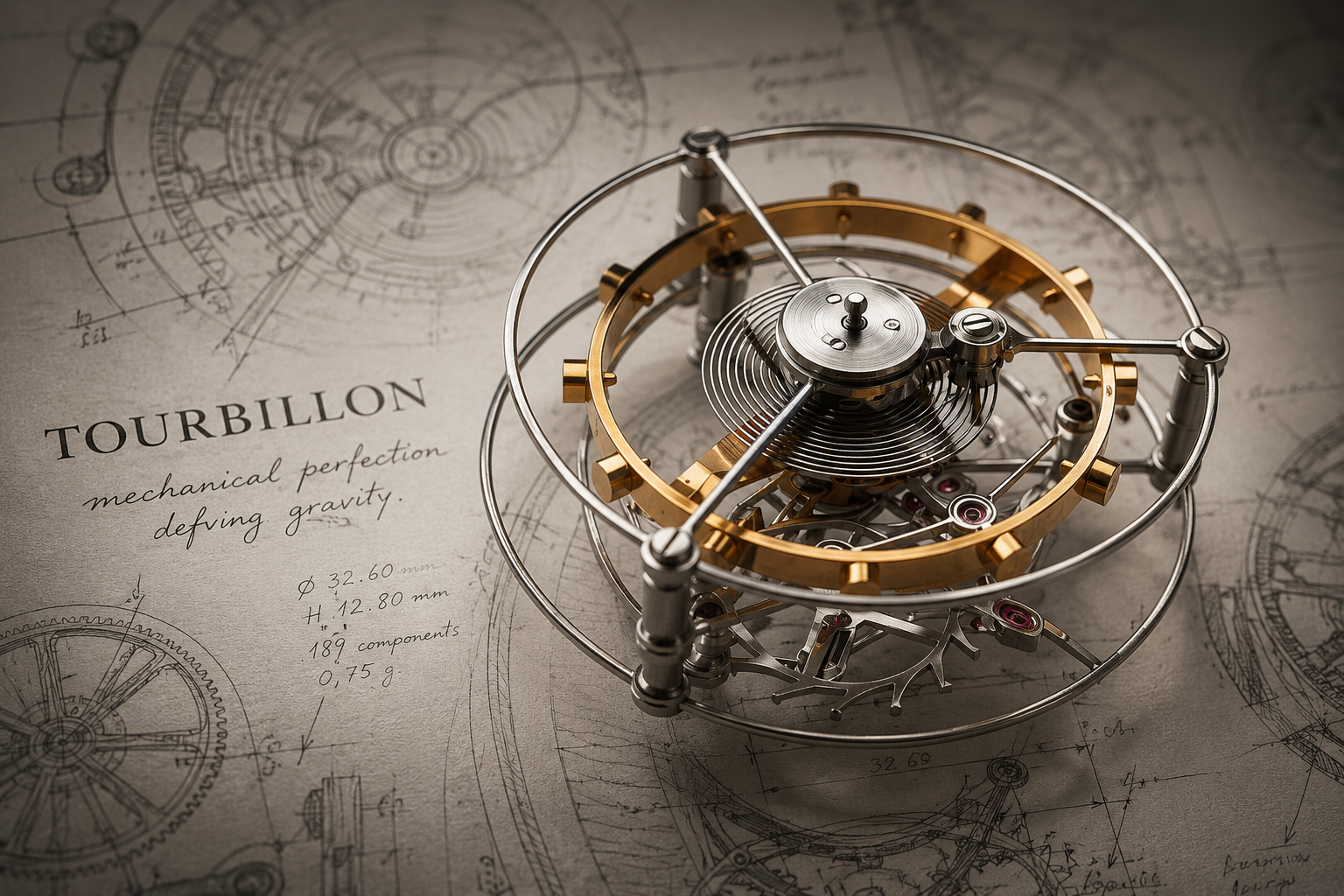
The tourbillon (French for “whirlwind”) was patented by the brilliant Abraham-Louis Breguet in 1801. Its purpose was to eliminate the negative effect of Earth’s gravity on the accuracy of pocket watches, which owners carried vertically in their vest pockets. Breguet placed the entire heart of the watch—the balance wheel, hairspring, and escape wheel—inside a tiny cage that rotates continuously (usually once per minute). This essentially averaged out and canceled the positional deviations of the movement.
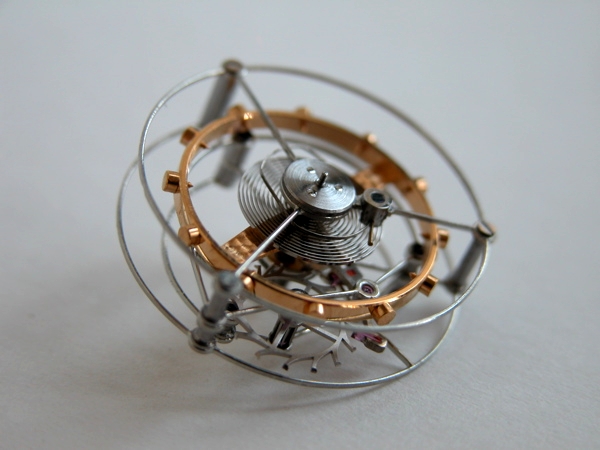
In modern wristwatches, where the wrist is constantly changing position, the tourbillon no longer serves any practical purpose in terms of accuracy. Even so, it continues to find its place in certain models, primarily as a symbol of prestige and a showcase of engineering prowess. In addition to the “classic” tourbillon rotating around a single axis, however, some manufacturers offer designs that take things several steps further.
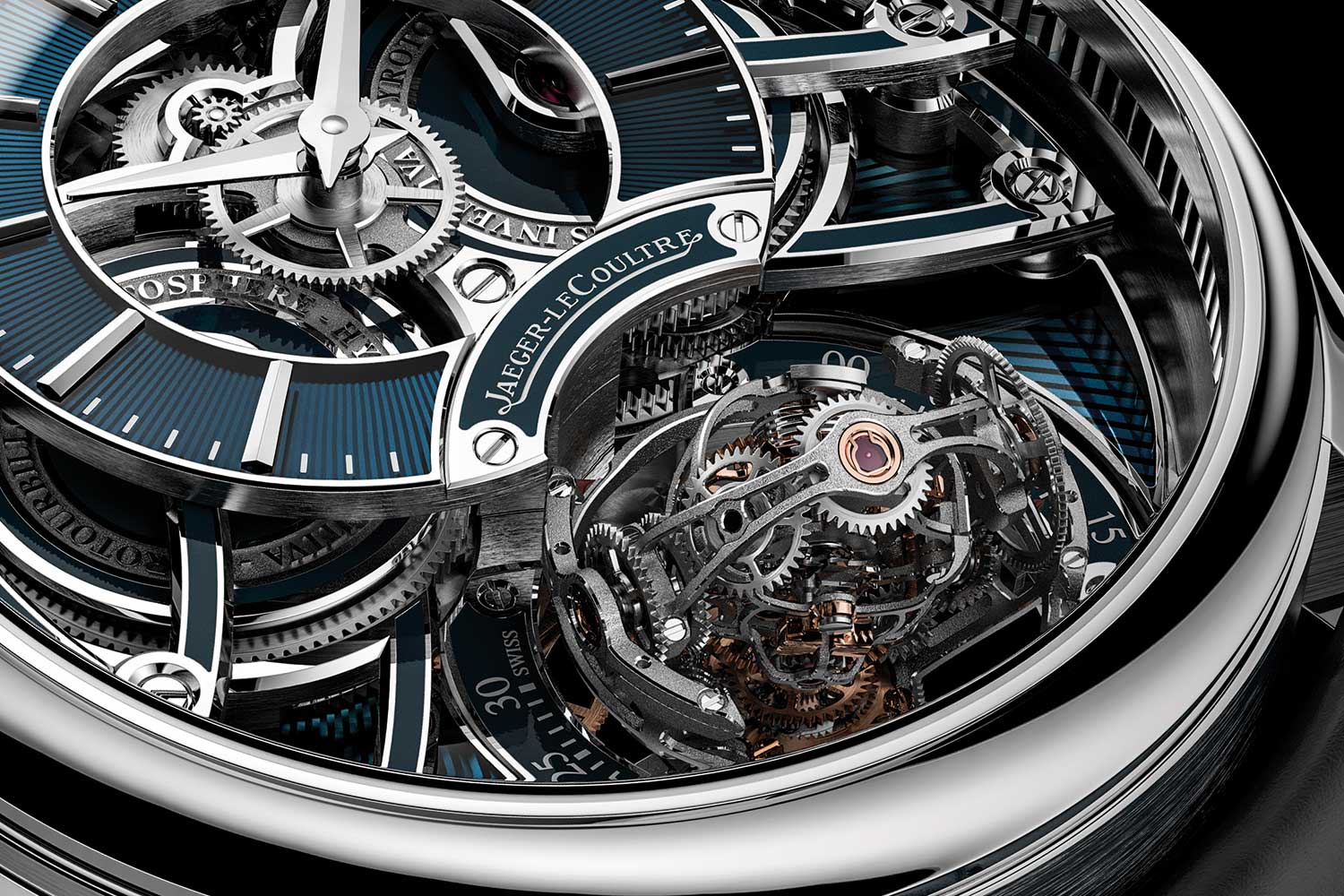
The pioneer in this segment is the Swiss company Jaeger-LeCoultre, which unveiled its first gyrotourbillon—a tourbillon that rotates on multiple axes—in 2004. The latest major advancement came this spring in the form of the Master Hybris Inventiva Gyrotourbillon À Stratosphère, ref. Q5306480, which pushes the boundaries of what’s possible yet another step further thanks to its rotation on three axes. And here’s an interesting fact: the tourbillon mechanism alone (not the entire movement) consists of 189 components and weighs approximately 0.75 grams.
Perpetual Calendar
You have to manually reset a standard watch with a date display five times a year because the movement doesn’t distinguish between months with 30 and 31 days. The annual calendar is a bit better in this regard; while it can recognize these changes, it still needs to be adjusted every February. And then there’s the perpetual calendar, which ranks among the “royal complications.” It can display the correct year, month, day of the week, and date all the way through the year 2100. At that point, most of these watches will need to be manually reset, because while it would normally be a leap year, according to the Gregorian calendar it will not be (since it excludes years divisible by 100 that are not divisible by 400). From a practical standpoint, this is certainly one of the most useful complications you’ll find on today’s list. This is primarily because other “features” no longer hold such significance in today’s digital age.
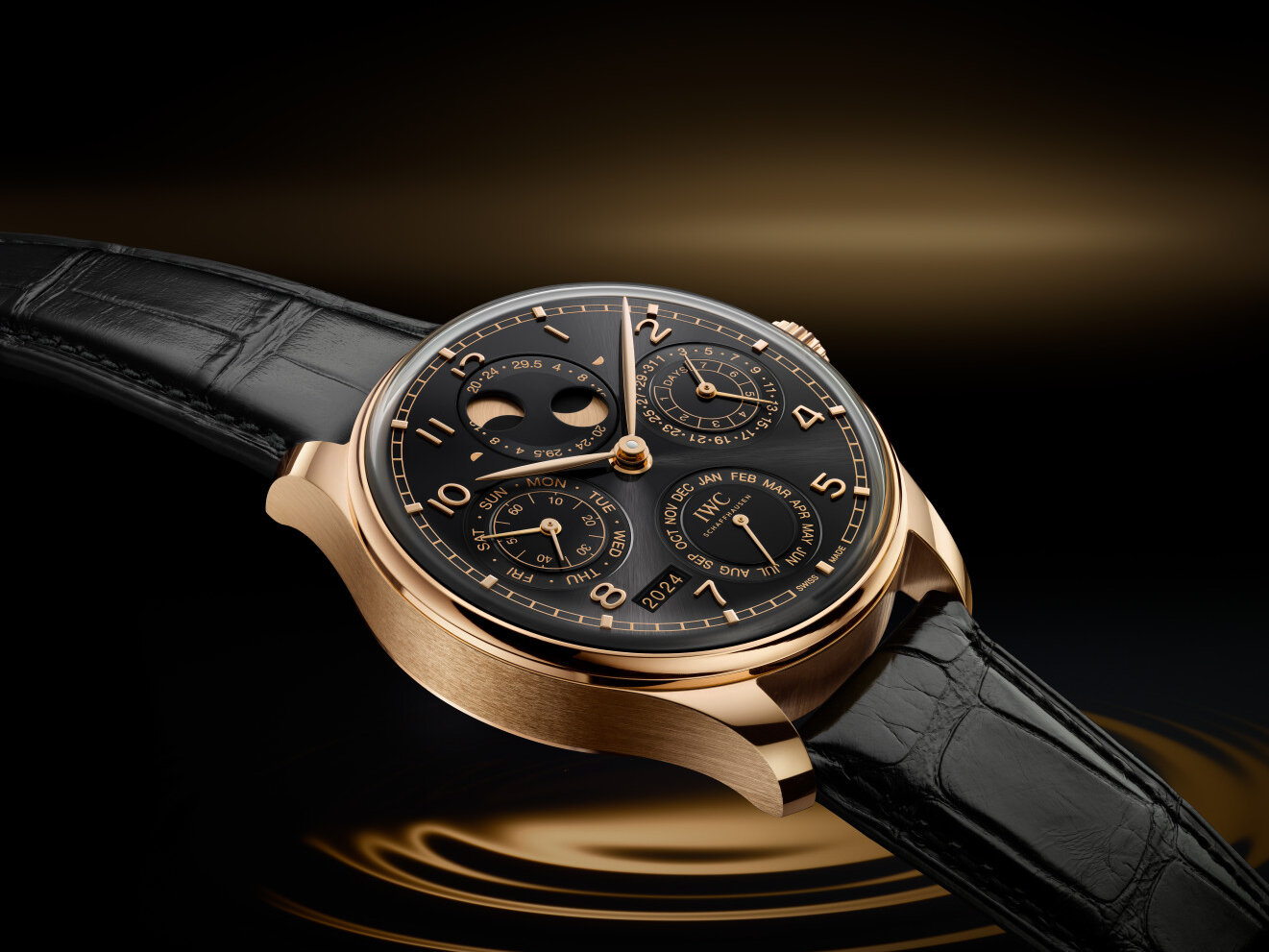
In any case, this is a truly impressive feat of watchmaking, which is once again the preserve of the more luxurious brands (although we could certainly find some pioneers in the “lower” segments as well). IWC recently took this a step further with its Portugieser Eternal Calendar model. The movement inside this watch can handle even the aforementioned calendar exceptions, which means it should be able to run accurately until at least the year 3999. In practice, however, it’s clear that, despite its quality, the watch probably won’t live to see that age…
Equation of Time
The equation of time is one of the complications you’ll encounter very rarely, even among brands in the high-end watchmaking segment. It displays the difference between calendar time and solar time. The former is our standard time, which divides each day precisely into 24 hours. However, due to the Earth’s elliptical orbit around the Sun and the tilt of the Earth’s axis, the actual solar day varies throughout the year and differs from our standard day by approximately -14 to +16 minutes.
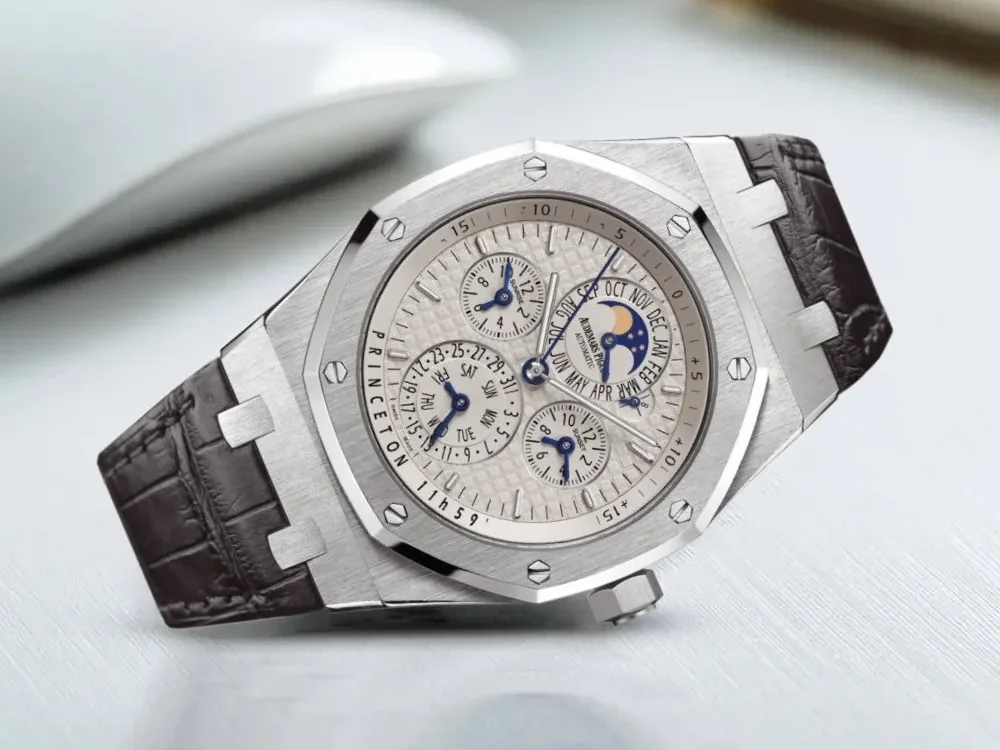
Watches with this complication either have a subdial on the face with a hand indicating the current deviation (e.g., +10 minutes), or they have two minute hands—one for standard time and the other (often marked with a sun symbol) that indicates true solar time. Interestingly, there are only four days a year (April 15, June 14, September 1, and December 25) when the two times are exactly the same and the deviation is zero. If we were looking for a specific watch featuring this complication, the Audemars Piguet Royal Oak 26603 would serve as an interesting example. In addition to the equation of time discussed here, this model also features the aforementioned perpetual calendar and a moon phase indicator. The total number of movement components exceeds 400, so it’s clear that even in this case, the design is far from simple.
Minute Repeater
In the days before the discovery of electricity, when absolute darkness reigned at night, people faced a major problem. Late at night, it was essentially impossible to read the time on their watches. The solution to this problem was another of the royal complications we’ll examine in this article—specifically, the minute repeater. It is a mechanism that, when a lever on the side of the case is pressed, mechanically “reads” the current time and uses miniature hammers to strike the hours, quarter-hours, and minutes on metal gongs. The watch uses two different tones (usually a low tone and a high tone). The low tones mark the hours; a combination of high and low tones marks the quarter-hours; and separate high tones mark the minutes. So, if the time is 4:18, you will hear 4 low tones, 1 double tone (to indicate a “shift” of 15 minutes), and 3 high tones for the individual minutes.
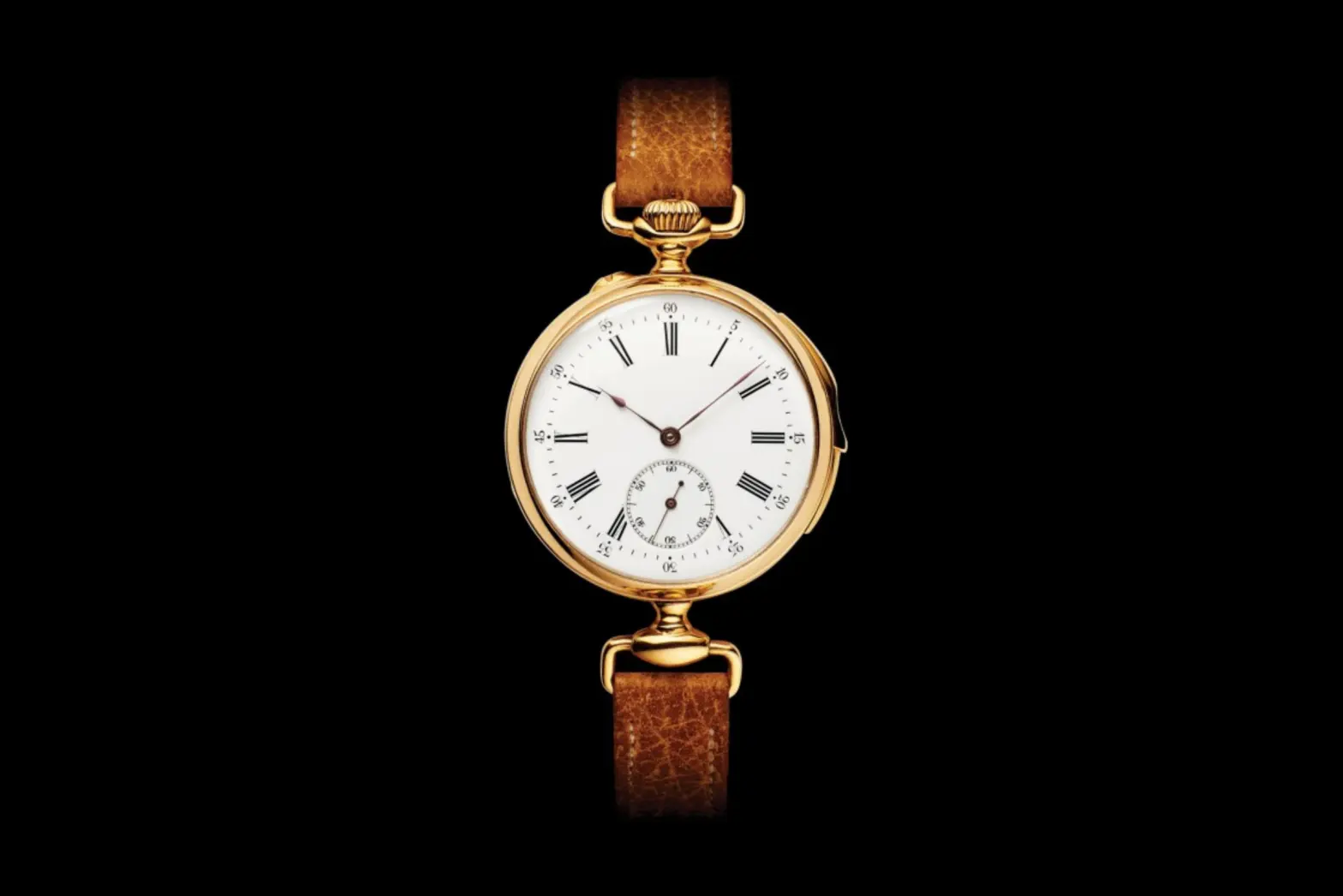
Although the invention and implementation of this complication as such had taken place much earlier, the first manufacturer to produce a wristwatch with this feature was, once again, Audemars Piguet in 1892. For attentive readers, however, it should be noted that while these timepieces could be worn on the wrist, they were essentially modified pocket watches. In any case, the brand has continued to incorporate this complication to this day, and its collection includes several models featuring this mechanism.
Split-Second Chronograph (Rattrapante)
A standard stopwatch can start, stop, and reset the time. Even this is a relatively complex feat for a mechanical watch, as evidenced by the fact that watches with this complication tend to be many times more expensive than their classic counterparts. In addition to the standard three-hand version with two pushers for operation, from time to time you may also come across some special variants, such as the flyback chronograph (which allows the hand to be reset while the chronograph is running), the monopusher chronograph (operated with a single button), and, above all, the split-second chronograph (often referred to by the French term “rattrapante”). This pushes the boundaries of technical prowess a little further, and it certainly deserves a place on today’s list.
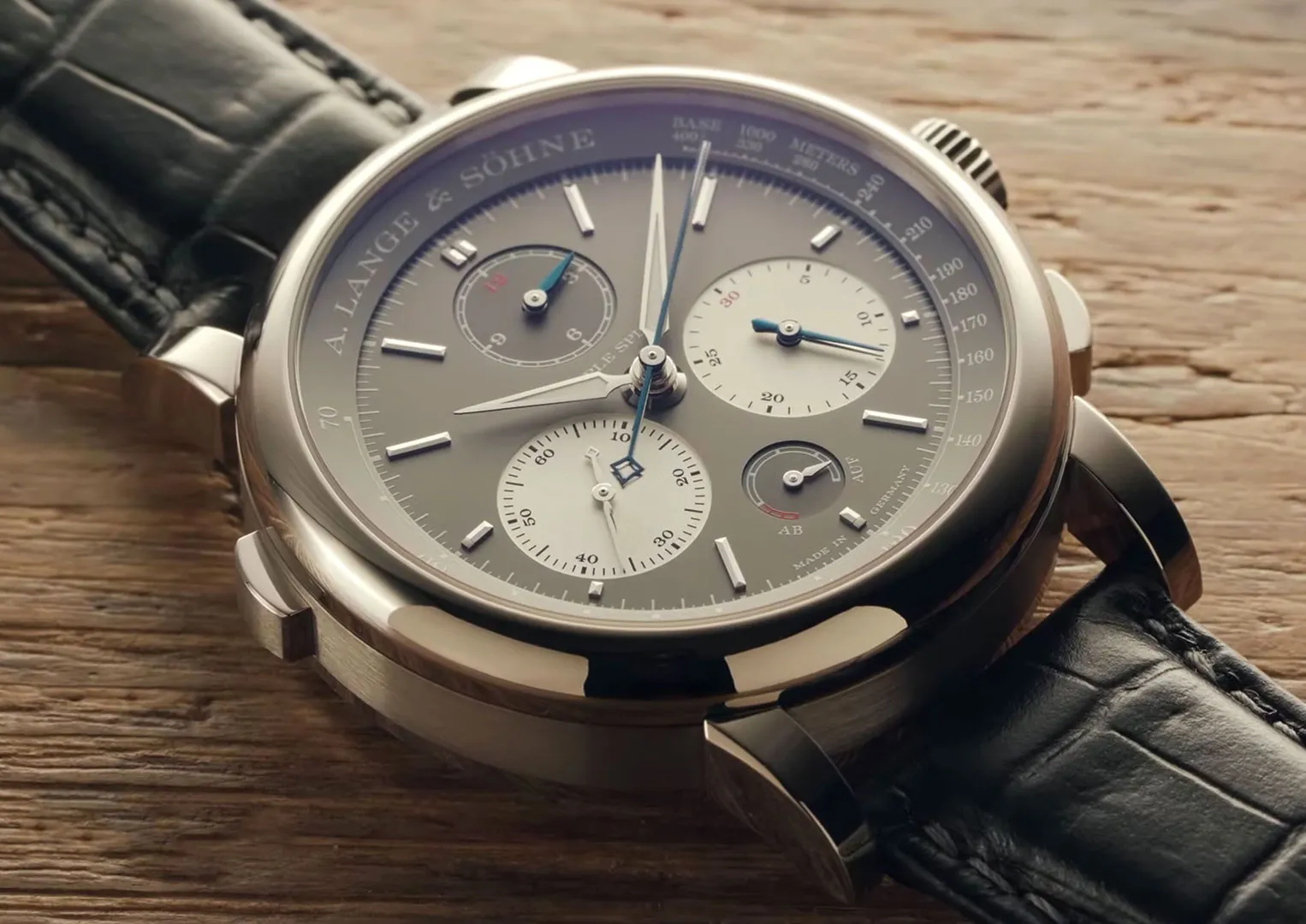
It features two stopwatch seconds hands that overlap and run as one. However, when you press one of the buttons, the first hand stops so you can read the split time, while the second hand continues to measure. When you press the button again, the first hand instantly “catches up” to the second (hence the French term rattraper—to catch up), and they continue together once more. At first glance, this may seem like a relatively uninteresting extra feature; however, it’s important to keep in mind that everything is mechanical and analog, which makes the production of such watches significantly more difficult. As with previous complications, there are also some manufacturers here who have decided to push the technical boundaries even further. In this case, the German brand A. Lange und Söhne stands out; with its Triple Split model, it enables the separate measurement not only of seconds but also, if desired, of minutes and hours.
Conclusion
When we look at all these stunning but complex timepieces, a fairly logical question comes to mind: Is this even necessary these days? The answer is, of course, simple—not at all. Every cell phone today can handle all of the tasks mentioned (even simultaneously) and at a fraction of the price. It would therefore be somewhat strange to consider a watch with these complications as something strictly necessary. Given their complexity, however, it’s only fitting to appreciate the engineering and watchmaking skills of the people involved in their creation.
As mentioned in the introduction, this post has by no means managed to cover all the complexities that could be classified under the category of “advanced watchmaking.” If we did, this wouldn’t be a blog post—it would be more like an encyclopedia. However, if you can think of any important ones that we’ve left out of today’s list, we’d love for you to share them with us in the comments section.







Comments
No one has commented on this article yet. Be the first.